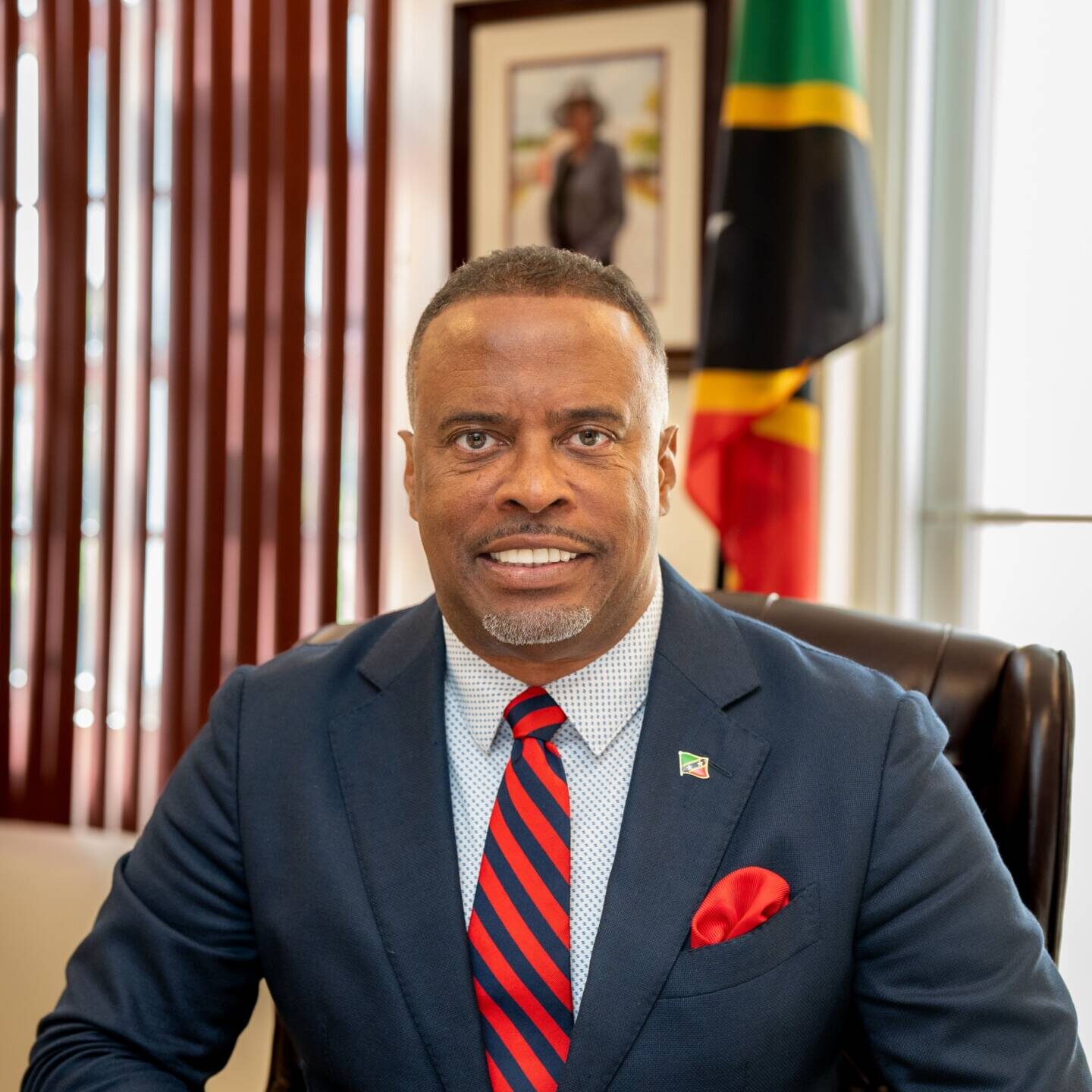
In a landmark address at the inaugural congress of Grenada’s Democratic People’s Movement, Nevis Premier Mark Brantley delivered a compelling vision for Caribbean sovereignty in an evolving global landscape. Speaking with personal conviction as someone married to a Grenadian for 32 years, Brantley established his deep connection to the nation before delving into substantial geopolitical analysis.
The Premier painted a concerning picture of international instability, citing recent events including US naval movements in the Southern Caribbean, the abduction of Venezuela’s president, and escalating Middle East tensions that have effectively closed the critical Strait of Hormuz. These developments, he warned, would severely impact Caribbean economies through increased costs of fuel, shipping, insurance, and overall living expenses.
Brantley referenced sobering assessments from Canadian Prime Minister Mark Carney and German Chancellor Friedrich Merz, both of whom have declared the demise of the rules-based international order. This breakdown, the Premier argued, threatens the Caribbean’s ability to influence global norms, particularly on vital issues like climate change where the region has historically punched above its weight.
With great powers engaging in renewed competition and middle powers seeking new alliances, Brantley posed a crucial question: What becomes of small nations that might be considered ‘the presumed powerless’? His answer was a call to action—the Caribbean must transform itself into ‘the power of the collective’ through enhanced regional integration and self-reliance.
The address highlighted how anti-immigrant policies emerging in Global North nations should serve as a catalyst for Caribbean transformation. Rather than lamenting tightened visa restrictions and increased border controls, Brantley urged the region to incentivize its diaspora to return home with their wealth, skills, and entrepreneurial spirit.
Particular attention was given to the over-reliance on Citizenship by Investment programs, which account for 30-35% of government revenues in Grenada and up to 60-70% in some OECS nations. With the European Union increasingly hostile to these programs, Brantley presented a comprehensive diversification strategy including renewable energy development, food security initiatives, cruise industry revenue optimization, creative economy investment, and special economic zones.
The Premier emphasized that nostalgia and hope are not strategies—concrete plans are needed. He challenged Grenada and the broader Caribbean to accelerate regional integration, deepen alliances with Latin America, Africa, and other Global South nations, and fundamentally reorient their economic models toward self-sufficiency.
In closing, Brantley charged the new political movement with courage and conviction, reminding them that no external savior would rescue the Caribbean—the region must save itself through determined action and people-centered governance.