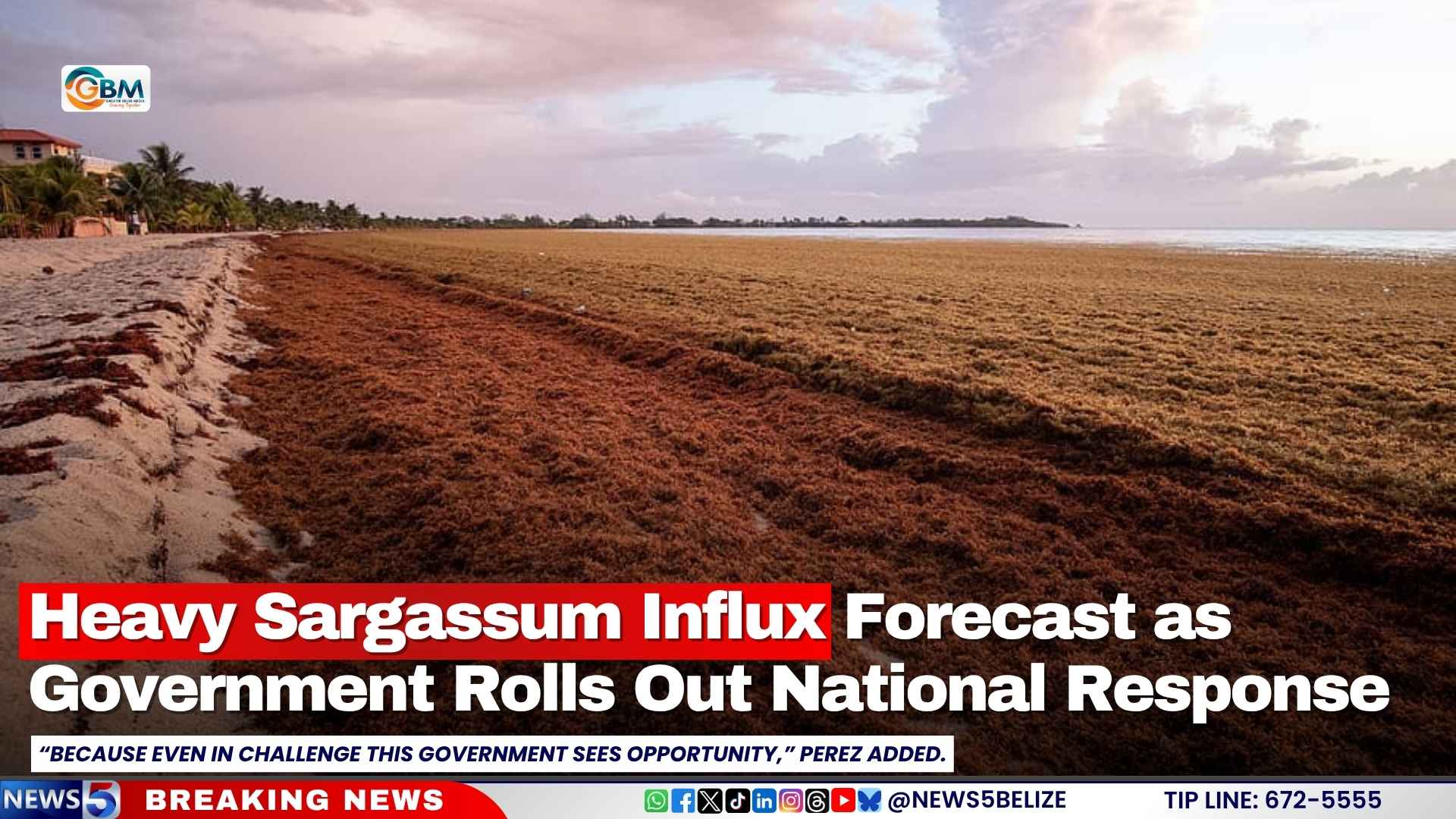
Belize’s coastal regions are preparing for another significant sargassum inundation as meteorological experts forecast substantial seaweed accumulations along critical shorelines. The National Meteorological Service has issued alerts for multiple communities including San Pedro, Caye Caulker, Hopkins, and Placencia—areas consistently impacted by the region’s escalating marine vegetation crisis.
Immediate response measures are already underway, with San Pedro’s Town Council deploying specialized containment corrals along vulnerable coastlines. These floating barrier systems aim to intercept and manage seaweed before it reaches tourist beaches, providing crucial support to hospitality enterprises that have incurred substantial daily cleanup expenditures to maintain their properties and preserve the nation’s vital tourism industry.
The ecological challenge has ascended to national policy discussions, receiving prominent attention in the National Assembly. Andre Perez, Minister of Blue Economy, characterized the sargassum phenomenon as among the most urgent and visible environmental challenges confronting coastal communities. Minister Perez emphasized the pattern of increasing frequency and intensity of seaweed influxes throughout the Caribbean region, noting multifaceted impacts on tourism infrastructure, fishing industries, and public health systems in affected areas.
The government’s approach transcends temporary mitigation measures, with Perez asserting that authorities are treating sargassum not as seasonal nuisance but as national priority. The Ministry of Blue Economy and Marine Conservation is developing a comprehensive, scalable national response strategy encompassing enhanced collection mechanisms, environmentally sustainable disposal protocols, and investigation into potential economic opportunities through conversion technologies and value-added product development.
Minister Perez concluded with an optimistic perspective, noting that the current administration perceives potential economic opportunities within the ecological challenge, signaling a paradigm shift from crisis management to innovative adaptation in addressing this persistent environmental issue.