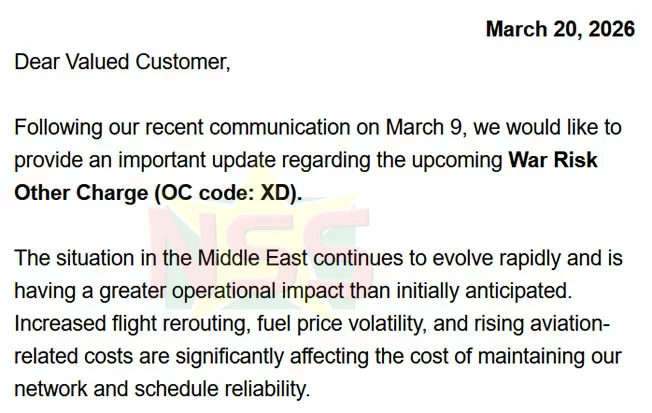
Rising geopolitical instability in the Middle East has catalyzed a chain reaction across global logistics networks, with maritime and air freight carriers implementing emergency surcharges that threaten export-dependent economies. Suriname’s seafood industry now faces the materialization of its worst-case scenario as transportation costs escalate dramatically.
International logistics corporations are rapidly deploying new financial mechanisms to offset operational risks. Air France KLM Martinair Cargo has announced a War Risk Other Charge, scheduled for further increases by late March. This surcharge directly responds to diverted flight paths, soaring fuel prices, and heightened operational expenditures.
Simultaneously, cargo carrier Amerijet instituted a Fuel Escalation Fee effective March 23rd, adding $0.04 per kilogram for standard shipments and $0.02 for perishables. This levy supplements existing fuel charges and applies specifically to shipments originating from the Caribbean and South America.
The maritime sector mirrors these developments, with shipping companies passing along additional costs driven by volatile fuel markets and intensified international uncertainty.
Udo Karg, President of the Suriname Seafood Association, confirms the industry’s fears have become reality. ‘What the fisheries sector feared has already begun this week. First the shipping companies, and now aviation,’ Karg told Starnieuws. He emphasized the disproportionate impact on smaller economies: ‘Major nations like Japan and EU states maintain reserves to buffer such developments, but countries like ours must improvise coping strategies.’
While transport firms characterize these measures as temporary and contingent on global developments, Surinamese entrepreneurs anticipate severe consequences for their export competitiveness. The fisheries sector—a critical component of the nation’s economy—faces particular vulnerability to these logistics cost inflations that could reshape trade dynamics in the region.