A profound transformation is underway in Belize’s retail grocery sector, where Chinese-owned supermarkets have established competitive dominance through radical cost control measures and informal financial networks. This shift has created intense pressure on traditional neighborhood stores that have long operated on personal relationships and community trust.
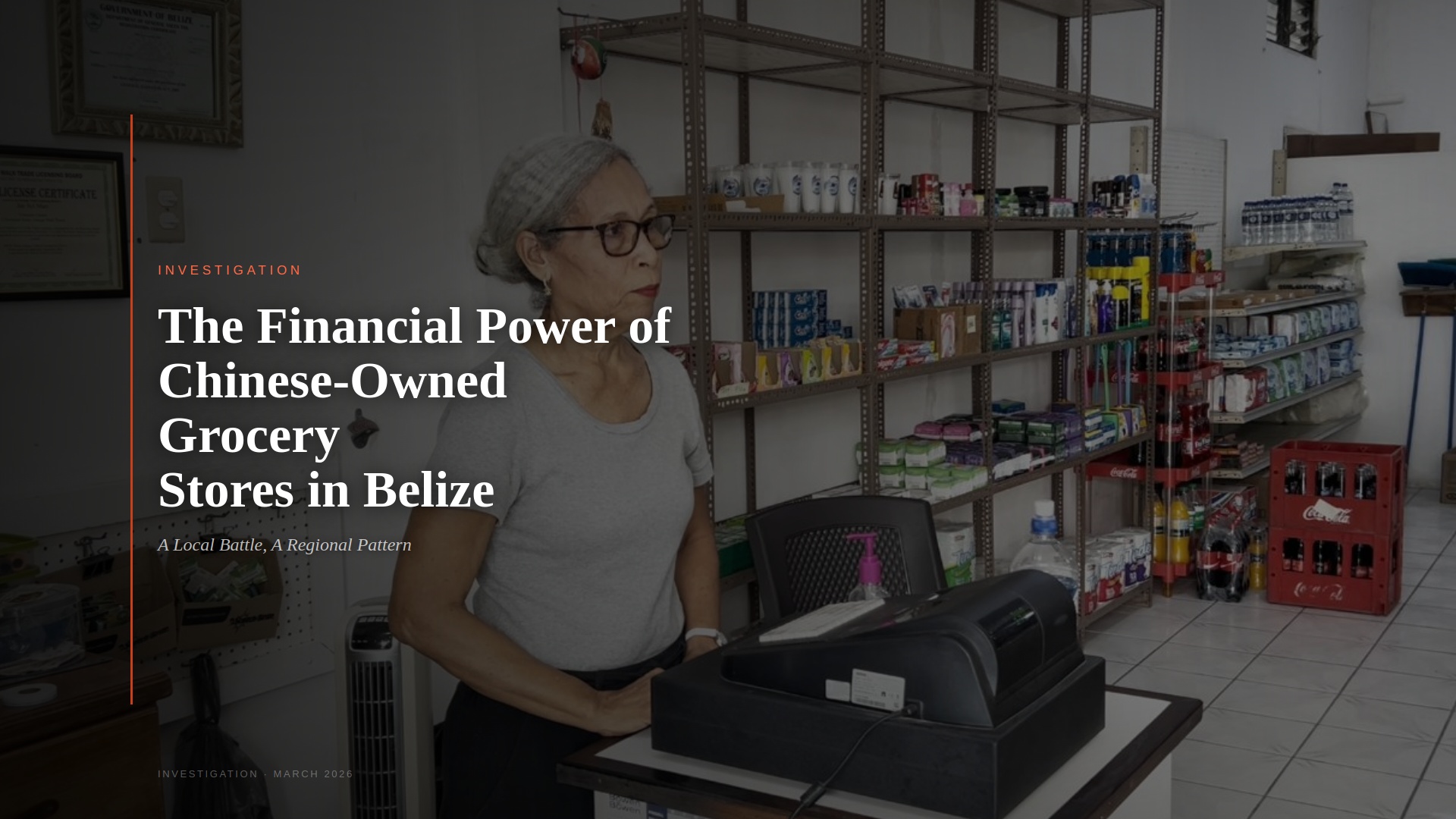
In Orange Walk Town, 67-year-old Consuelo Catzim represents the struggling traditional model. Her store, Jansyl Mart, has served the community since 1999, operating on personal knowledge of customers and occasional credit extensions. “I started this because I had to survive,” Catzim recalls, having invested her retirement payout to support her children. Despite building deep community connections, her sales dropped sharply as customers migrated to Chinese-owned stores offering lower prices.
The competitive gap stems from fundamentally different business models. A 2015 University of Belize study of 60 Chinese businesses revealed extraordinary operational discipline: 56.7% operate 12+ hours daily, 53.3% work all seven days weekly, and 58.3% maintain monthly expenses below BZD $9,000 despite 30% reporting monthly sales exceeding $50,000. Startup capital primarily came from family networks (45%) rather than bank loans (5%).
This financial advantage is compounded by supply chain dynamics. Small retailers like Catzim pay significantly higher wholesale prices—sometimes $3 more per case than bulk buyers—forcing them to charge retail prices that cannot compete. “That five cents is what kills us,” Catzim explains, referencing the marginal price differences that determine shopping decisions.
New enforcement data reveals additional competitive distortions. Belize’s Supplies Control Unit documented 136 establishments violating price control regulations for essential goods like rice, bread, and cooking oil. Violations included failure to display prices and selling above mandated maximums, with Chinese-owned stores disproportionately represented on violation lists.
The expansion is fueled by sophisticated informal financing systems documented by University of Calgary researchers. Chinese entrepreneurs typically access capital through family networks, rotating credit associations, and overseas remittances rather than formal banking. This allows rapid deployment of capital despite higher effective interest rates.
Dr. Osmond Martinez, Minister of State in Economic Transformation, views the competition as educational: “The reason why they have survived is because they have managed to capitalize on the finance that they have, the finance mechanism, and the network that they do have.” He encourages Belizean entrepreneurs to adopt similar collaborative approaches.
The pattern extends beyond Belize. Nicaragua experienced an influx of 400 Chinese retail businesses following its 2024 Free Trade Agreement with China, while Guyana has seen similar market transformations. This regional trend highlights how informal entrepreneurial networks can reshape entire retail sectors through disciplined cost control and alternative financing mechanisms.
As traditional shops decline—Orange Walk saw 27% closure in five years—the question remains whether Belize can preserve the community-oriented commerce represented by operators like Catzim while adapting to new competitive realities.