After decades of watching their shoreline steadily vanish into the Caribbean Sea, the residents of Monkey River Village in southern Belize are witnessing their first significant government-led intervention against catastrophic erosion. The $300,000 emergency shoreline project, initiated on February 9th, represents a critical response to a community that has already lost homes, property, and even parts of its burial ground to advancing waters.
Prime Minister John Briceño expressed profound personal and governmental urgency regarding the situation, stating, ‘If we do not do anything as a government, this village is going to disappear.’ He described the emotional impact of seeing cemetery plots submerged underwater, acknowledging both anger and despair that previous administrations had failed to act.
The current strategy employs a natural-materials approach designed for rapid implementation. Initial work involves installing bollards at the river mouth to dissipate wave energy, followed by urgent measures to protect the vulnerable cemetery from further underwater erosion. Contractor Albert Loewen explained the hydrological challenges, noting that sediment buildup has altered the river’s natural flow patterns, complicating stabilization efforts.
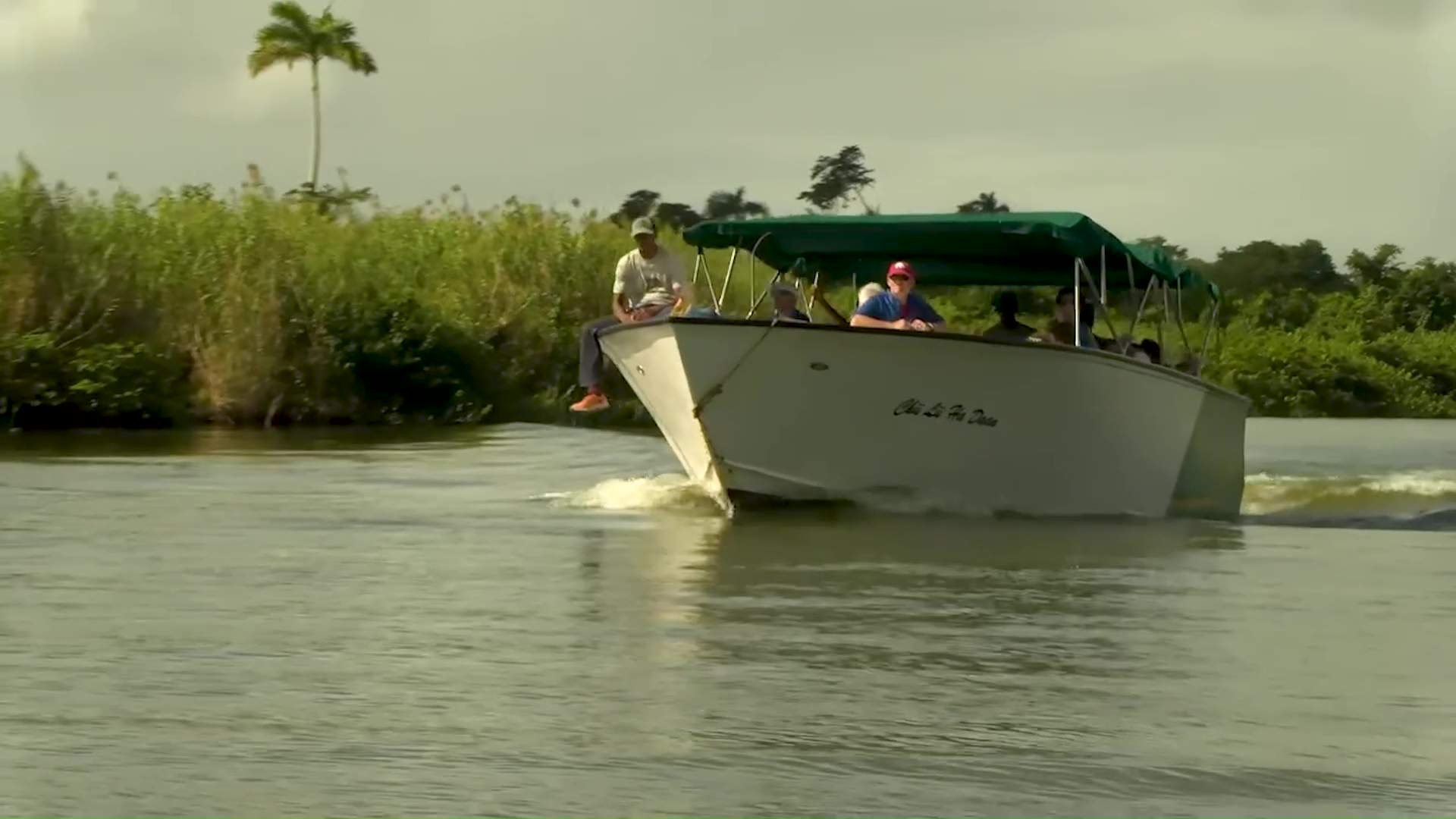
Beyond the immediate physical threat, the erosion crisis has severely impacted the local economy. Fast-moving tourist boats have exacerbated bank degradation while simultaneously churning the river into mud, crippling the traditional fishing and guiding industries that residents depend on for livelihoods.
Community leaders like Chairlady Eloydia Cuevas emphasize that the preservation effort transcends environmental concerns, touching on fundamental aspects of culture, economy, and identity. The project represents not just infrastructure work but the preservation of a way of life.
Government officials frame the intervention as a collaborative model. Valentino Shal, CEO of the Ministry of Rural Development, emphasized that sustainable transformation requires coordinated efforts across multiple ministries and full community participation. The project aims to both reduce immediate danger and establish foundations for a community-led conservation economy that balances ecological protection with economic vitality.