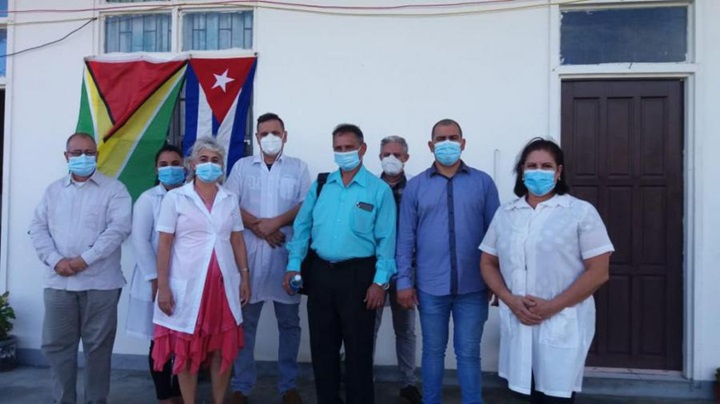
In a significant political development, Guyana’s main opposition parties have voiced strong support for continuing the Cuban Medical Brigade program, despite mounting pressure from the United States to terminate the initiative. The Alliance For Change (AFC) and the People’s National Congress Reform-led A Partnership for National Unity (APNU) have issued separate statements advocating for the preservation of this decades-long healthcare partnership.
The AFC characterized the Cuban medical presence as “a critical pillar of Guyana’s healthcare system,” emphasizing its role in addressing specialized personnel shortages, strengthening rural and hinterland medical services, and providing otherwise unavailable care to thousands of Guyanese citizens. The party described the bilateral relationship as being built on “solidarity, mutual respect, and a shared commitment to improving the well-being of their peoples.”
APNU Chairman Aubrey Norton, a Cuban-trained political scientist, expressed profound disappointment with the government’s apparent capitulation to US demands. “I have grave difficulty with us abandoning people who helped us sincerely,” Norton stated, referencing historical periods when Caribbean nations faced severe doctor shortages. He questioned the ethical implications of discontinuing assistance from those who provided crucial support during times of need.
This political stance emerges alongside diplomatic developments at the United Nations, where Secretary-General Antonio Guterres welcomed renewed talks between the US and Cuba. UN spokesperson Stéphane Dujarric acknowledged the potential for dialogue to “peacefully resolve bilateral disputes” while expressing concern about Cuba’s ongoing fuel crisis and its negative impact on health systems and basic necessities.
The Cuban government, through President Miguel Diaz-Canel Bermudez, has confirmed discussions with US officials covering bilateral issues and potential cooperation areas. The Cuban leadership emphasized conducting these “sensitive” negotiations based on principles of equality, respect for sovereignty, and adherence to international law, while acknowledging the complexity of moving away from decades of confrontation.