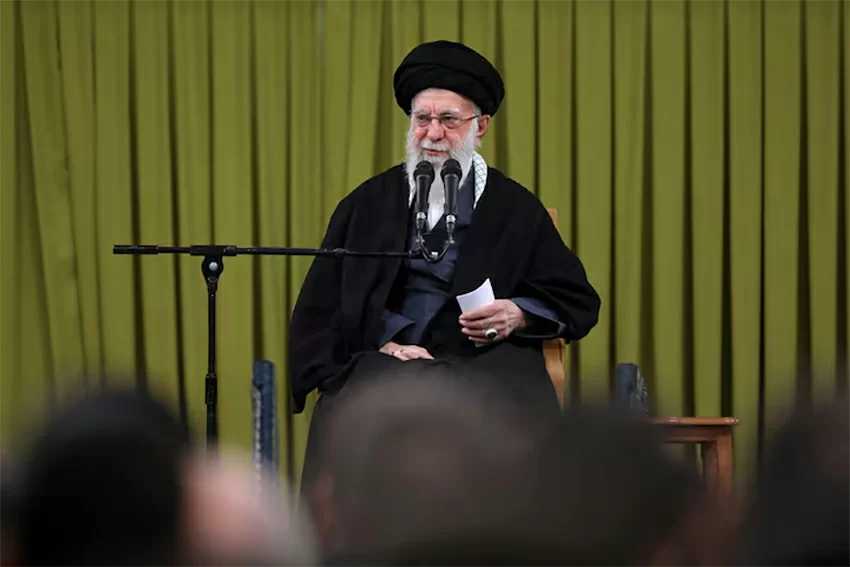
In a seismic development that has shaken the Middle East’s geopolitical landscape, Iranian state television has officially confirmed the death of Supreme Leader Ayatollah Ali Khamenei, 86, along with several family members during coordinated airstrikes on his residence. The announcement marks an unprecedented moment in Iran’s modern history, ending Khamenei’s 37-year reign as the Islamic Republic’s highest authority.
American President Donald Trump initially disclosed the operation, characterizing it as a successful joint mission between United States and Israeli forces. According to Trump’s statement, Khamenei and associated Iranian officials were unable to evade sophisticated American intelligence tracking systems. Israeli Prime Minister Benjamin Netanyahu subsequently reinforced these claims, citing mounting evidence confirming the Supreme Leader’s demise.
The tragedy extends beyond political implications, with confirmation that Khamenei’s daughter, son-in-law, and granddaughter also perished in the attack. Iranian media delivered the news through solemn programming, withholding specific operational details while acknowledging the multidimensional loss.
Following constitutional protocols, Iran has declared 40 days of national mourning alongside seven days of official holiday periods. Regional analysts anticipate intense political maneuvering within Iran’s religious hierarchy as the Assembly of Experts convenes to select Khamenei’s successor—a process that could fundamentally reshape Iran’s domestic policies and international relations.
Global observers are monitoring Tehran’s transition with heightened alertness, recognizing Iran’s substantial influence across Middle Eastern affairs and global energy markets. The unprecedented nature of this event suggests potential volatility in regional stability, with particular attention on Iran’s proxy networks and nuclear policy trajectory.