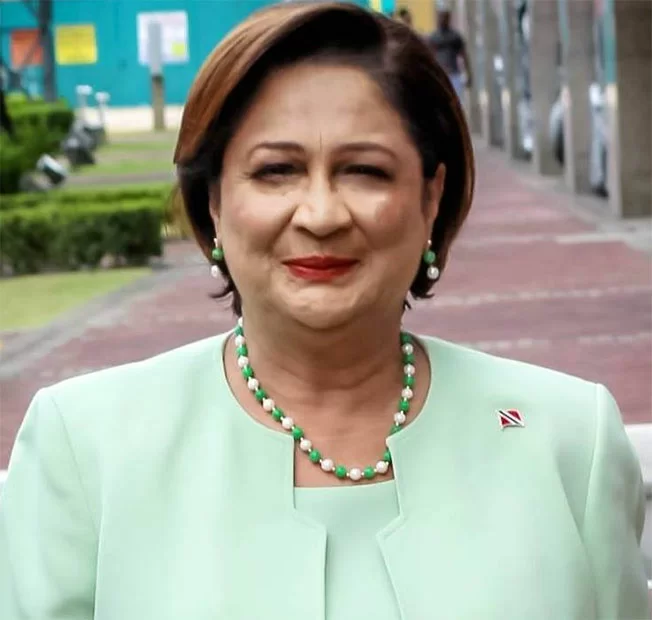
In a striking address at the 50th CARICOM Heads of Government Conference in St. Kitts and Nevis, Trinidad and Tobago Prime Minister Kamla Persad-Bissessar delivered a blistering critique of the regional organization’s failure to present a unified front against Venezuelan aggression toward member states. The Prime Minister characterized CARICOM’s response as a “concerning silence” despite repeated security threats emanating from Caracas.
Persad-Bissessar questioned CARICOM’s continued designation as a “zone of peace” when member nations face external threats without demonstrated regional solidarity. She emphasized that both Guyana and Trinidad and Tobago operate under direct pressure from Venezuela, noting her government’s public support for Guyana in its ongoing border dispute with Venezuela while criticizing other CARICOM members for insufficient backing.
Citing national security imperatives, the Prime Minister revealed her administration has pursued independent security arrangements, including enhanced defense cooperation with the United States. She specifically acknowledged support from the Trump administration and Secretary of State Marco Rubio, highlighting collaborative efforts against drug trafficking, arms smuggling, and illegal migration originating from Venezuela.
The Prime Minister reported that increased U.S. regional engagement has contributed to significant homicide reduction in Trinidad and Tobago, where criminal activity maintains strong connections to transnational gangs and smuggling networks.
Persad-Bissessar also addressed challenges surrounding CARICOM’s free movement principle, stating that while her government supports integration conceptually, Trinidad and Tobago cannot currently sustain full open borders due to overwhelming pressures on healthcare systems, social services, and national finances from tens of thousands of illegal migrants.
The address exposed deepening fractures within CARICOM regarding security policy, migration management, and foreign relations. While reaffirming the importance of regional cooperation, the Prime Minister made clear that national security priorities outweigh regional consensus for Trinidad and Tobago. Her unusually forthright critique has forcefully reinvigorated discussions about CARICOM’s effectiveness and strategic direction.