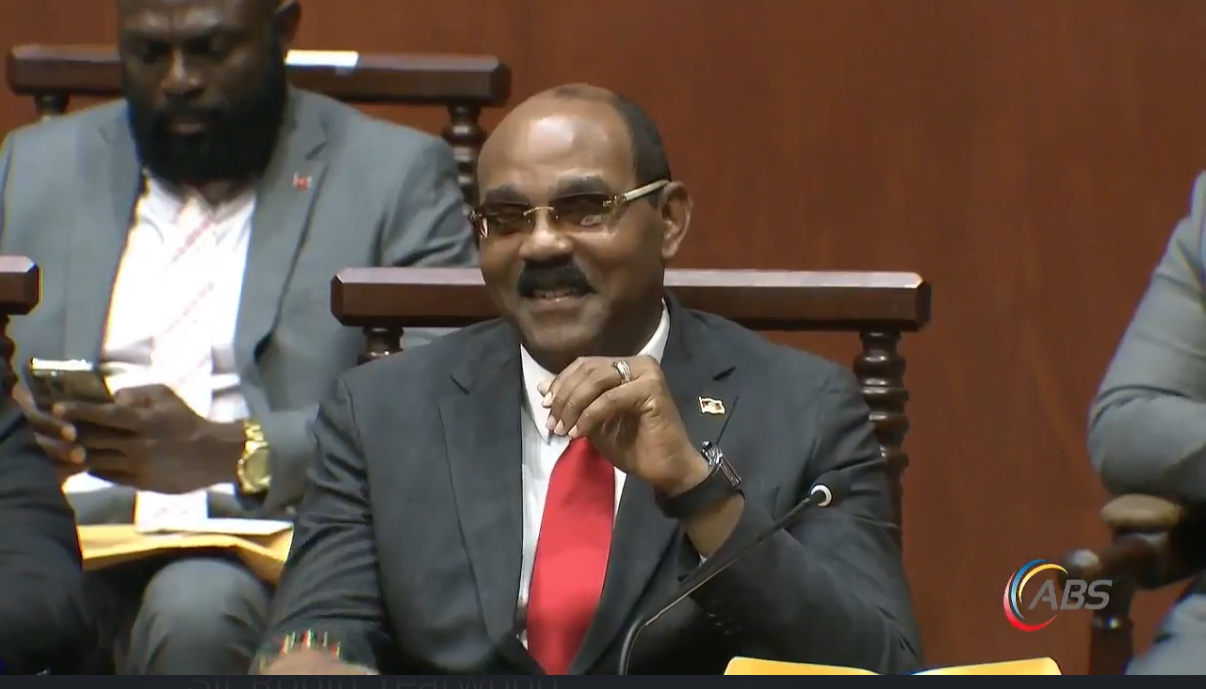
Against the backdrop of a heated ongoing public debate over coastal access rights in Antigua and Barbuda, Prime Minister Gaston Browne has issued a nationwide call for collective solidarity, urging all citizens and residents to set aside deep-seated animosity, petty envy, and arbitrary racial and ethnic divides to work toward shared national progress. The unifying public message came on the heels of an official policy address where Browne cautioned bad-faith actors against weaponizing the beach access controversy to stoke widespread public resentment and tear community bonds apart. Browne explicitly called out unidentifiable malicious actors for spreading deliberately misleading narratives, fabricated claims, and pre-staged manipulated video content designed to spark violent public confrontations and erode public trust in the sitting administration. “The critical issue of public beach access demands transparent, good-faith advocacy and accountable, responsible leadership, not cynical partisan political manipulation,” Browne emphasized during his formal address. Pushing back against widespread public criticism that his government had failed to take sufficient action to safeguard longstanding public beach rights, Browne reaffirmed his administration’s unwavering commitment to protecting the equal legal entitlements of local citizens, legal permanent residents, and international visitors to the country’s coastal spaces. He issued a clear, binding public warning that no private property owner, hotel operator, commercial business, or contracted private security personnel holds any legal authority to block members of the public from accessing coastal areas they are lawfully entitled to use. At the same time, Browne urged ordinary members of the public to respect duly registered private property boundaries, stick to officially designated public access routes, and resolve any emerging disputes through formal legal and administrative channels rather than resorting to unregulated public confrontation. The prime minister also extended a formal appeal to all beachfront property holders and real estate developers to collaborate constructively with government agencies to establish well-marked, conveniently located, and regularly maintained public access points to coastal areas. Browne made no secret, however, that the administration stands ready to invoke its statutory legal powers to secure land or access easements on private parcels, with fair market compensation provided to affected property owners, in cases where good-faith negotiations fail to deliver acceptable public access arrangements. As a concrete long-term solution to longstanding coastal access gaps, Browne laid out a detailed government initiative to develop 10 dedicated public beach parks across the twin-island nation, complete with public amenities and paved access roads engineered to accommodate emergency response vehicles including ambulances and fire trucks. Browne stressed that sustainable tourism growth, lawful private property rights, and unobstructed public beach access are not mutually exclusive goals, noting that all incoming and existing investment projects must comply with national legislation, preserve the country’s unique coastal natural heritage, and uphold the legitimate legal rights of local communities. Acknowledging that unresolved barriers to public beach access have lingered for multiple decades across the islands, Browne argued that the long-running issue should serve as a unifying catalyst for collective problem-solving rather than a polarizing flashpoint for social conflict. “This is an issue of core national interest. It should bind us all together as a single community to deliver practical, enduring solutions that benefit every generation of Antiguans and Barbudans,” he stated.
PM calls for unity and rejection of racial divisions following beach access address