On November 25, 2026, stakeholders gathered at the British High Commissioner’s residence in Belize to conduct a formal midterm assessment of the UK-funded Biodiverse Landscapes Fund (BLF), a seven-year regional initiative designed to advance forest conservation, strengthen climate resilience, and build sustainable livelihoods for populations across Belize, Guatemala, Honduras, and El Salvador.
Unlike top-down conservation models that rely on external institutional mandates to draw arbitrary boundaries around protected natural areas, the BLF was built on a core principle: the communities that live alongside and depend on forest ecosystems are the most qualified stewards to lead climate adaptation and mitigation action. Now entering its fourth year of implementation, the program has already delivered tangible, community-designed outcomes that stand in stark contrast to disconnected academic or policy solutions developed far from on-the-ground contexts.
During the assessment forum, British High Commissioner Alistair White emphasized that the program’s greatest strength lies in its collaborative partnership structure, rather than a dynamic where external actors deliver solutions *to* or *for* local populations. “Communities experience the direct, day-to-day impacts of shifting climate patterns firsthand, so they inherently understand which interventions will be practical and sustainable for their specific circumstances,” White noted. This community ownership model, he added, eliminates the common pitfall of unworkable strategies designed in distant academic or government offices that fail to account for local realities.
Wildlife Conservation Society (WCS) Belize Country Director Nicole Auil Gomez explained that in 2024, participating local organizations worked directly with grassroots stakeholder groups to co-create fully bottom-up climate-smart development plans. These documents did not originate from external consultants: residents themselves mapped out the unique climate threats facing their territories, ranging from prolonged droughts and uncontrolled wildfires to erratic, intense seasonal rainfall, then designed context-specific interventions to address those risks.
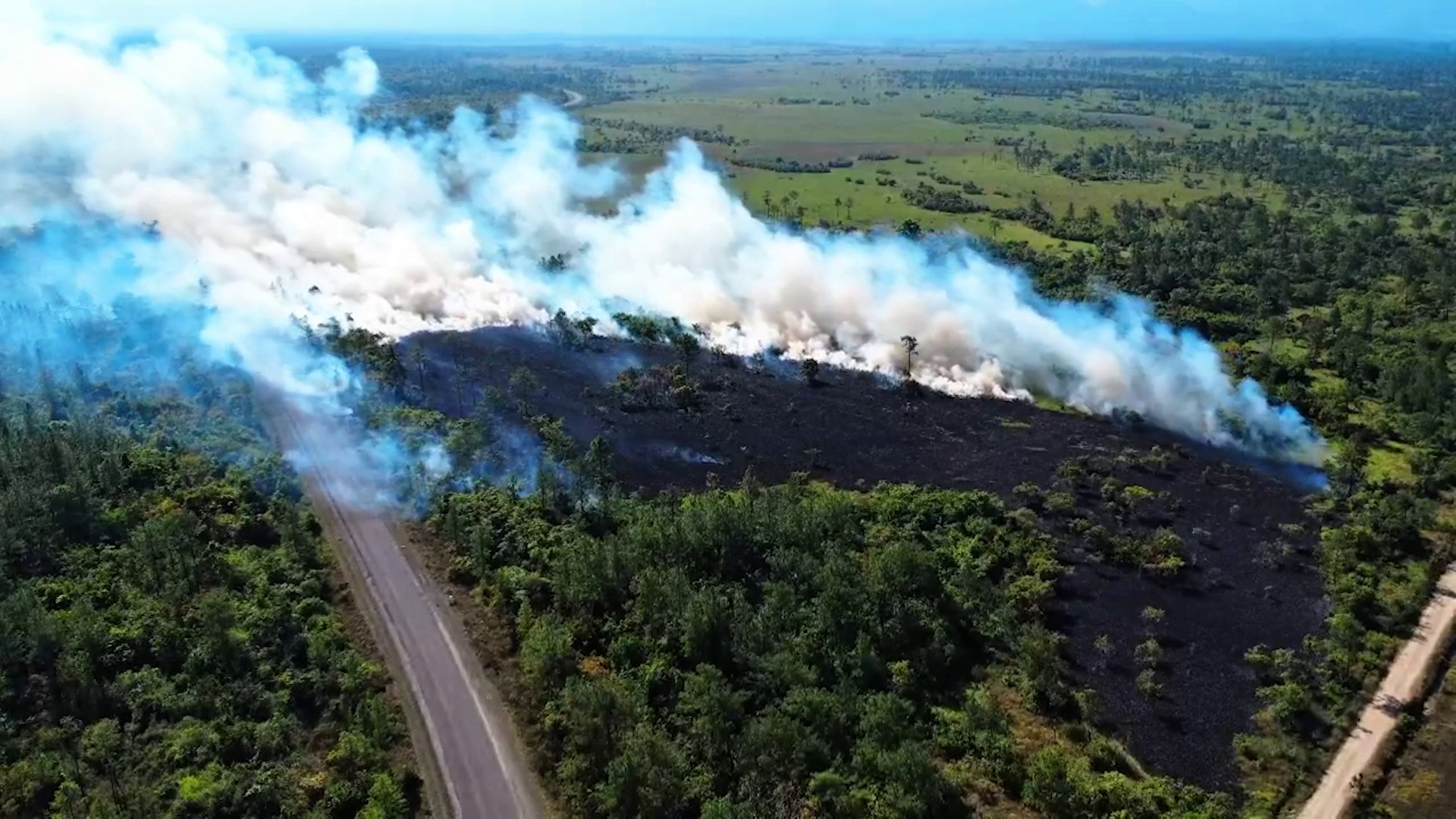
For example, in the Belizean community of Mahogany Heights, residents identified unmanaged wildland fires and rising extreme heat as their most pressing climate vulnerabilities. With support from the BLF, the community received a portable water tank to support local fire response, cooling fans for the local primary school and elderly residents, and specialized training and equipment for their volunteer community fire brigade. WCS Community Resilience Coordinator Kadisha Augustine, who supports Mahogany Heights’ adaptation work, confirmed that these targeted resources have already reduced local risk exposure significantly.
A core focus of the midterm review was evaluating long-term sustainability: organizers stressed that the program’s ultimate success will not be measured by short-term outputs during the seven-year funding window, but by whether communities retain the knowledge, resources, and institutional ownership to continue advancing their climate action plans long after UK funding concludes. Gomez added that the program prioritizes centering Indigenous and forest-dependent communities, whose livelihoods are inextricably tied to ecosystem health, to ensure every intervention is tailored to unique local cultural, environmental, and economic contexts rather than applying a one-size-fits-all regional framework.
UK Assesses Progress of Community Led Climate Change Mitigation