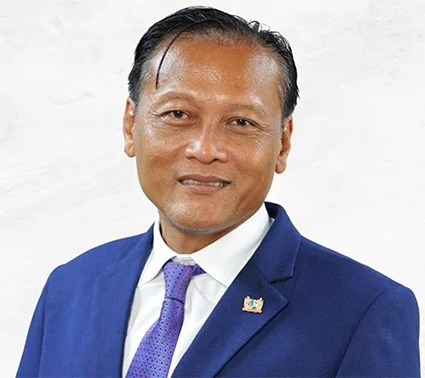
On November 26, Member of the Surinamese National Assembly Raymond Sapoen published a public opinion piece framing the recently announced Final Investment Decision (FID) by Malaysia’s energy giant Petronas for the development of the Sloanea gas field in offshore Block 52 as a landmark economic turning point, timed serendipitously with the 51st anniversary of Suriname’s independence. Sapoen echoed widespread national elation over the project, positioning it as the next major breakthrough for Suriname’s burgeoning offshore oil and gas sector, following the 2022 GranMorgu oil project milestone in adjacent Block 58. Despite the widespread public euphoria, Sapoen issued a stark caution that the window to capture maximum long-term national economic value opens immediately, not when the first cubic meter of gas is scheduled for export in 2030. He warned that complacency over the next 24 months would risk Suriname forfeiting the vast majority of the project’s potential economic gains before construction even commences. Sapoen laid out a series of urgent, unaddressed priorities for the national government to deliver on: First, full public disclosure of the financial terms and implications of state-owned energy firm Staatsolie’s 20% stake in the Sloanea project, held via its subsidiary Paradise Oil. He noted Staatsolie already carries substantial existing financial obligations, and the multi-billion-dollar new investment tied to Sloanea demands full transparency over funding mechanisms, potential impacts on the national energy firm’s balance sheet, and ripple effects on the national public budget. Second, full public release of all formal development agreements for both the Sloanea project and the upcoming GranMorgu oil project, which is scheduled to come online in 2028. Sapoen emphasized that Suriname’s offshore hydrocarbon reserves are the collective property of the Surinamese people, yet even after the Sloanea FID, critical details of the development plan remain undisclosed, and Staatsolie has refused to make its partnership contract with TotalEnergies for GranMorgu public, undermining parliament’s constitutional oversight duty. Third, the release of legally binding, concrete local content requirements for Block 52, to ensure Surinamese domestic firms are not sidelined into low-value, auxiliary roles such as catering and site cleaning, but granted structured access to high-value maritime services, technical engineering contracts, and skilled operational roles across the project lifecycle. Sapoen also flagged a critical labor market risk: the overlapping peak construction and operational phases of the Block 58 and Block 52 megaprojects will create unprecedented demand for skilled energy sector workers far outstripping Suriname’s current limited domestic talent pool, and the government must roll out targeted accelerated upskilling programs to avoid a scenario where thousands of foreign imported workers fill nearly all high-skill positions. Finally, Sapoen criticized the current lack of clear political oversight framework for the two megaprojects, noting that while a dedicated Ministry of Oil and Gas exists, the government has ceded too much decision-making authority to Staatsolie without formal, publicly accountable role delineation. While Staatsolie’s accumulated industry expertise is a valuable national asset, Sapoen stressed that the national government retains ultimate accountability to parliament and the Surinamese public for the equitable management of the country’s hydrocarbon resources. He closed his statement by congratulating all Surinamese citizens on the historic milestone, expressing hope that when the first shipment of Sloanea gas leaves Surinamese territorial waters in 2030, the nation can celebrate a project that truly delivers shared prosperity, governed by the principle of “gas for and by Suriname.”