Trinidad and Tobago’s central government has reaffirmed its unwavering commitment to enforcing a full, permanent ban on the overseas export of scrap iron, copper, and brass, with the policy set to take effect no later than December 31, 2026. The landmark regulatory move, first announced publicly by Prime Minister Kamla Persad-Bissessar on a Sunday, has been formally backed by key cabinet members, who have ruled out last-minute negotiations with industry representatives ahead of drafting formal parliamentary legislation before the end of the calendar year.
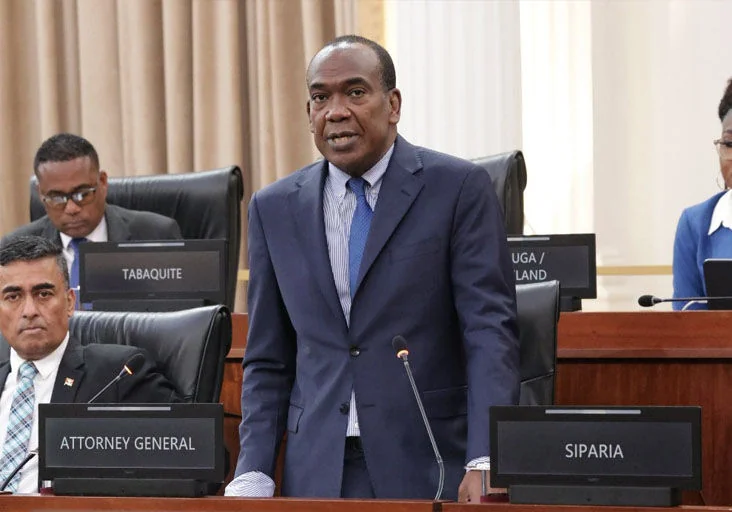
Attorney General John Jeremie has explicitly rejected requests from the Trinidad and Tobago Scrap Iron Dealers Association for urgent consultative meetings, which association president Allan Ferguson submitted directly to both the Prime Minister and Jeremie in a bid to revise or delay the proposed ban. Jeremie confirmed that cross-ministerial working groups are already finalizing the full legislative framework that will be tabled before national lawmakers in the coming months to codify the export restriction into binding law.
Multiple senior cabinet ministers have echoed the Attorney General’s firm stance, framing the unprecedented measure as a last-resort intervention after years of incremental policies failed to curb systemic criminal activity tied to the unregulated scrap trade. Public Utilities Minister Barry Padarath laid out stark financial and public welfare data to justify the policy, noting that over the past 18 months alone, more than $30 million in critical state assets have been vandalized, stolen, or completely destroyed by metal thieves targeting public infrastructure. The widespread theft of copper cables belonging to national telecommunications provider TSTT, and repeated attacks on Water and Sewerage Authority (WASA) facilities, have left thousands of households across communities without reliable access to clean water and telecommunications services, draining limited public funds that would otherwise be allocated to community development projects. Padarath noted that the recently vandalized Tabaquite Booster Station was only restored to full operational status shortly before his public remarks, following costly emergency repairs. “Serious times call for serious measures,” Padarath emphasized, pointing out that previous interventions including temporary export moratoriums, incremental legislative tweaks, and expanded security patrols had all failed to curb the criminal activity. “We cannot keep repeating the same outdated approaches and expect different outcomes. This ban will give our nation the space to recalibrate, reset our regulatory frameworks, and force a long-overdue culture shift in the sector, even if that means delivering a shock to break the cycle of illegal exploitation.”
Minister of Homeland Security Roger Alexander also voiced full unreserved support for the Prime Minister’s decisive policy, describing the previously unregulated scrap metal sector as a “runaway horse” that had evaded proper oversight for decades. Alexander acknowledged that many members of the public were calling for full transparency on the intelligence underpinning the drastic policy, but explained that sensitive details related to active criminal investigations could not be disclosed publicly to avoid compromising ongoing law enforcement operations. He added that a large share of the industry’s commercial operators were complicit in the illicit trade, knowingly purchasing stolen state assets and directly incentivizing widespread pilferage. With national police resources already stretched thin across multiple active anti-crime priorities, the government is simultaneously accelerating new police officer recruitment drives and expanding frontline patrol presence to tackle all forms of criminality, including the metal theft rings that have long financed gang activity, drug trafficking networks, and large-scale money laundering operations across the country.
Govt stands firm on ban