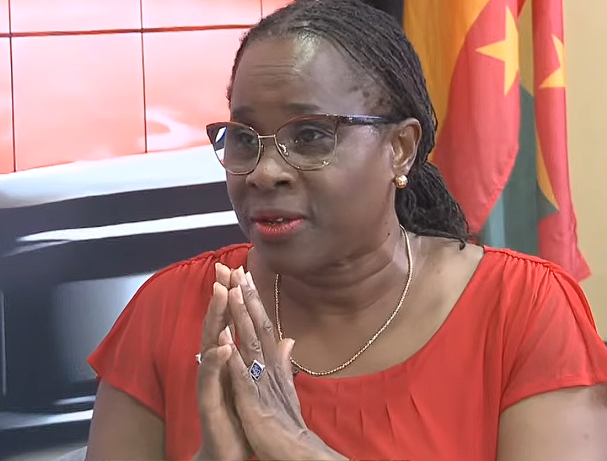
Newly appointed Grenadian Minister for Local Government, Constituency Affairs and Community Development Claudette Joseph has announced the administration’s formal plan to revisit long-dormant 1995 local government legislation, as part of a broader push to transfer greater decision-making authority to grassroots communities and reduce administrative strain on the central national government. Speaking during the ruling National Democratic Congress (NDC)’s weekly NDC Heartbeat broadcast, Joseph emphasized that the initiative is not starting from a blank slate, noting that Grenada operated a robust local governance system with elected district councils and community boards prior to these structures being formally dissolved in 1969. The 1995 legislative framework, which was passed under the Sir Nicholas Brathwaite-led first NDC administration shortly before it left office, never moved to implementation despite remaining formally on the country’s statute books. This existing body of law includes the District Councils Act and the Carriacou and Petite Martinique County Council Act, while Section 107 of Grenada’s national Constitution explicitly enshrines a legal requirement for a dedicated local governing council for the two southern sister isles. Joseph, who previously served as Attorney General, noted that significant preliminary drafting work for the Carriacou and Petite Martinique local government framework was already completed during her earlier tenure, in partnership with the island affairs ministry and the national Attorney General’s office. She criticized successive prior administrations for failing to act on this constitutional mandate, arguing that decades of inaction have left the government in formal non-compliance with the country’s founding legal document. Under the government’s current roadmap, officials will conduct a full audit of the 1995 laws to assess whether they can be updated and modernized to fit 21st century community needs, or if a fully new legislative framework is required, with Joseph noting she expects the existing text will form the foundation rather than being scrapped entirely. The decision to cluster local government, constituency affairs and community development under a single unified ministerial portfolio is intentional, Joseph explained, as the three policy areas are deeply interconnected. Once established, the new local governance bodies will be tasked with overseeing small, hyper-local development projects spanning not just community infrastructure, but also cultural programming, local sports initiatives, elderly support services, livelihood enhancement schemes and other people-focused activities. This structure will allow residents to directly identify their own community priorities and oversee project delivery, rather than waiting for central government approval for every small-scale initiative. The reform is designed to boost community ownership of local development outcomes while freeing up central government resources and administrative capacity to focus on large-scale national planning and major infrastructure rollouts. While no formal implementation timeline has been released, the proposal marks the most concrete step forward for a local government system that has been a recurring item on Grenada’s policy agenda for more than 50 years. Key outstanding questions to be addressed during the legislative review process include the exact scope of decision-making powers for district councils, sustainable funding mechanisms for local bodies, minimum administrative capacity requirements for elected local representatives, and formal protocols for coordination between local councils and central government agencies.