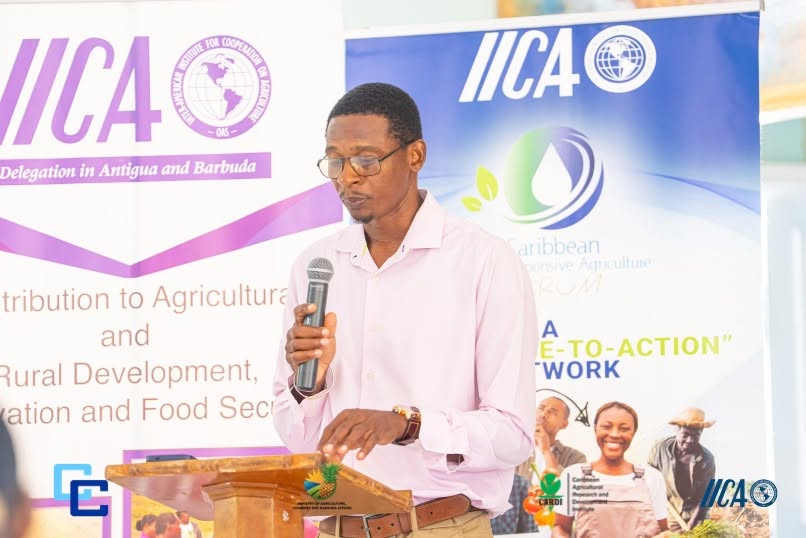
Antigua and Barbuda has locked in November 19 as the official date for a full-scale cross-agency disaster response simulation, a targeted initiative designed to cut critical delays in delivering high-quality seeds and core planting supplies to smallholder farmers in the immediate aftermath of hurricanes, floods, and other increasingly frequent extreme weather events that have battered Caribbean agricultural systems in recent years. The drill forms the centerpiece of a week-long structured training and capacity-building program tied to two landmark national projects: the newly established Mobile Seed Bank and the Agri-First Responders task force, both developed to shore up food security in the twin-island nation. Coordinated by the Inter-American Institute for Cooperation on Agriculture (IICA), the lead organizing body, the pre-drill schedule allocates three consecutive days of hands-on drone operation training for technical field staff, equipping teams to conduct rapid aerial damage assessments of farmland, identify accessible routes to isolated rural communities, and map unmet supply needs even when roads and communications infrastructure are knocked out by severe storms. Immediately following the November 19 simulation, a formal official handover ceremony transferring full operational control of the Mobile Seed Bank to Antigua and Barbuda’s Ministry of Agriculture is slated for November 20, paired with certified first aid and cardiopulmonary resuscitation (CPR) training for all frontline Agri-First Responders personnel to ensure teams can operate safely in high-risk post-disaster zones. The collaborative multi-stakeholder effort unites IICA, the Antigua and Barbuda Ministry of Agriculture, the Caribbean Agricultural Research and Development Institute (CARDI), and a network of local community partners to streamline end-to-end supply chain coordination for seeds, resilient planting materials, and critical agricultural support kits in the wake of climate-fueled disasters. Nationwide data shows that total or partial destruction of farm fields and widespread loss of stored planting supplies after major extreme weather events often delay subsequent planting cycles by weeks or even months, eroding farmer livelihoods and creating dangerous gaps in local food self-sufficiency. The preparedness framework being piloted in Antigua and Barbuda will also be replicated in Dominica, where the same partner coalition is rolling out parallel upgrades to national agricultural disaster response systems to build regional resilience against accelerating climate hazards. IICA’s public announcement of the Antigua and Barbuda activity timeline noted that the November 19 drill and November 20 handover are upcoming scheduled events, and no post-event outcomes, performance metrics, or official confirmation of completed activities were included in the released documentation.
Antigua and Barbuda plans disaster drill to test how farmers get help after storms