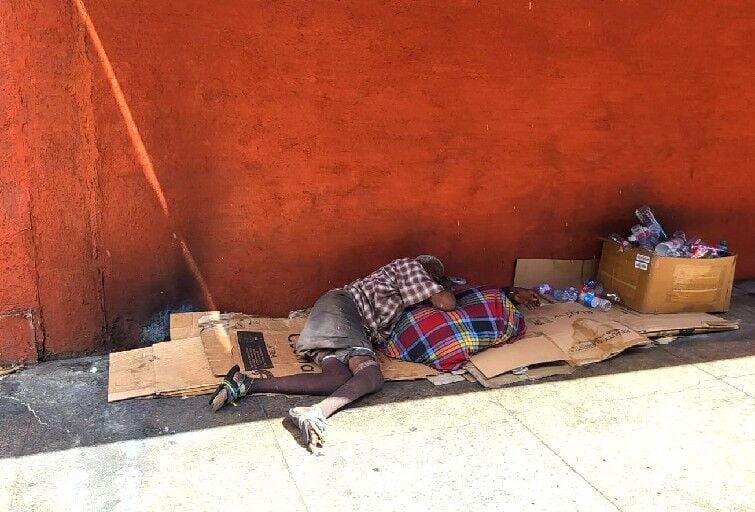
During a Thursday interview with local broadcaster CCN TV6, San Fernando Mayor Robert Parris laid out a pressing set of concerns over the city’s rapidly expanding unhoused population, pointing to uncoordinated, repeated food distribution by local charitable groups and private residents as a primary driver of the crisis. Parris explained that unhoused individuals congregating at the high-traffic Harris Promenade public space are now receiving as many as six separate meal servings each day, a dynamic he argues has drawn transient vagrant populations from surrounding regions to the city, while also attracting non-unhoused people to loiter in the area to access free food. The mayor noted that a 2023 census conducted by the national Ministry of Social Development previously counted approximately 200 unhoused people across San Fernando, but current numbers are growing at an exponential rate far outpacing earlier projections. Unregulated concentration of unhoused residents in the promenade area has created tangible strains on municipal resources, Parris emphasized, noting that city funds reserved for taxpayer-funded public upkeep are now being diverted to repair vandalized public assets including a historic bandstand, and to deploy extra casual sanitation staff to clear accumulations of human waste and debris left in the high-foot-traffic public space. Parris’ public call for action was spurred by an early-morning news report of a fatal assault in nearby Marabella, where an unhoused individual allegedly attacked and killed a local resident. The mayor framed the violent incident as a urgent wake-up call for national policymakers, noting that he first flagged the systemic risks of unaddressed homelessness more than a year prior, but no formal national regulatory framework for unhoused support has been implemented to date. Parris is now calling on the central government to prioritize the issue as a time-sensitive public safety and livelihood priority, and has offered to collaborate directly with national officials to share local on-the-ground data and align intervention strategies. He is also issuing a formal request to local nonprofits and private residents to halt direct, uncoordinated food distribution on Harris Promenade, and instead redirect their food donations to registered community residential support facilities, where city administrators can implement a structured, unified support system that avoids drawing additional transient populations to the city, while also tracking and connecting unhoused individuals to housing, mental health services, and employment training to facilitate their long-term reintegration into mainstream society.