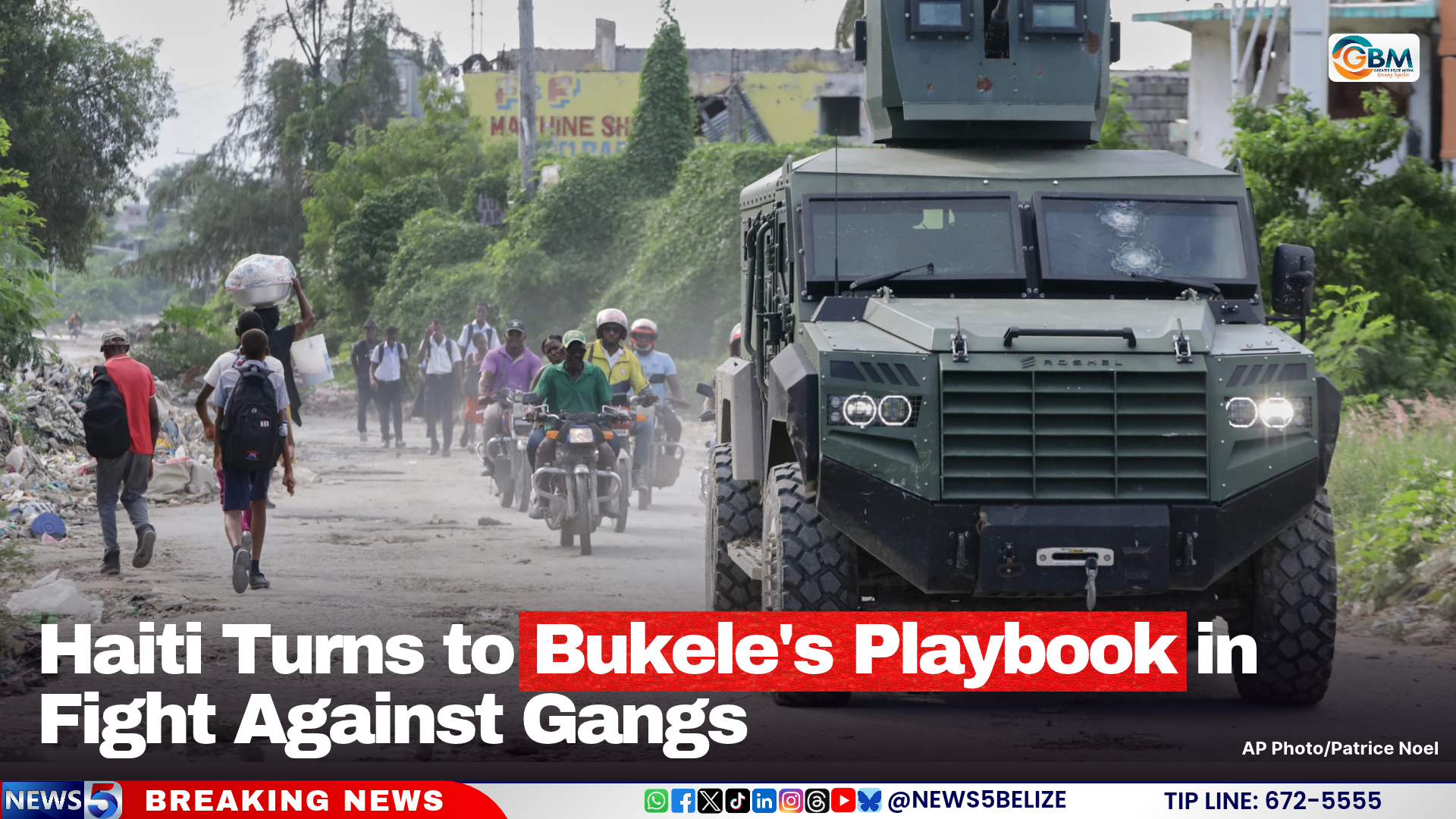
Port-au-Prince, Haiti – November 21, 2026: Amid a years-long, escalating gang crisis that has paralyzed large swathes of its national territory, Haiti has formalized a landmark security partnership with El Salvador to replicate the hardline anti-crime strategy that made Salvadoran President Nayib Bukele a globally polarizing figure. The core of the newly announced deal, unveiled by Haitian Minister of Justice and Public Security Patrick Pélissier after a recent official diplomatic trip to San Salvador, lays out plans for three new purpose-built correctional facilities to be constructed via a joint venture between a Salvadoran construction firm and a local Haitian contractor, with groundwork on the first facility slated to launch imminently. During his visit, Pélissier toured CECOT, El Salvador’s infamous 40,000-inmate maximum-security prison purpose-built to hold alleged gang members, and publicly lauded the facility’s near-total isolation of detainees, noting that for anyone confined there, “once you enter, there is no hope of ever seeing the outside world again.” The agreement arrives as Haiti’s domestic corrections system remains in a state of near-collapse, two years after coordinated armed gang raids on two of the country’s largest prisons in 2024 freed thousands of hardened inmates and left remaining detention sites drastically overcrowded and under-resourced. The deepening bilateral security collaboration comes alongside an active deployment of more than 2,000 Salvadoran troops to Haiti, ordered by Bukele roughly one month prior after four Salvadoran personnel attached to a UN-backed peace mission went missing following an October 18 gang attack. This week, El Salvador’s Ministry of Armed Forces confirmed three of its deployed soldiers were killed while conducting explosive ordnance disposal operations on Haitian soil, with a fourth injured service member listed in stable, non-life-threatening condition. The Salvadoran deployment operates as a distinct, independent unit separate from the UN-authorized Gang Suppression Force, the multinational mission formally mandated to dismantle armed gang networks, protect critical public infrastructure, and clear access routes for life-saving humanitarian aid in coordination with Haitian state authorities. Parallel to these developments, officials in Belize have confirmed they are conducting a formal policy review of Bukele’s controversial zero-tolerance anti-gang framework, to evaluate whether similar measures could be adapted to address their own rising domestic violent crime rates.