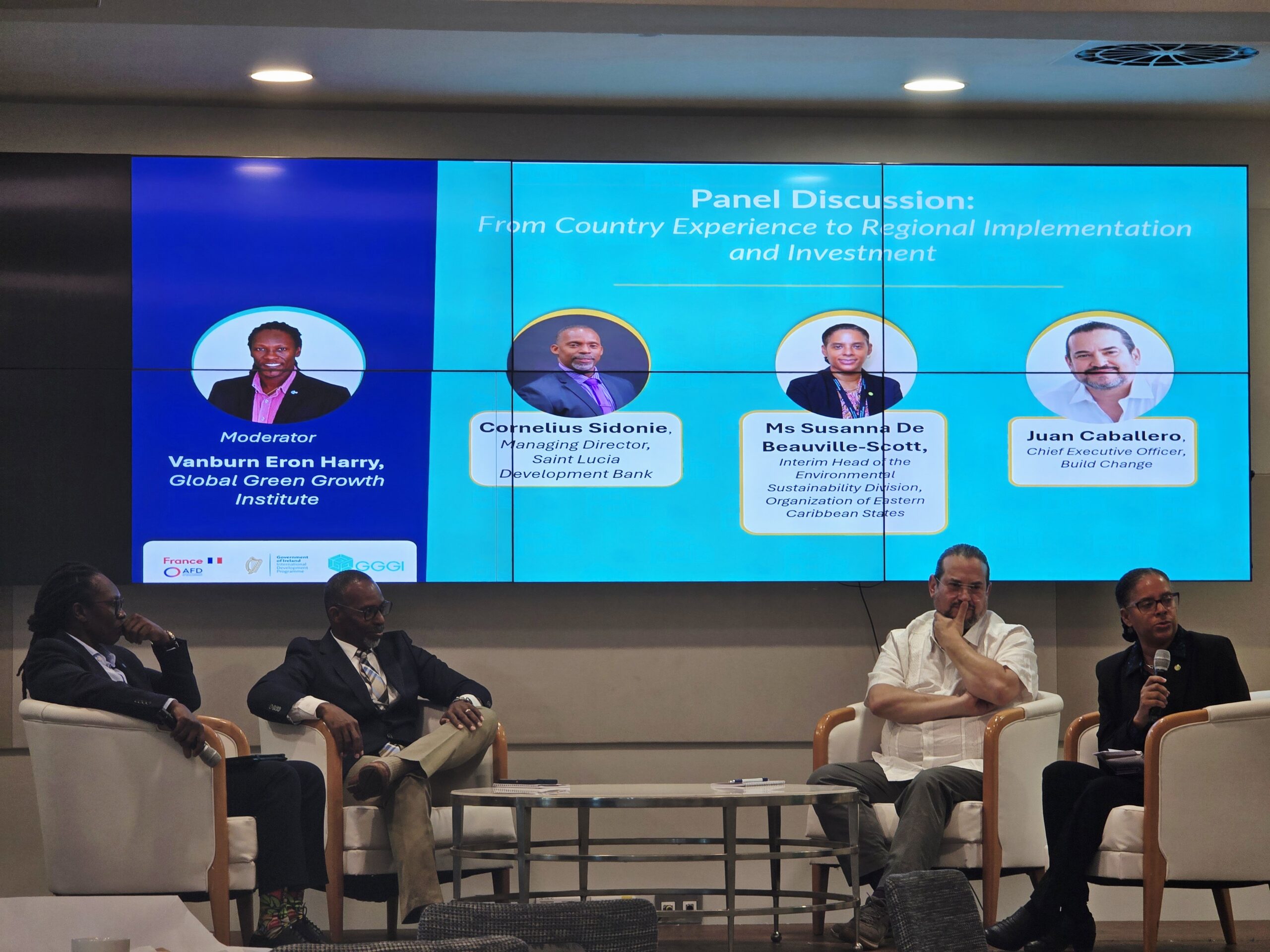
Across the Eastern Caribbean, from Saint Lucia to its neighboring small island states, securing safe, affordable home ownership has evolved into a cascading, multi-faceted crisis that threatens household stability and long-term community resilience. Construction costs have surged in recent years, driven in large part by global supply chain disruptions and import bottlenecks tied to ongoing geopolitical conflicts, while available developable land grows increasingly scarce and prohibitively priced. Compounding these economic strains, intensifying tropical cyclones and extreme weather events amplified by climate change repeatedly lay waste to residential infrastructure, leaving thousands displaced after each major storm. Local 2022 census data for Saint Lucia shows that 65.7% of households currently own their homes, but that milestone is rapidly slipping out of reach for younger and low-income residents: the island’s monthly minimum wage sits at just $1,131, while even basic one-bedroom rental units routinely list for rates well above that threshold. The scale of climate-related housing damage underscores the urgency of the crisis: in the aftermath of 2024’s Hurricane Beryl, the Organisation of Eastern Caribbean States (OECS) confirmed 60% of homes in Grenada’s Carriacou were damaged or destroyed, and 90% of residences on Saint Vincent and the Grenadines’ Union Island sustained severe damage or total loss. To address these overlapping shared challenges, the Global Green Growth Institute (GGGI) hosted a landmark regional symposium at Saint Lucia’s Harbor Club on November 17, 2026, convening a cross-sector cohort of stakeholders including housing ministry officials from across the Eastern Caribbean, licensed architects, construction industry leaders, financial institution representatives, international development funders, and OECS leadership. Delegates from Saint Lucia, Grenada, Saint Vincent and the Grenadines, Honduras and France joined the closed-door discussions, centering collective regional collaboration as the most viable path forward rather than isolated national action. A core set of actionable, targeted solutions emerged from the day’s deliberations. First, OECS Interim Head of the Environmental Sustainability Division Susanna De Beauville-Scott proposed a regional pooled procurement framework for construction materials, which would allow participating nations to combine bulk orders to secure far greater bargaining power with global suppliers, driving down material costs far below what individual islands could negotiate independently. Second, Cornelius Sidonie, Managing Director of the Saint Lucia Development Bank, advocated for the rollout of dedicated home ownership readiness centers across the sub-region: these specialized facilities would provide early, accessible financial literacy and long-term planning support to residents, many of whom currently lack clear guidance on the steps required to qualify for a mortgage and purchase a home. Third, GGGI consultant Colin John Jenkins presented a forthcoming unified regional resilient housing guideline, designed to create a shared, standardized definition of “climate-resilient residential construction” that eliminates the current ambiguity faced by homebuyers, builders and regulators. OECS Director General Didacus Jules emphasized that the framework would not impose a one-size-fits-all building design, but instead set universal minimum resilience criteria that could be adapted to local contexts, with member states sharing technical expertise and successful design models across borders. Delegates also noted that streamlining redundant bureaucratic approval processes for resilient housing construction would be critical to delivering new, affordable units to low-income households quickly, with targeted subsidies where needed to ensure homes can withstand increasingly severe storm events. The symposium forms a key milestone in GGGI’s ongoing Scaling-up Resilient Green Affordable Housing project (CAR027), which builds on the successful Balata pilot initiative in Saint Lucia’s capital Castries to roll out standardized climate-resilient housing norms and accessible financing mechanisms across Saint Lucia, Grenada and Saint Vincent and the Grenadines. Supported by funding from Agence Française de Développement (AFD) and the Irish Government’s Department of Foreign Affairs and Trade, the initiative aligns with GGGI’s core mandate to support partner nations in transitioning to low-carbon, environmentally sustainable and socially inclusive economic systems. As Saint Vincent and the Grenadines Permanent Secretary for Housing Dornette Hull noted, the small island states of the Eastern Caribbean share far more common ground than divides them: “We may have slight differences in our accents, but we face nearly identical constraints, including limited resources. Working in unison, we can deliver far higher quality, more resilient housing for our most vulnerable communities than any of us could accomplish alone.”
Building a storm-ready home is getting harder, here’s what housing officials want to change