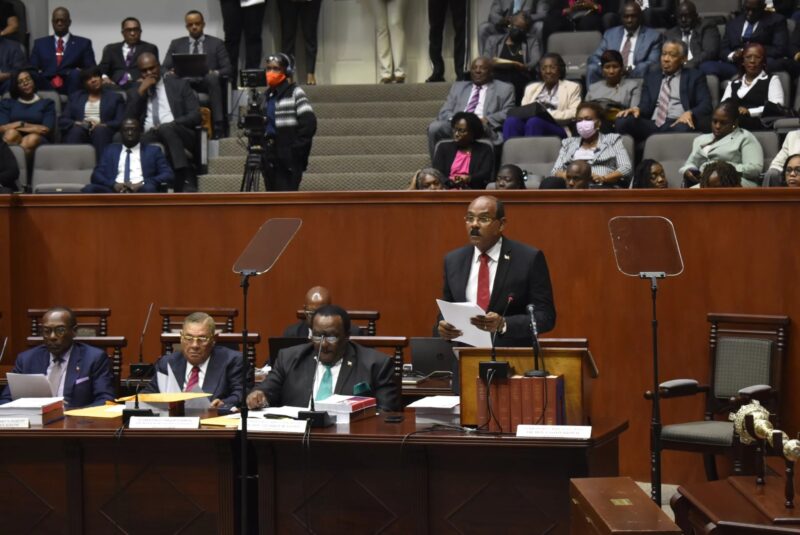
Antigua and Barbuda’s national legislative calendar for the final quarter of 2025 has been formalized, with Prime Minister and concurrently serving Finance Minister Gaston Browne set to table the country’s 2027 national budget before the House of Parliament on December 11. This landmark fiscal address will fall exactly seven days after Governor General Sir Rodney Williams delivers the annual Speech from the Throne on December 4, the traditional ceremonial opening of the parliamentary budget session that lays out the administration’s overarching policy priorities for the coming fiscal year.
The official timeline was publicly confirmed by Cabinet Secretary Maurice Merchant during a post-meeting press briefing on Wednesday, shortly after senior technical staff from the Ministry of Finance presented updated preliminary fiscal forecasts to the full Cabinet. At the time of the briefing, ministry officials confirmed that the 2027 budget drafting process remained in its final refinement phase, with preliminary resource allocation frameworks already circulated to all government ministries, statutory bodies and public departments for feedback and final adjustments.
A core stated policy anchor for the upcoming 2027 fiscal framework is the administration’s explicit goal of delivering a positive fiscal surplus, a milestone that would extend the country’s recent track record of prudent macroeconomic management. Preliminary revenue forecasts shared with Cabinet peg total projected government receipts in a range between $1.4 billion and $1.5 billion, with finance officials expressing confidence that baseline revenue collections will at minimum match the full-year 2026 performance. Administration fiscal advisors added that ongoing rollouts of enhanced tax compliance measures and modernized digital revenue collection infrastructure could push final 2027 intake above initial baseline projections, creating additional fiscal headroom for priority investments.
On the expenditure side, the government has committed to keeping core recurrent operating spending aligned as closely as possible to 2026 approved levels, to avoid unnecessary expansion of recurring fiscal obligations. The only planned notable uptick in total outlays will be earmarked for capital development projects, as a pipeline of externally funded initiatives moves into active implementation. These priority projects include major expansion and upgrade works at the University of the West Indies Five Islands Campus and the adjacent Five Islands Primary School, funded via a concessional financing agreement with the Saudi Fund for Development, alongside a separate portfolio of education infrastructure upgrades and regional road improvement schemes supported by the Caribbean Development Bank.