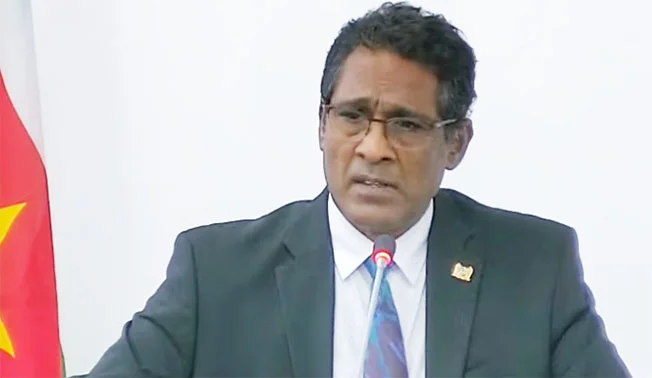
During a parliamentary debate in Suriname’s National Assembly (DNA) on November 18, VHP representative Dew Sharman laid out an urgent, pragmatic case for ratifying a bilateral anti-drug agreement with the United States, even as he openly acknowledged significant legal and political caveats tied to the pact. The deal, first signed in October 2024, has been held up in legislative review amid widespread public and lawmaker concerns that its provisions could erode Suriname’s national sovereignty and independent decision-making authority. Sharman, a member of the assembly’s rapporteur committee for the treaty, emphasized that delaying action for years to resolve every minor legal imperfection would pose a far greater threat to national security than the targeted risks of partnering with U.S. counter-narcotics agencies. He cited unconfirmed but alarming on-the-ground intelligence that an average of four to five illicit drug airdrops take place across Suriname’s remote interior every day, with frequent unauthorized incursions of the country’s airspace by unregistered aircraft linked to transnational criminal networks. Sharman noted that large swathes of the nation’s inland territory are already operating with almost no oversight from central government authorities, as heavily armed foreign criminal syndicates have established de facto control over remote regions that Suriname’s underfunded, understaffed security forces cannot currently patrol. He referenced public statements from the Surinamese Minister of Defense and the armed forces commander confirming that local security agencies lack sufficient personnel, radar equipment, aircraft, and logistical capacity to intercept illegal flights or disrupt drug trafficking operations in the hinterland. Even as he pushed for swift legislative approval, Sharman detailed a long list of problematic clauses in the existing agreement that require follow-up diplomatic negotiations with Washington. These include a provision that bars Suriname from sharing any intelligence collected via U.S. support with third parties without prior explicit approval from the U.S. Embassy in Paramaribo, a clause that gives the U.S. government full unilateral authority to suspend or terminate all counter-narcotics assistance at any time, and ambiguous language that fails to clarify lines of command during interception operations, rules for the use of lethal force, and liability protocols in the event of civilian casualties or property damage during operations. Sharman also called for explicit written confirmation from the U.S. that the agreement does not open the door for the establishment of a permanent U.S. military base on Surinamese soil to coordinate counter-drug operations. He clarified that the existing signed text cannot be unilaterally amended by Suriname’s parliament, and recommended that the government negotiate supplementary protocols or formal diplomatic note exchanges to address all sovereignty risks after the core agreement enters into force. Rejecting calls for a dogmatic, all-or-nothing stance that would reject U.S. support entirely, Sharman argued that true national sovereignty is already being violated by drug cartels that operate with impunity across Suriname’s territory, and that pragmatic, urgent action to restore state control over the entire country is the highest priority for national interest.
Sharman: Drugscriminaliteit in binnenland te ernstig om Amerikaanse hulp uit te stellen