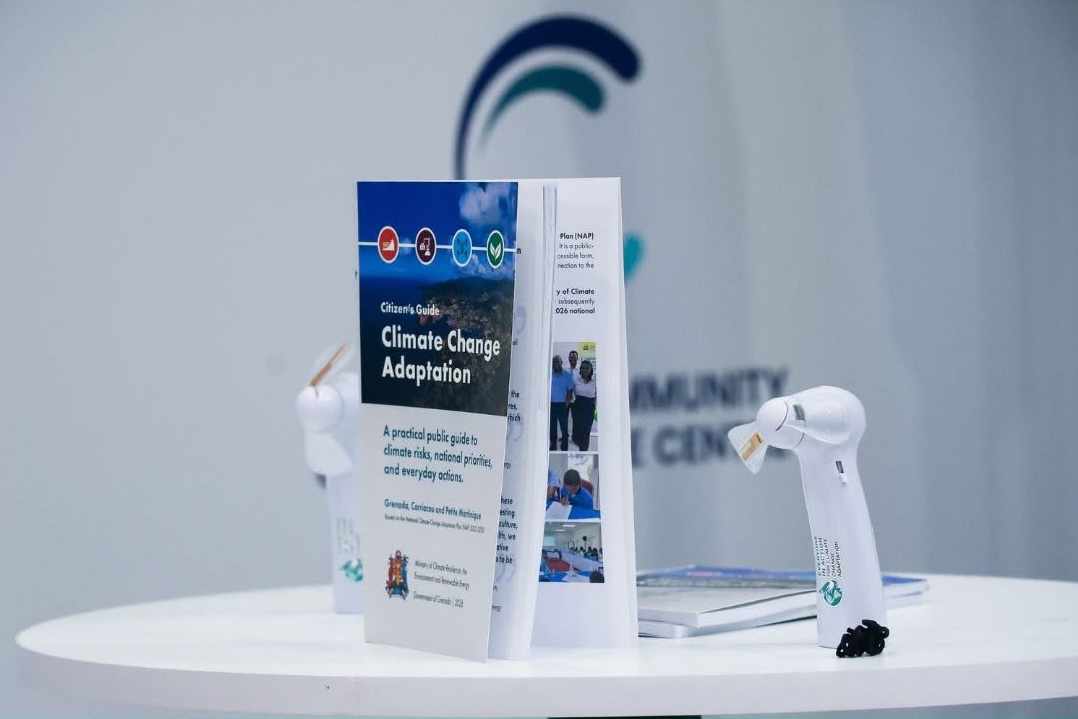
At the 31st United Nations Climate Change Conference (COP31) hosted in Türkiye, the Caribbean island nation of Grenada formally launched its 90-page Citizen’s Guide to Climate Change Adaptation during a ceremony at the CARICOM Pavilion on November 17. Led and principally authored by Dr. Roxanne Graham-Victor, the country’s National Climate Change Adaptation Officer, the resource was developed after extensive multi-stakeholder consultation, iterative drafting, and formal validation processes, designed explicitly to move beyond dense national policy jargon to deliver actionable, easy-to-follow guidance for residents across Grenada, Carriacou, and Petite Martinique. Tailored for individual households, small business operators, school administrations, and local community groups, the guide outlines concrete, daily steps to cut climate vulnerability: from household water conservation and structural retrofits to reinforce residential buildings against extreme winds, to safeguarding natural coastal mangrove and coral barriers, and rolling out community-level early response protocols for severe weather events. These targeted measures directly address the island’s most pressing climate pain points, from rain-dependent smallholder farming operations, to widespread seasonal water supply shortages, and high-risk coastal settlements including Gouyave and Soubise that face accelerating threats from tropical storms and sea level rise. The launch builds on nearly a decade of structured national adaptation planning in Grenada, which first launched its formal National Adaptation Plan (NAP) process in 2015, securing cabinet approval for its inaugural national climate adaptation strategy in November 2017 following consultations with over 160 cross-sector stakeholders. The newly updated 2025–2030 revised NAP lays out 14 interconnected action programmes, with a total estimated implementation price tag of $572 million USD. The urgency of these investments is underscored by Grenada’s devastating history of extreme weather events: successive major hurricanes Ivan in 2004, Emily in 2005, and most recently Hurricane Beryl which struck on July 1, 2024, inflicted catastrophic damage. A World Bank post-disaster assessment calculated direct economic losses from Beryl alone at $218 million USD, equivalent to 16.5% of Grenada’s total 2023 gross domestic product, wiping out farmer harvests and replanting capital, destroying fishing vessels and gear that sustained coastal livelihoods, and leaving thousands of households with unplanned, crippling repair costs. Parallel to the COP31 announcement, regional stakeholders gathered at Grenada’s Coyaba Beach Resort on November 11-12 for the Third Regional Workshop of the Multi-Actor Partnership on Climate and Disaster Risk Finance and Insurance, hosted by the Caribbean Policy Development Centre (CPDC). The forum convened government officials, civil society leaders, academic researchers, and private sector representatives to design improved financial protection frameworks for climate-related disasters. CPDC Executive Director Richard Jones presented new survey data showing 79% of civil society organisations serving marginalized, vulnerable populations across five Caribbean nations hold no dedicated budget lines for post-disaster recovery, leaving frontline support groups as exposed to climate shocks as the communities they serve. Grenada’s National Disaster Coordinator Dr. Terence Walters emphasized that effective disaster risk reduction cannot rely solely on top-down government action: while natural hazards are unavoidable, collective public behavior, access to clear, timely information, and willingness to act on early warning alerts are the most critical factors that prevent a hazard from escalating into a full-scale humanitarian disaster. The newly launched citizen guide is intentionally structured to democratize that critical preparedness information, recognizing that national policy and government programmes can only deliver full resilience when paired with proactive, coordinated action from ordinary residents, local businesses, and neighborhood community groups. The full public-facing Citizen’s Guide to Climate Change Adaptation is now freely accessible to all via the Government of Grenada’s official Climate Resilience Portal.