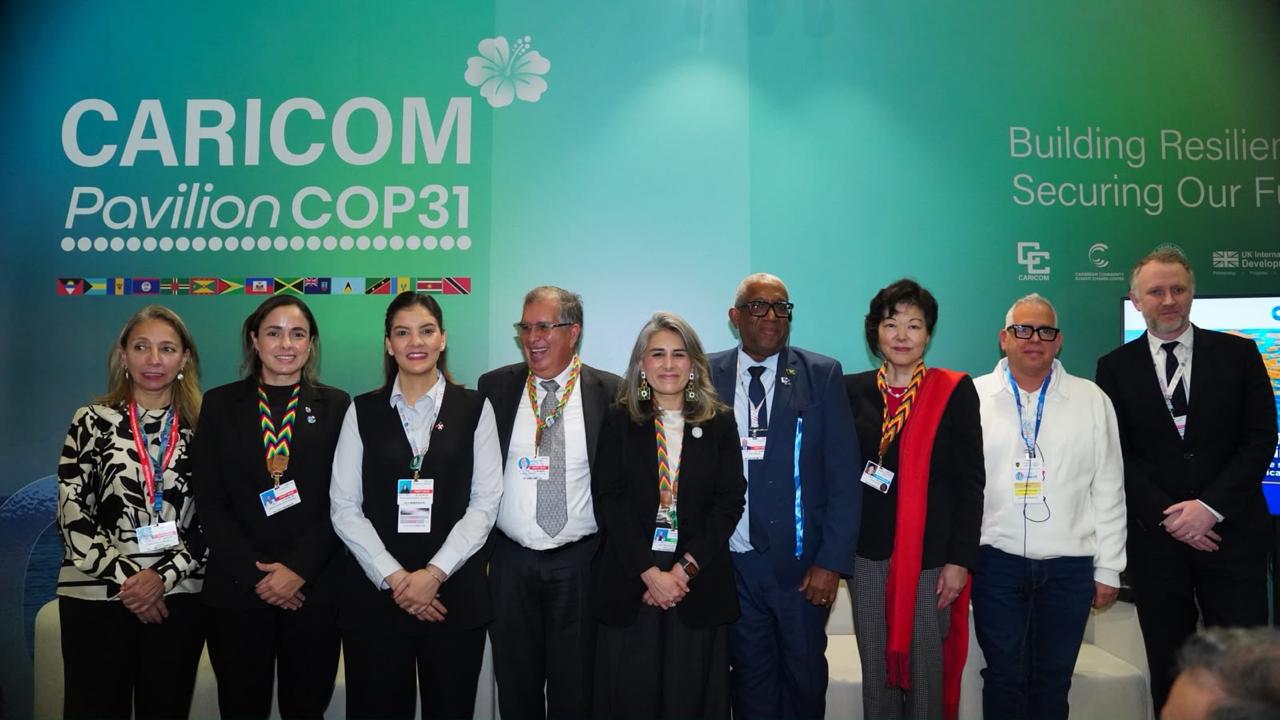
A landmark cross-border environmental project dubbed SargMarine was formally unveiled at the 31st UN Climate Change Conference (COP31) by CAF, the Development Bank of Latin America and the Caribbean, in partnership with the Global Environment Facility (GEF), with official backing from the governments of Mexico and France. Backed by a US$10 million grant from the GEF, the program is designed to mitigate the devastating, widespread impacts of massive sargassum seaweed blooms that have overwhelmed marine and coastal ecosystems, crippled tourism and fishing industries, and disrupted livelihoods for coastal communities spanning the entire Greater Caribbean region. The initiative has already locked in an additional US$67.3 million in co-financing commitments, creating a total pooled budget of nearly US$77.3 million to deliver on its targeted outcomes. CAF will oversee overall implementation of SargMarine, the Organization of American States (OAS) will lead on on-the-ground execution across participating nations, and the Inter-American Institute for Global Change Research (IAI) will serve as the core technical partner providing cutting-edge scientific expertise. The core objectives of the program include building a unified regional information sharing platform, bolstering national capacities to forecast, prepare for, and respond to sudden sargassum influxes, and developing economically viable productive use cases for collected sargassum that can unlock new revenue streams for local coastal economies. Lina Mondragón, CAF’s Manager for Climate Action and Positive Biodiversity, emphasized the critical gap the project is designed to fill: “Sargassum is an inherently transboundary ecological phenomenon, but almost all current mitigation efforts remain siloed at the national level. To break down this fragmentation, we must leverage existing regional institutional capacities, strengthen pre-existing collaborative frameworks, and forge binding shared agreements that enable coordinated, large-scale joint action.” The unprecedented scale of the sargassum crisis makes this integration of scientific data, public policy design, and targeted public and private investment an urgent necessity. Data from the United Nations Environment Programme confirms that a record 37.5 million tonnes of sargassum was documented across the Atlantic Ocean in May 2025, marking the highest volume ever recorded since systematic monitoring of the macroalgae began in 2011. These massive, rotting seaweed accumulations are not only degrading fragile coastal ecosystems, but also dragging down local economic output in tourism-dependent coastal zones and creating growing public health risks for nearby residents. Chizuru Aoki, Manager of the GEF’s Conventions and Funds Division, confirmed that the entire SargMarine initiative has received full final institutional approval, clearing the path for immediate on-the-ground rollout. “This is not a theoretical plan any longer. We are fully prepared to launch tangible, action-focused interventions in affected communities right away,” Aoki noted. During the official COP31 launch event, Colombian Minister of Environment and Sustainable Development Fabio Arjona Hincapié stressed that isolated national solutions cannot address a crisis that crosses multiple national maritime borders. “Local, uncoordinated responses will never be sufficient on their own,” Arjona stated, underlining that joint regional action and strengthened collective negotiating power on the global stage are non-negotiable to curb the sargassum bloom crisis. Jamaica’s Special Envoy for Climate Change, Environment, Oceans and the Blue Economy Matthew Samuda highlighted that advancing regional sargassum monitoring and forecasting systems is a top program priority for his nation. “Our most pressing need is to accurately predict exactly when sargassum masses will arrive on our shores, and which stretches of coast will be most heavily impacted,” Samuda explained, adding that precise forecasting data will allow authorities to pre-deploy protection resources to high-risk zones, while also supporting long-term planning for sargassum circular economy projects that rely on consistent, predictable supplies of the raw seaweed material. Ana Emilia Pimentel, the Dominican Republic’s Vice Minister for Climate Change and Sustainability, emphasized that all SargMarine interventions must center the needs of frontline coastal communities alongside formal economic impact assessments. “This crisis cannot be addressed purely through technical or top-down policy solutions; we have to design every part of this work from the perspective of the ordinary people whose livelihoods are most directly affected,” Pimentel said. For small island and coastal Caribbean nations that have faced increasingly frequent and severe sargassum inundations over the past decade, the SargMarine initiative represents a long-awaited shift from fragmented national reactions to a unified, coordinated regional system for monitoring, preparedness, and collective response.