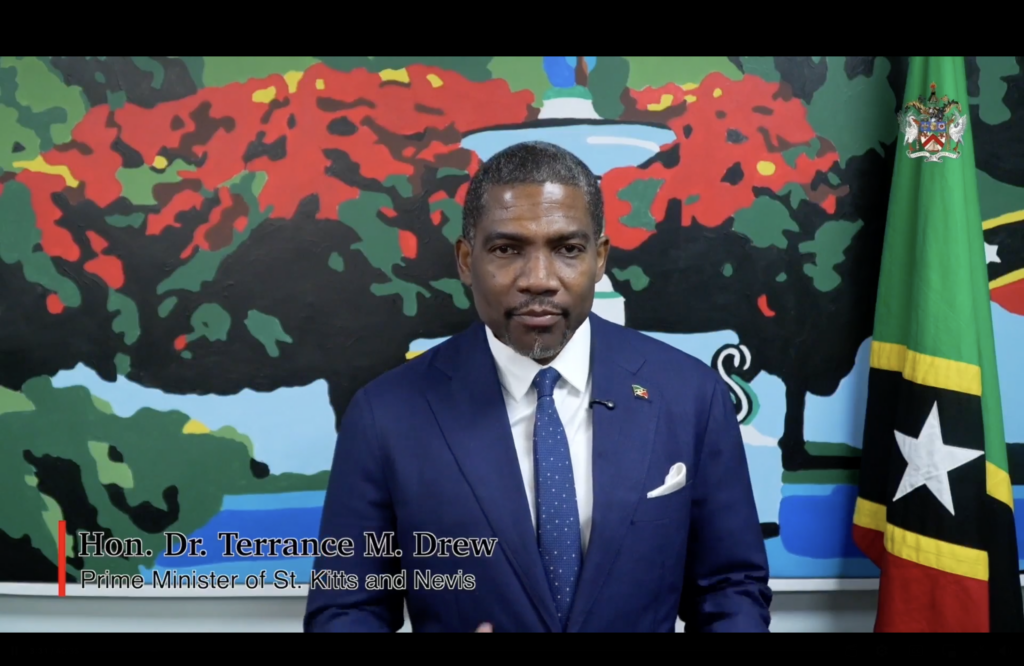
In a nationally televised address delivered on November 13, St. Kitts and Nevis Prime Minister Dr. Terrance Drew formally unveiled his administration’s landmark decision to gradually wind down the Caribbean nation’s decades-old Citizenship by Investment (CBI) programme, framing the move as a proactive step to preserve critical visa-free travel privileges and shield the country’s fragile international financial partnerships from disruptive regulatory action.
Drew confirmed that government representatives have already submitted formal notification of the policy shift to European Union authorities, and are currently engaged in talks to finalize a structured transition timeline, with no immediate hard cutoff for new applications set to take effect before a mutually agreed deadline is locked in with EU counterparts. He emphasized that he would publicly disclose the final date for accepting new CBI submissions as soon as negotiations with Brussels conclude.
The prime minister traced the origins of the policy shift to a formal correspondence received from the European Commission in June of this year, which laid out a clear expectation for St. Kitts and Nevis to phase out the CBI scheme over a defined transition window to maintain the twin-island nation’s unrestricted visa-free access to the EU’s 27-nation Schengen travel area.
Drew warned that refusing to align with the EU’s position would carry cascading risks far beyond revoked travel privileges, threatening the core correspondent banking relationships that underpin all cross-border capital flows for the country. Those financial connections, he noted, are the backbone of the nation’s $1 billion tourism sector, overseas remittance processing, and the ability to pay for critical imported food, fuel, and consumer goods that local supply chains cannot produce.
The prime minister moved immediately to reassure all individuals who have already completed the full, lawful process to acquire St. Kitts and Nevis citizenship via the CBI route that their legal status will remain fully unaltered by the phase-out, with no retroactive changes to their passport rights or residency entitlements.
To prevent unregulated last-minute activity during the transition period, Drew explicitly ruled out any temporary loosening of application vetting standards, promotional discounted rates, or so-called “fire sale” offers to rush through a surge of final submissions, noting the programme will operate under its existing strict due diligence protocols and independent regional oversight for all remaining pending cases.
All existing staff at the dedicated national CBI administrative unit will be redeployed to a new government foreign direct investment facilitation task force, leveraging their years of experience engaging with global high-net-worth investors to drive capital into new priority economic sectors.
Drew acknowledged the historic role of the CBI scheme, first launched in 1984 as the world’s first formal citizenship-for-investment programme, noting it had poured an estimated EC$6.5 billion into national coffers between 2008 and 2025, covering nearly 50% of all federal government cash receipts over that 17-year period, and had funded critical public infrastructure projects, affordable housing builds, and the country’s emergency COVID-19 pandemic response. At its peak in 2022, CBI revenue made up 70% of total government income, a share projected to drop to less than 20% by 2026 as the phase-out progresses. He noted that the heavy historic reliance on CBI revenue had left the small island state dangerously exposed to sudden shifts in international regulatory policy and fluctuating global investor demand.
The administration’s post-CBI economic diversification roadmap centers on five high-growth priority sectors: geothermal renewable energy, premium sustainable tourism, climate-resilient agriculture, cross-border digital services, and the local creative cultural economy. Key near-term infrastructure plans include drilling six new geothermal wells on Nevis, constructing a shared utility-scale geothermal power plant, and laying a subsea electricity interconnector to link the two islands’ power grids. Drew added that neighboring regional states Antigua and Barbuda and St. Martin have already expressed preliminary interest in purchasing excess clean geothermal power once the facility is operational, though no formal long-term supply contracts have been signed to date.
Negotiations are also ongoing with EU officials to secure targeted development grants to support the transition, including funding for the geothermal energy buildout, a second high-capacity undersea fibre-optic cable to boost digital connectivity, and upgrades to regional inter-island sea transport infrastructure. To prepare the local workforce for new jobs in these emerging sectors, the government will roll out expanded free technical vocational training programmes, targeted tertiary scholarships, and paid industry apprenticeship schemes for young residents.
Drew confirmed that the planned reduction in CBI-related revenue will require tight fiscal discipline across all government departments, but explicitly ruled out any plans to raise personal or corporate taxes to offset the gap, framing the transition as a growth-focused strategy rather than an austerity measure. “We will not balance our books by placing new burdens on the backs of our people,” he stated. “We will grow our economy to replace that revenue, and build a far more resilient, diversified national economy that can stand on its own for generations to come.”
BREAKING: St. Kitts and Nevis to wind down citizenship investment programme; closing date under negotiation