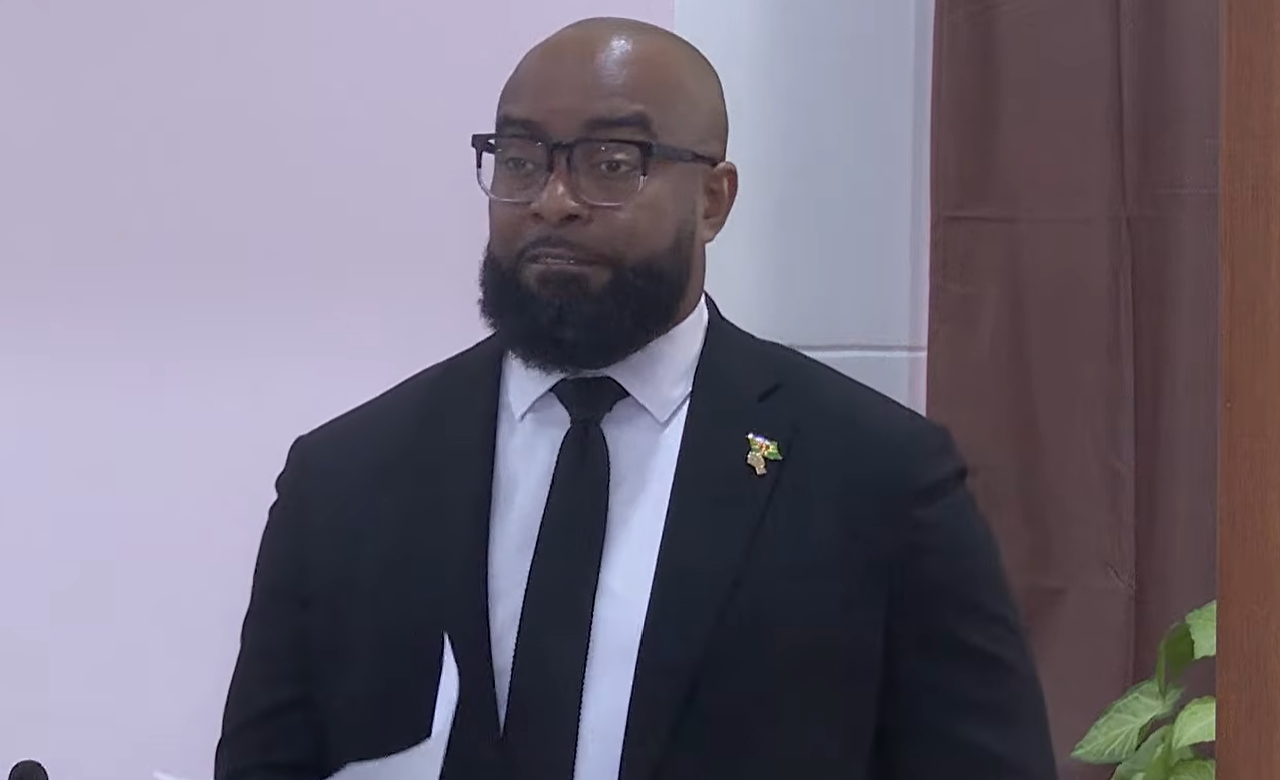
During a heated parliamentary debate this week, Dominica’s opposition Senator Delbert Paris sounded the alarm over systemic gaps in fiscal transparency, public fund accountability, and rigorous expenditure oversight tied to a pending supplementary appropriation bill that seeks legislative sign-off for a staggering $240.57 million in additional government spending. Paris emphasized that unwavering backing for national development priorities should never serve as a justification for rubber-stamping taxpayer-funded outlays without full, documented justification, particularly in cases where large sums are presented for parliamentary approval after the funds have already been disbursed. He drew a clear line between constructive support for public infrastructure and blanket approval of unexplained extra spending, noting that lax oversight of such supplementary allocations directly erodes the public’s trust in the integrity of the national budget. The most substantial segment of Paris’s critique centered on the ongoing construction of Dominica’s long-awaited international airport, a flagship national infrastructure initiative. He zeroed in on a proposed supplementary injection of $50.23 million for the project, which comes on top of the $310 million already formally earmarked for the airport under the 2025–2026 financial year budget. Crucially, Paris stressed his concerns are not intended to derail or discredit the high-priority airport project, which he has repeatedly endorsed as a critical economic catalyst for the island nation. Instead, he pressed the government to produce a full, itemized breakdown of the specific scope changes, cost overruns, or unforeseen project adjustments that justified the sudden $50 million top-up in just a six-month window, no formal details of which have been shared with legislators to date. Citing official government estimates, Paris laid out that cumulative spending on the airport to date, combining historical disbursements, current outlays, and revised interim allocations, has already hit roughly $1.18 billion, with combined historical and projected future costs on track to climb as high as $1.5 billion. He noted, however, that a large share of these figures are un-audited projections rather than verified, independently reviewed expenditure totals, and that the government has never publicly released a formal, currently approved fixed total project cost for the airport, forcing legislators and the public to rely on outdated, partial estimates from previous fiscal years. Paris also called out glaring inconsistencies in the project’s publicly communicated completion timeline, pointing to conflicting official government announcements that have variously targeted a 2027 finish, a second-quarter 2028 handover, and a first-phase completion in 2028, even as the lead developer’s official website still lists 2027 as the official completion date. He warned that the lack of a fixed, publicly shared project timeline signals poor project management that could trigger unplanned additional costs, further inflating the project’s final price tag. At the close of his address, Paris reaffirmed his full, unreserved support for the airport’s successful delivery and long-term operation, noting he is eager to see the facility become fully operational and open to international commercial air traffic to drive tourism, trade, and broader economic growth for Dominica.
Paris calls for clearer accounting on $240.57M spending bill and airport timeline