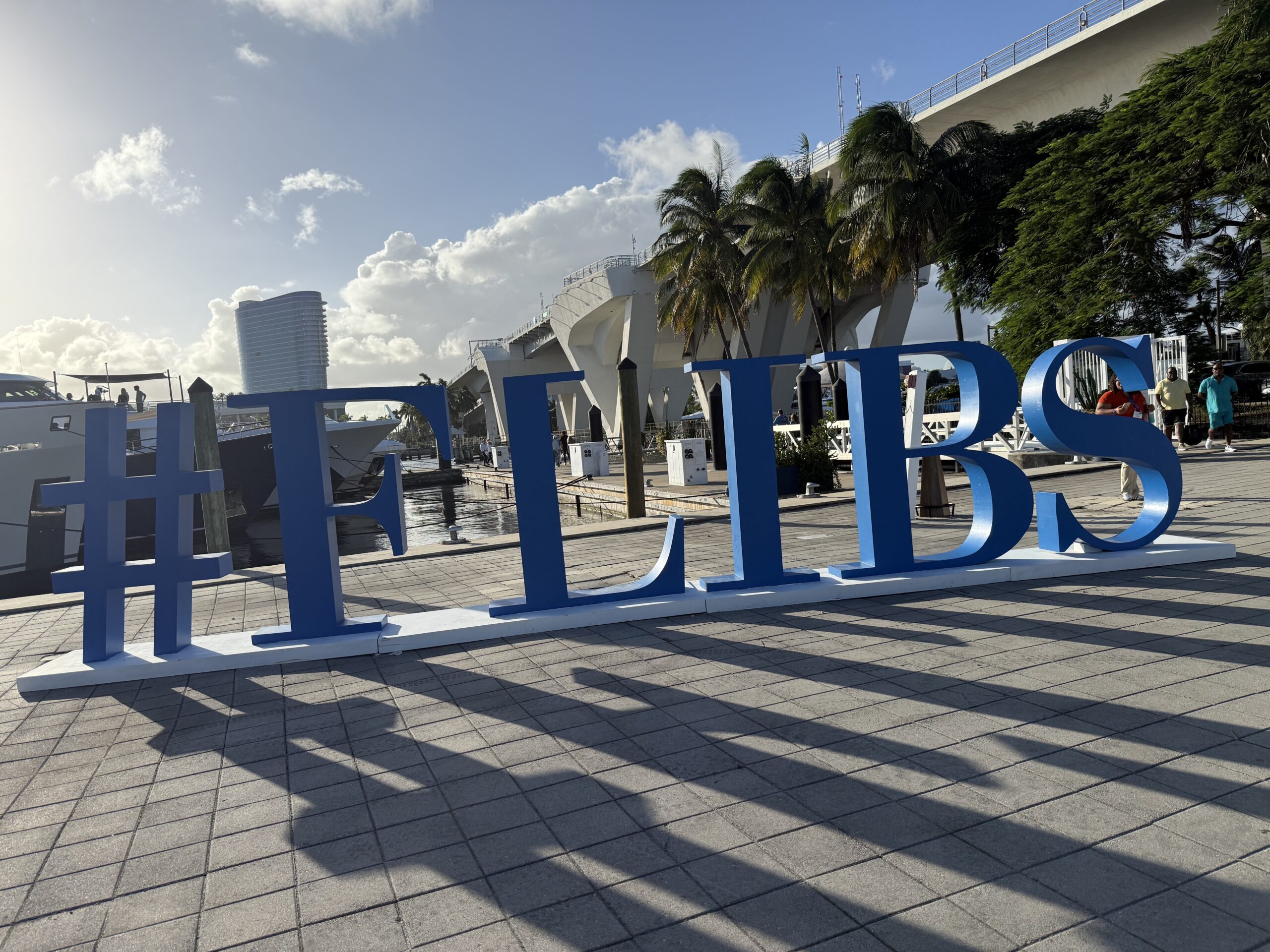
The Organisation of Eastern Caribbean States (OECS) Commission, operating under the World Bank-funded Unleashing the Blue Economy of the Caribbean (UBEC) initiative, has wrapped up a high-impact joint appearance at the 2026 Fort Lauderdale International Boat Show (FLIBS), held between October 28 and November 1, 2026 in Fort Lauderdale, Florida. For this landmark international industry event, tourism authorities from Grenada, St. Lucia, and St. Vincent and the Grenadines joined forces to market the three sovereign nations as a seamless, multi-stop yachting travel hub, highlighting the breadth of immersive marine tourism experiences available for visitors who plan a single, uninterrupted sailing itinerary across the southern Eastern Caribbean. Widely recognized as the world’s largest in-water boat exhibition, FLIBS draws unmatched industry visibility: the 2025 iteration hosted over 100,000 attendees, more than 1,000 exhibitors representing 52 national markets, and over 1,300 displayed vessels, cementing its status as a non-negotiable global gathering point for the yachting and recreational boating ecosystem.
Across the five-day run of the 2026 show, tourism representatives from the three nations operated in close coordination to highlight their distinct local assets while emphasizing the tangible advantages of bundling their destinations into a single curated Caribbean sailing journey. The collective showcase highlighted complementary, one-of-a-kind attractions across all three territories: Grenada’s postcard-perfect sheltered anchorages, vibrant local cultural heritage, and robust marine support service networks; St. Lucia’s world-famous twin Pitons geological landmarks, dramatic coastal vistas, and long-established, high-standard yachting infrastructure; and St. Vincent and the Grenadines’ sprawling, unspoiled archipelago, secluded turquoise bays, and globally celebrated island-hopping sailing routes. This coordinated promotional strategy allowed each jurisdiction to spotlight its unique competitive strengths while building a far more formidable regional market presence than any single country could achieve in isolation within the crowded global yachting tourism sector.
Maria Fowell, Senior Technical Specialist for Tourism at the OECS Commission, emphasized the strategic rationale behind framing the Eastern Caribbean as an interconnected, cohesive yachting market. “All three participating nations have identified yachting tourism as a high-priority growth vertical, and this collaborative model dramatically amplifies our collective brand exposure to the global boating and yachting industry,” Fowell noted. Beyond external marketing gains, the joint effort created structured opportunities for cross-authority knowledge sharing, deeper professional relationship building, and alignment on future cooperative frameworks to advance their shared long-term goal of growing sustainable marine tourism across the sub-region.
Beyond destination showcase activities, the three tourism teams leveraged FLIBS as a dedicated business development platform to hold face-to-face meetings with top-tier international yachting industry stakeholders, gather real-time market intelligence, and map out actionable future partnership pathways. Shanai St Bernard, Nautical Development Manager at the Grenada Tourism Authority, stressed the irreplaceable value of in-person engagement with yacht charter brokers and industry peers to capture emerging market trends and identify targeted improvements to boost Grenada’s global market standing. “The biggest advantage of a show like this is the chance to sit down one-on-one with brokers who represent some of the world’s largest yacht operating firms. We get unfiltered, direct insight into how Grenada is performing in the market, what adjustments we can make to improve our offerings, and how we can drive more visitor traffic to the southern Caribbean and directly to Grenada’s shores,” St Bernard explained. These direct stakeholder interactions delivered granular, actionable data on evolving industry trends, shifting visitor preferences, and the unmet needs of yacht charter operators, providing a robust evidence base to inform upcoming destination marketing campaigns and new tourism product development roadmaps.
Cassie-Anne Laidlow, Experience Development Officer with responsibility for Marine and Sailing at the St. Vincent and the Grenadines Tourism Authority, described the 2026 FLIBS participation as exceptionally productive, particularly for unlocking new cross-border and international collaboration opportunities. “This has been an incredible experience. We connected with long-time repeat visitors to our islands, met travelers who have upcoming trips booked, and sat down with some of the most influential decision-makers across the global yachting and sailing ecosystem. We have already pinpointed high-priority partnership pathways and new collaborative projects that we are eager to advance in the coming months,” Laidlow shared. These on-site conversations underscored the unique capacity of leading international boat shows to catalyze new commercial connections, lift global destination brand awareness, and accelerate the sustained, inclusive growth of the region’s marine tourism sector.
Denise Mauricette, Maritime Officer at the St. Lucia Tourism Authority, extended formal appreciation to the UBEC project team for their ongoing support, and reaffirmed the outsized impact of collective regional promotion. “I want to extend special thanks to the OECS, and specifically the World Bank-supported UBEC project, for consistently creating platforms that allow us to present a unified southern Caribbean travel experience. I have always believed that collaboration carries enormous power: by promoting not just St. Lucia, but our two fellow member states alongside us, we project a strong, united front that sends a clear message to global travelers that while these are three distinct destinations, we operate as one cohesive, accessible yachting region,” Mauricette stated. Her remarks highlighted the core role of regional integration in tourism outreach, and the ability of coordinated, joint marketing efforts to generate far greater international visibility for small island destinations that would otherwise struggle to compete with much larger global tourism markets.
A centerpiece of the OECS delegation’s 2026 FLIBS programming was a dedicated destination seminar, which gave representatives from Grenada, St. Lucia, and St. Vincent and the Grenadines a formal stage to walk the global boating community through their full suite of yachting and marine tourism offerings. Presentations covered the full scope of experiences available across the three nations, including state-of-the-art marina facilities, curated mapped sailing routes, sheltered anchorages, iconic coastal landmarks, guided marine excursion options, and authentic local cultural immersion activities. By framing each destination’s unique characteristics as complementary pieces of a broader, interconnected travel ecosystem, the seminar reinforced the Eastern Caribbean’s powerful value proposition as a seamless, multi-island yachting destination. The session also facilitated open, interactive dialogue with attending industry guests, allowing representatives to address targeted questions, distribute detailed destination resources, and stoke greater travel interest in the Eastern Caribbean. Paired with ongoing engagement at the delegation’s shared exhibition booth, the seminar substantially lifted the collective brand visibility of the three participating nations and created an additional high-impact channel to connect directly with the global boating consumer and operator market.
This coordinated FLIBS participation forms a core activity of the UBEC Project, the World Bank-funded regional initiative implemented across Grenada, St. Lucia, and St. Vincent and the Grenadines with administrative coordination led by the OECS Commission. UBEC’s overarching mandate is to drive the sustainable growth of the regional Blue Economy by strengthening governance frameworks, building institutional operational capacity, expanding equitable economic opportunities, and advancing environmental sustainability across high-priority sectors including commercial fisheries, marine and coastal tourism, and solid waste management. The international boat show outreach program falls under Component 1 of the UBEC project portfolio, focused on Strengthening Governance, Policies and Capacity Building, which supports targeted interventions to upgrade the policy and institutional operating environment for sustainable Blue Economy development, including dedicated work to boost the competitiveness, climate resilience, and long-term sustainability of the regional tourism sector. Through the OECS Commission’s Economic Development Unit, parallel ongoing work is advancing a unified regional policy framework for sustainable tourism, with explicit priorities around inclusive economic transformation, environmental stewardship, social equity, and cross-border resilience across all OECS member states.
The joint promotional push for the three destinations at FLIBS 2026 directly aligns with these core UBEC objectives by deepening regional cooperative ties, expanding international market reach, and unlocking new commercial opportunities for small and medium-sized enterprises (MSMEs) across the entire marine tourism value chain. Yachting tourism generates widespread, cascading economic benefits that extend far beyond marina operations and yacht charter services, creating new revenue streams for local tour operators, scuba diving businesses, family-owned restaurants, boutique accommodation providers, local transportation services, marine maintenance technicians, food and beverage provisioning firms, and dozens of other small service providers across the three islands. By supporting targeted international promotion of the region’s yachting assets, the UBEC project is actively building an enabling operating environment for responsible marine tourism expansion, and advancing a broader regional vision of equitable, environmentally sustainable Blue Economy growth.
The 2026 Fort Lauderdale International Boat Show marks the third consecutive coordinated international boat show engagement delivered under the UBEC partnership and the three national tourism authorities. Earlier in 2025, the joint delegation participated in the Annapolis Boat Show in Maryland, U.S., where representatives showcased the Eastern Caribbean’s yachting offerings to recreational boating enthusiasts, prospective travelers, and marine industry stakeholders. That engagement was followed by the 64th Antigua Charter Yacht Show in December 2025, which provided a high-visibility platform to connect directly with yacht charter brokers, vessel captains, and senior industry leaders embedded in the Caribbean’s mature, high-value charter yacht market. These prior events laid a solid foundational framework for ongoing coordinated regional promotion, strengthened long-term commercial partnerships across the global marine tourism industry, and validated the core value of positioning the Eastern Caribbean as a single interconnected yachting destination. Building directly on that accumulated momentum, FLIBS 2026 allowed the delegation to further expand the region’s global industry footprint and solidify the southern Eastern Caribbean’s collective brand positioning as a world-class premium yachting destination.
The resounding success of the Grenada, St. Lucia, and St. Vincent and the Grenadines joint participation at FLIBS 2026 serves as a clear demonstration of the transformative impact of a coordinated regional approach to international tourism promotion. By pooling resources and aligning their outreach strategies, the three small island nations were able to spotlight their individual unique strengths while showcasing the full, unmatched breadth of the Eastern Caribbean’s multi-destination yachting appeal. As the OECS Commission and its member states continue to advance their regional Blue Economy policy agenda, collaborative initiatives like this joint boat show delegation will remain a core platform for strengthening cross-border regional partnerships, expanding global industry connections, and unlocking inclusive, long-term economic opportunities for tourism businesses and local communities across the Eastern Caribbean.