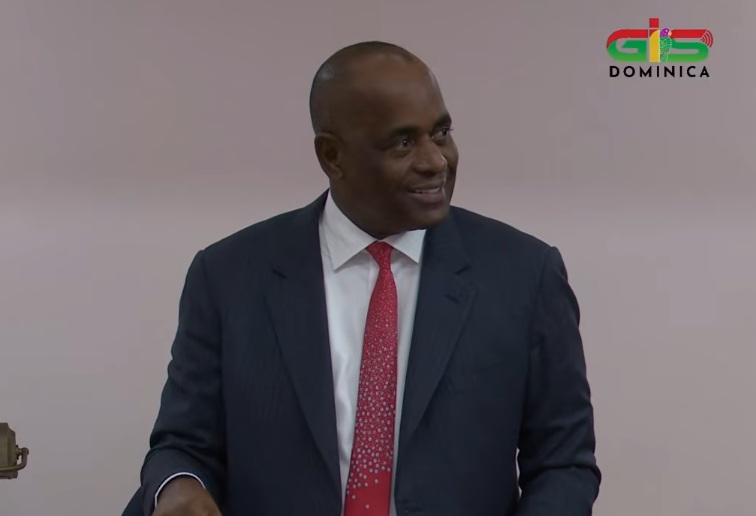
During a lengthy parliamentary address delivered at the third meeting of the fourth session of Dominica’s 11th Parliament on Monday, Prime Minister Roosevelt Skerrit mounted a robust, comprehensive defense of his administration’s track record of national progress, while formally endorsing a set of supplementary government estimates totalling nearly EC$248.5 million. Skerrit framed the proposed additional public spending not as arbitrary expenditure, but as targeted, high-impact investment that will ripple across every sector of Dominica’s society, lifting up local communities, small and medium-sized enterprises, and ordinary households nationwide. Outlining the core pillars of his administration’s multi-year development strategy, the prime minister emphasized that ongoing government initiatives are deliberately structured to generate sustained formal employment, spur broad-based economic activity, cut national poverty rates, and put greater disposable income directly into the pockets of Dominican citizens. He pushed back firmly against longstanding critics of his government’s spending priorities, noting that many of the programs now being rolled out are delivering tangible opportunities that were completely out of reach for everyday Dominicans in previous decades. Official tabled figures pegged the exact value of the supplementary appropriations at EC$248,517,384.02, of which roughly EC$26.7 million comes in the form of no-repayment grant funding. Skerrit took time during his address to express profound gratitude to Dominica’s bilateral allies, global multilateral financial institutions, and partner nations for their consistent ongoing support, at a moment when most countries around the world are increasingly prioritizing their own domestic economic needs amid widespread global fiscal strain. He stressed that these strong international partnerships have been irreplaceable in enabling Dominica to deliver large-scale transformative infrastructure projects, even as the small island nation faces inherent constraints of limited domestic revenue, persistent exposure to volatile global economic shocks, and extreme vulnerability to destructive tropical natural disasters. “We are extraordinarily fortunate as a nation to have reliable global partners who continue to stand with us, providing the critical support we need to move our national development forward, build an economic ecosystem that generates more jobs, and tackle the most pressing challenges facing our people,” Skerrit told parliamentary attendees. He also pushed back against criticism of the government’s responsible borrowing framework, noting that Dominica’s strong reputation among international lending partners is a clear signal of global confidence in the credibility and long-term viability of the country’s national development roadmap. A substantial portion of the prime minister’s address was dedicated to outlining the transformative potential of Dominica’s proposed new international airport, a landmark infrastructure project he described as a decades-old national dream that successive previous administrations failed to turn into reality. Skerrit argued that a fully operational international airport is the foundational missing piece required to unlock Dominica’s untapped cross-sector economic potential, driving explosive growth in the tourism, agricultural export, light manufacturing, and international trade sectors. He reminded parliament of the widespread, long-running travel frustrations Dominican residents faced for decades before recent upgrades to the Douglas-Charles Airport, including frequent forced disembarkations in neighboring islands when incoming flights could not land after dark due to a total lack of night-landing infrastructure. Skerrit noted that his administration already resolved that longstanding pain point by rolling out full night-landing capabilities at the existing Douglas-Charles Airport, and later secured the first ever direct regular air routes connecting Dominica to North American markets. Even with those major upgrades in place, he emphasized that the new purpose-built international airport will deliver exponentially larger economic gains across the entire national economy. The improved, expanded air connectivity will allow local smallholder farmers to ship fresh, time-sensitive produce to overseas markets far faster, enable local fishing operators to access high-value international seafood buyers, and open up lucrative new export pathways for Dominican businesses working with highly perishable goods including exotic tropical flowers. Skerrit also noted that the enhanced accessibility brought by the new airport will accelerate the ongoing expansion of Dominica’s fast-growing eco-tourism hotel sector, making the island a far more attractive destination for millions of potential international travellers who currently face complex multi-stop itineraries to reach the nation. He concluded by framing the multi-million dollar investment in the new international airport as a deliberate, high-return strategic intervention designed to deliver widespread, long-lasting economic dividends across every corner of the Dominican economy. “If the upgrades we have delivered to the Douglas-Charles Airport have already transformed our national trajectory, just imagine the scale of growth and opportunity a full international airport will unlock for every single Dominican,” he remarked.
PM Skerrit defends EC$248.5M supplementary budget, highlights airport project