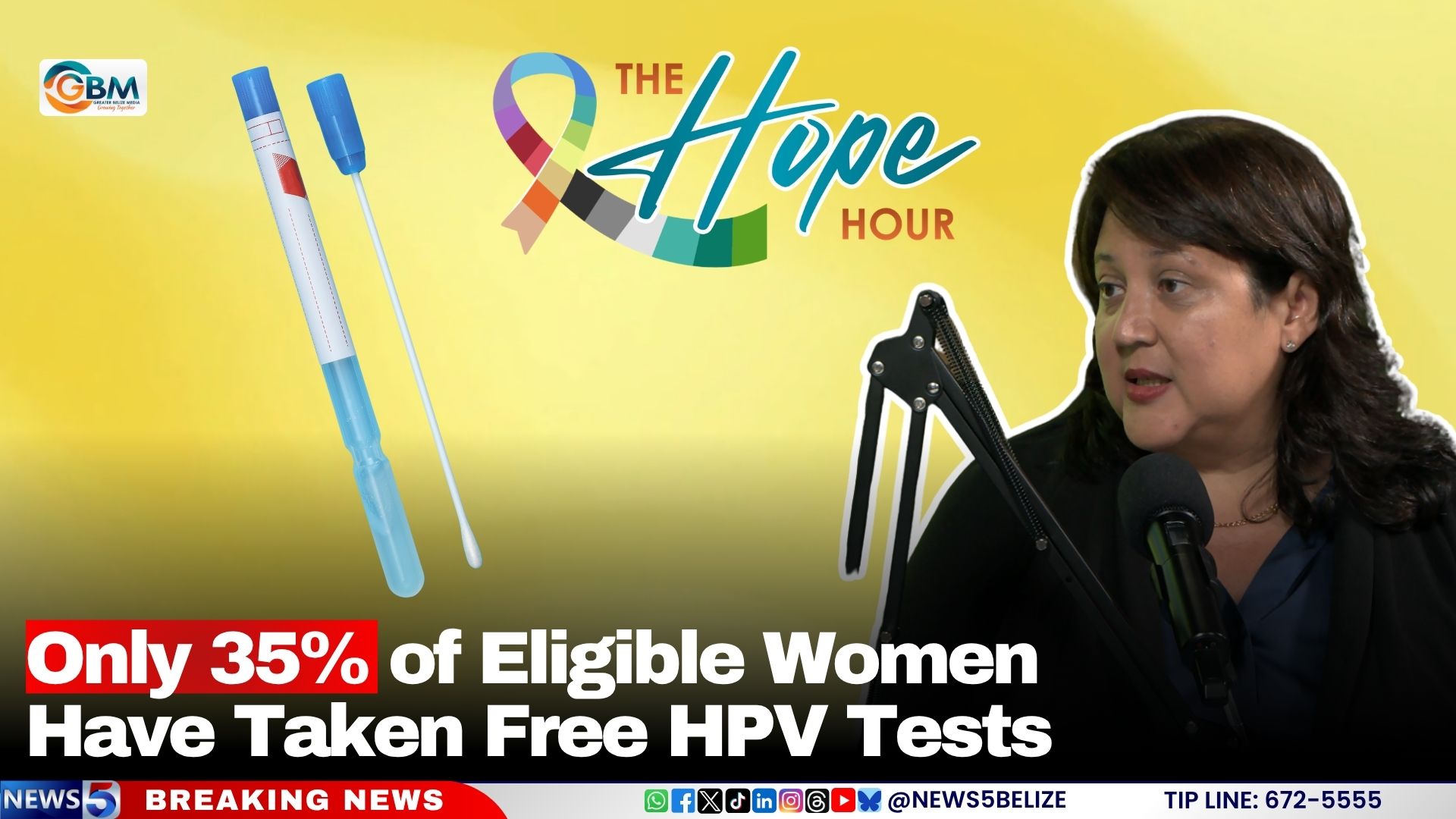
As cervical cancer persists as one of the most avoidable yet devastating public health threats to women across Belize, new data from the country’s public health leadership reveals that just over a third of the target eligible population has accessed the government’s free, user-friendly HPV screening initiative. Released during the debut episode of the public health broadcast *The Hope Hour* on a recent Monday, the update comes as Belize’s Ministry of Public Health and Wellness works to advance its national commitment to eliminate cervical cancer as a public health burden by 2030. Public Health and Wellness Director Dr. Melissa Diaz-Musa acknowledged during the program that while full elimination by the 2030 target may be an ambitious stretch, health authorities remain determined to drive sharp, life-saving reductions in new cervical cancer diagnoses and related mortality rates. The cornerstone of the country’s expanded screening strategy is a free HPV self-swab program tailored for women aged 30 to 49, a group that accounts for the highest risk of developing pre-cancerous cervical changes linked to high-risk HPV strains. Unlike conventional Pap smears, which require a clinical pelvic exam administered by a trained medical provider to identify existing abnormal cell growth, the self-test kit empowers women to collect their own samples in full private, after receiving the swab from a nurse or doctor, completing the collection in a restroom, and returning the sealed sample to their healthcare facility. Most participants receive their results within a 1 to 2 week window, officials confirmed. Despite the program’s accessibility and privacy-focused design, uptake remains drastically below projected targets: of the estimated 62,000 women who fall within the 30 to 49 age eligibility bracket, only 22,000 had completed the free test as of 2023, when the national rollout was fully completed, translating to a mere 35% participation rate. Belize’s sole practicing oncologist, Dr. Ramon Yacab, emphasized during the broadcast that HPV testing delivers far greater preventive value than traditional Pap smears, as it targets the root cause of 90% of all cervical cancer cases: the presence of high-risk Human Papillomavirus strains, rather than only detecting cellular changes that have already developed after prolonged viral exposure. This early detection capability allows clinical teams to intervene before pre-cancerous lesions ever form, drastically cutting long-term mortality risks. *The Hope Hour*, the public health series where the update was shared, airs biweekly on Monday evenings from 7:30 to 8:30 PM via Greater Belize Media, with simultaneous live streaming access available to viewers on the News 5 Live Facebook page and the GBM Livestream YouTube channel.