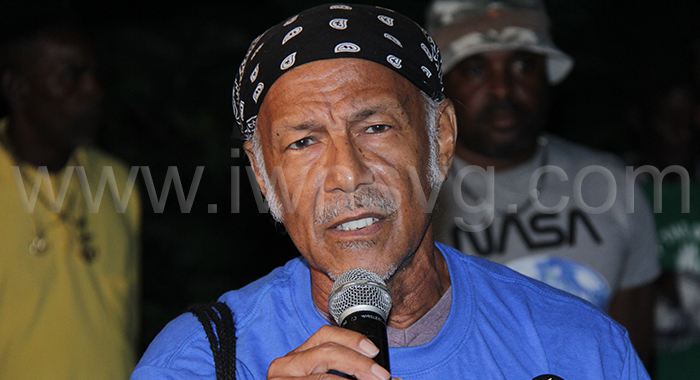
During a candid Independence Day drive across St. Vincent and the Grenadines’ main island, a local resident shared a visceral moment of national embarrassment, noting that the unkempt, overgrown grass verges, tangled vines, and drooping tree canopies lining major roadways on both sides of the territory were in the worst condition he had ever witnessed. The sight prompted him to question if core public bodies including the Forestry Department, state utility VINLEC, and Local Government Department were still operational, though he intentionally held back direct criticism of central authorities — the very entity legally tasked with sustaining a functional, decentralized local governance framework.
The author, veteran public servant Donald De Riggs, outlines that central government’s core mandates extend far beyond basic infrastructure upkeep: it is responsible for securing stable, fair market access for local agricultural and tourism goods, unlocking economic opportunities that benefit the broad majority of Vincentians rather than a narrow, privileged elite, facilitating cross-sector dialogue to expand formal employment and accessible education pathways, and advancing the long-discussed plan to establish a domestic national university. Such a tertiary institution would allow local students to pursue higher education without relocating abroad, eliminating the heartbreak of family separation for households forced to send children overseas to study.
Road maintenance, the piece argues, is far more comprehensive than patching potholes and resurfacing worn asphalt — services the public already pre-pays for via mandatory vehicle registration and driving license fees. To counter the territory’s frequent heavy rainfall that makes grass regrow within days of trimming, verges, roadside shrubs, overhanging vines, and drainage networks along main and feeder routes require scheduled upkeep no fewer than six times per year, rather than the current inconsistent pattern of only two annual cleanup drives timed exclusively for the back-to-school season and Christmas holidays.
A properly resourced, fully operational local government structure, De Riggs insists, would restore the country’s road network to a source of collective national pride, matching the neat, vibrant, well-maintained thoroughfares seen in neighboring sister islands Grenada and St. Lucia, where decentralized governance ensures hyper-local needs are addressed quickly.
He recounts a first-hand anecdote from his tenure at the Government Information Service (later renamed API under a previous administration), when he repeatedly asked every sitting cabinet minister — including the late iconic leader Sir James — why successive political parties had included a local government rollout in their election manifestos, yet never followed through on the promise. During one such meeting with then Minister of Communications and Works Glenford Stewart, the pair’s conversation was interrupted by an incoming phone call. After hanging up, Stewart shook his head and confirmed the call was about a request to arrange a replacement toilet seat for a primary school on the remote island of Canouan.
De Riggs pointed out to the minister that central government’s logjam of trivial, neighborhood-level requests was entirely self-inflicted: if formal local government bodies were established in every parliamentary constituency, small, site-specific needs like school bathroom repairs would never need to be escalated all the way to a national cabinet minister. Stewart openly agreed with that assessment. The opinion piece issues a stark warning to the current administration: if it fails to deliver on a formal local government policy and fully implemented decentralized governance structure, its time in power will be cut drastically short.
Shifting to another long-stalled critical public priority, De Riggs reminds readers that the opposition New Democratic Party first tabled a National Health Insurance (NHI) bill in Parliament back in 2001, shortly after losing the general election to the Unity Labour Party. If the ULP administration had acted on that forward-thinking, progressive proposal, the NHI scheme would have reached full maturity in 2026, acting as a robust safety net to guarantee low-income and vulnerable Vincentians access to high-quality, affordable medical care. The author emphasizes that it is not too late to revive that widely popular policy, which would lift crippling medical cost burdens for generations of local residents to come.
Currently, countless Vincentians face public fundraising campaigns every week to cover costly diagnostic tests, complex surgeries, and specialized treatments that are not available domestically, forcing many to travel to Trinidad, Barbados, or further afield for care and leaving families at constant risk of financial ruin due to unexpected medical crises. A fully funded NHI scheme would also incentivize local medical practitioners to invest in state-of-the-art diagnostic and surgical equipment, as they would have guaranteed coverage for those services via the contributions the working population has paid into the national scheme over decades. De Riggs closes with a direct, urgent appeal to the current government, noting that the draft NHI bill already exists and the ruling party holds a comfortable majority in the House of Assembly, so there is no valid excuse for further delay: legislators must pass the bill in the next parliamentary sitting to deliver the relief that Vincentians at home and in the diaspora have long demanded and fully support. This opinion piece reflects the personal views of author Donald De Riggs, and does not necessarily align with the editorial position of iWitness News.
Ah feel shame!