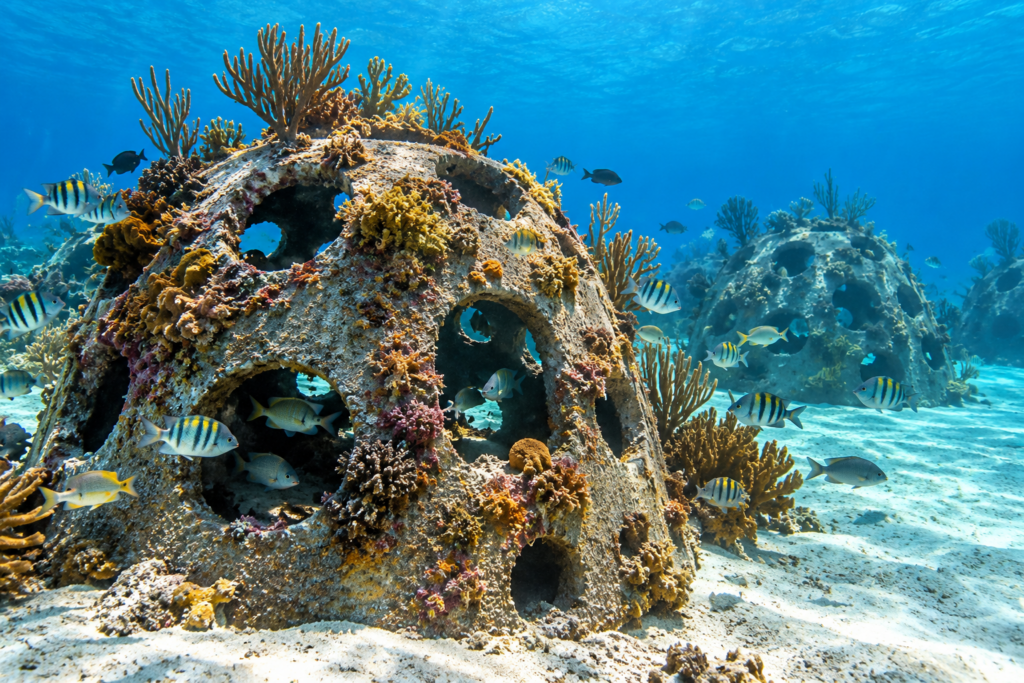
During a recent appearance on the local “Browne and Browne Show” broadcast over the weekend, Antigua and Barbuda’s Prime Minister Gaston Browne laid out a forward-looking national strategy to build a full-fledged domestic industry centered on artificial reef production, with plans to market these specialized marine restoration systems to neighboring Caribbean nations and global coastal communities beyond the region. Browne framed the initiative as a natural extension of the hands-on technical expertise the country has already cultivated through ongoing local reef deployment and monitoring projects, noting that this accumulated know-how could be packaged and shared on the international stage alongside physical manufactured reef units. At this early stage of the proposal, the prime minister did not release formal details including timelines for production launch, dedicated manufacturing facility locations, public or private financing frameworks, or pre-negotiated cross-border export agreements for the artificial reef systems. The discussion that sparked the formal announcement unfolded during a joint segment with renowned marine scientist Dr. Deborah Brosnan, who has led on-the-ground research for pilot artificial reef deployments at Antigua’s Peace Beach. Brosnan walked listeners through the core design of the custom reef structures, which are engineered to precisely replicate the complex, irregular contours of naturally growing coral colonies: these man-made frameworks create sheltered nooks and habitats for fish, crustaceans and other marine organisms, while their submerged physical form dissipates incoming wave energy to reduce shoreline erosion and prevent critical beach sand loss. The marine researcher emphasized that the commercial and public value of the local project extends far beyond producing the physical reef units themselves. The full package of scalable solutions includes evidence-based site selection protocols, specialized low-impact installation techniques, and standardized long-term performance assessment frameworks that have been field-tested in local coastal conditions. To track the Peace Beach pilot’s progress, Brosnan’s research team has deployed a 24/7 live-streaming underwater camera alongside a sensitive underwater hydrophone to capture real-time footage of colonizing marine life and record ambient reef ecosystem sounds as the artificial structures mature. Pre-deployment baseline habitat surveys were completed across the Peace Beach coastline to map ecological conditions and identify the most geographically suitable spots to place the reef units, ensuring maximum efficacy for coastal protection, sand retention, and native biodiversity support. The performance metrics of the pilot project remain under active, rigorous study to refine future reef design iterations. Browne also cited a separate large-scale reef restoration initiative underway in Barbuda, a collaborative effort led by Brosnan and global entrepreneur John Paul DeJoria, as a key source of the hands-on operational experience that will underpin the proposed national manufacturing industry. Brosnan noted that small island developing states like Antigua and Barbuda are uniquely positioned to lead global innovation in coastal resilience solutions, given their direct, day-to-day dependence on healthy marine ecosystems and stable shorelines for tourism, food security and community safety. She argued that the practical, community-tested solutions developed in the Caribbean island context are highly adaptable to other vulnerable coastal regions around the world facing accelerating threats from sea level rise, coral bleaching and worsening storm-driven erosion.
Antigua and Barbuda eyes manufacturing artificial reefs for export