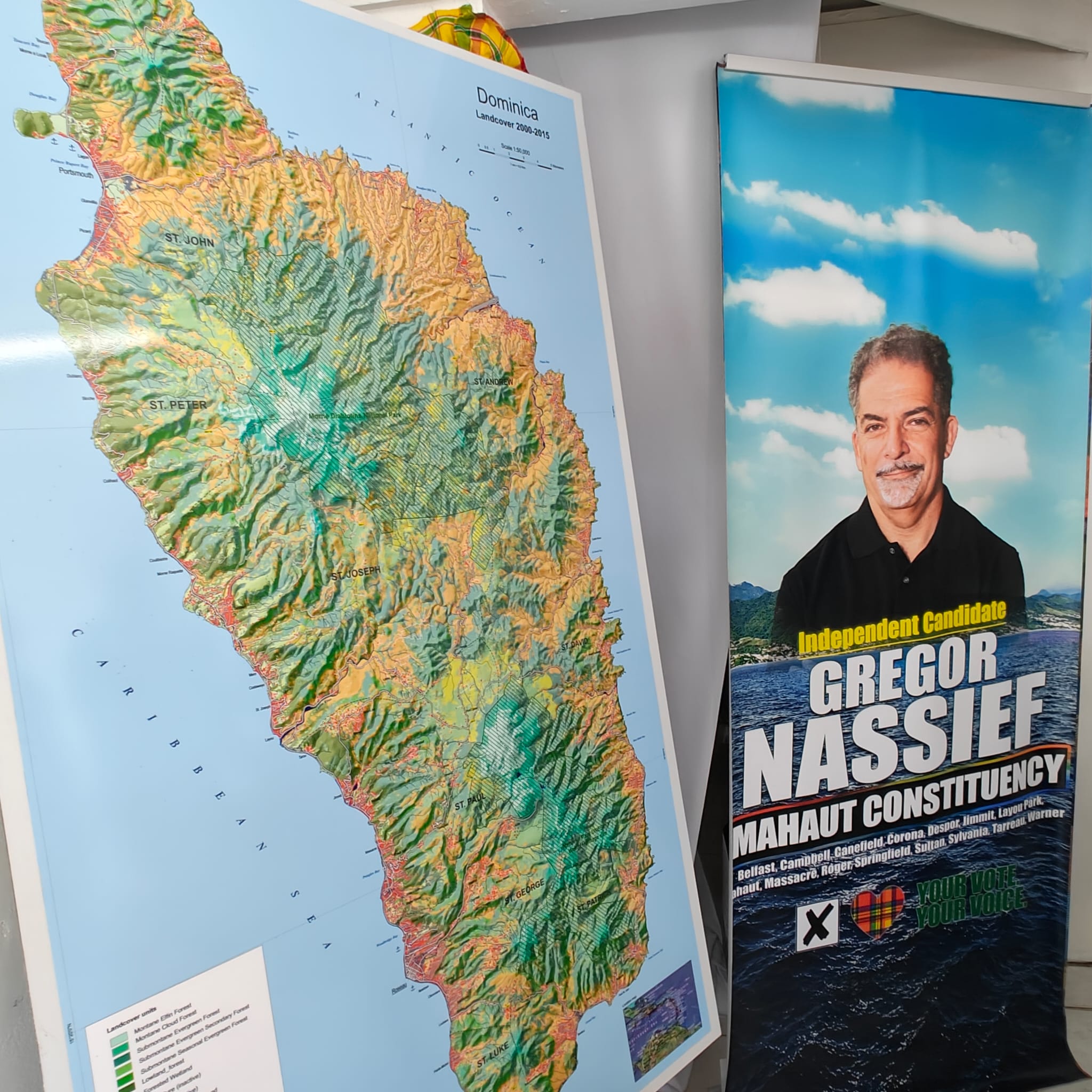
During a formal media gathering marking his official entry into electoral politics held at his Mahaut constituency campaign headquarters last Friday, independent candidate Gregor Nassief laid out a sweeping critique of Dominica’s current development path while presenting a people- and nature-centered roadmap to unlock the island nation’s untapped potential. Nassief, a community leader with deep generational roots in Mahaut who has spent decades living and working across Venezuela, Dominica and the United States, opened his address by emphasizing that the Caribbean island is endowed with unparalleled competitive advantages: a highly skilled, creative population, vast old-growth forest reserves, abundant freshwater supplies, fertile arable land, and a pristine, biodiverse marine exclusive economic zone. Yet he warned that these world-class assets are being squandered under the current policy framework, as the nation grapples with shrinking formal economic opportunities, stagnating core productive sectors from agriculture to sustainable tourism, and a steep, sustained rise in cost of living that is eroding household stability for working families. A core pillar of Nassief’s critique targeted the country’s long-running Citizenship by Investment (CBI) programme, which has served as a primary revenue stream for successive administrations for decades. The independent candidate argued that successive governments have failed to pursue meaningful, long-overdue economic diversification despite widespread, well-documented global warnings about the CBI model’s long-term financial sustainability, leaving Dominica dangerously exposed to external policy shifts that could eliminate that revenue stream overnight. He went further to flag systemic gaps in public fiscal transparency and accountability, particularly when it comes to public disclosure of how CBI-generated funds are allocated, noting that persistent underfunding of critical public priorities – from fair compensation for frontline healthcare workers to nationwide solid waste management upgrades and expanded local community social services – is a direct consequence of unaccountable public resource management. Nassief outlined a stark contrast between two competing national trajectories: the self-reinforcing “circle of dependency” he says Dominica is currently trapped in, where misallocation of public funds drives economic stagnation, high youth unemployment, rising poverty, and forces more citizens to rely on ad-hoc government handouts to make ends meet; and the proposed “circle of prosperity and opportunity” he is campaigning to implement, where fully transparent public financial governance will de-risk the local market for domestic and foreign small business investment, generate stable, dignified jobs for young Dominicans, strengthen household financial security, and expand the government’s long-term fiscal capacity to fund universal, high-quality public services and targeted sustainable development projects. Rejecting suggestions that his extended periods of residence overseas weakened his ties to his home constituency, Nassief highlighted his family’s decades-long history of community service in Mahaut, framing his decision to run for office as a natural extension of that intergenerational legacy, rooted in a commitment to co-design local solutions in close partnership with Mahaut residents rather than imposing top-down policies from distant government offices. He closed his launch address by reaffirming that Dominica does not lack the natural or human capital to become one of the most prosperous small island nations in the Caribbean, but requires a deliberate, collective shift away from overreliance on volatile, non-diversified revenue streams to build an economy that nurtures local entrepreneurship, guarantees sustainable livelihoods for all citizens, and protects the island’s irreplaceable natural ecosystems for future generations.
Gregor Nassief declares Dominica is moving away from its potential, calls for shift towards prosperity and opportunity