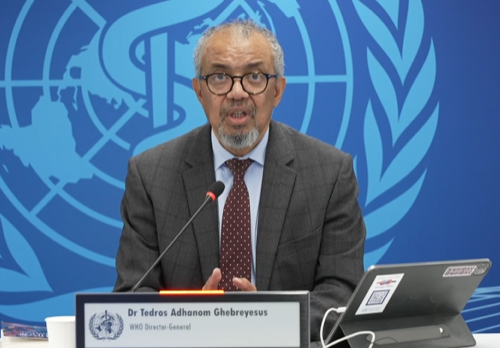
WASHINGTON, DC – November 8, 2026: Escalating armed clashes across eastern regions of the Democratic Republic of the Congo are creating unprecedented barriers to ongoing public health campaigns aimed at containing a deadly Ebola outbreak, as widespread insecurity shuts down critical healthcare operations and forces tens of thousands of civilians to flee their residential areas. The rapidly deteriorating security landscape is unfolding at a moment when global health authorities are already stretched thin working to curb the outbreak that has already claimed thousands of lives, prompting a growing number of nations near and far to implement strict new travel restrictions designed to block cross-border viral transmission. The United Nations Office for the Coordination of Humanitarian Affairs (OCHA) released field reports documenting a deadly overnight assault on Thursday in North Kivu province’s Beni territory, where at least 30 civilians were killed in the Contina Loya locality. Multiple residential structures were set on fire during the attack, and a local health clinic was completely destroyed, resulting in the deaths of several patients receiving care at the facility. This wave of violence has had a direct, devastating impact on frontline Ebola response operations. Humanitarian staff on the ground confirmed that dozens of people who had been placed in mandatory observation after close contact with confirmed Ebola patients fled the monitoring center amid the chaos of the attack. Response teams were left with no choice but to fully suspend all activities in the affected zone, severely hampering contact tracing efforts that are the backbone of preventing unobserved viral spread. The UN humanitarian agency issued an urgent public appeal to all warring parties in the region to uphold the protection of civilian populations, adhere strictly to international humanitarian law, and guarantee unobstructed, safe passage for all humanitarian and healthcare personnel operating in the conflict zones. OCHA explicitly warned that persistent armed violence is not only killing innocent civilians but also systematically dismantling months of progress made to contain the Ebola outbreak. During a recent press briefing held in Geneva, Switzerland, World Health Organization (WHO) Director-General Dr Tedros Adhanom Ghebreyesus acknowledged that while transmission rates are declining in some previously high-burden areas, the sudden emergence of new infection hotspots continues to pose formidable operational challenges for response teams. “In some zones, we are seeing transmission slow, but new hotspots keep emerging. Mass population displacement, heavy seasonal rainy weather, targeted attacks on healthcare infrastructure, and logistical barriers to reaching remote, isolated communities are all complicating our response efforts significantly,” Dr Tedros stated. The outbreak has sparked growing public health concerns far beyond the DRC’s borders, with regional neighbors Kenya and Nigeria already reporting confirmed imported Ebola cases linked to travel from high-risk zones. Dr Tedros confirmed that Kenya has recorded nine total Ebola cases including two fatalities, while Nigeria has identified one confirmed imported case. He publicly praised both nations for their swift, transparent public health responses and their willingness to immediately report all detected infections to global health authorities. “I commend Kenya and Nigeria for their rapid, well-coordinated response to these imported cases, and for their full transparency in reporting all confirmed infections in a timely manner,” he added. The rising risk of cross-border transmission has pushed dozens of national governments to roll out targeted precautionary public health measures, including travel restrictions applied to all individuals arriving from jurisdictions classified as high-risk for Ebola spread. The Caribbean nation of St. Kitts and Nevis is the latest country to tighten its border entry protocols. In an official public media advisory, the St. Kitts and Nevis government stated that its new rules were developed in full alignment with latest guidance from the Caribbean Public Health Agency (CARPHA), the United States Centers for Disease Control and Prevention (CDC), and the WHO. The advisory lists eight countries as designated high-risk zones for Ebola transmission and/or virus importation: the Democratic Republic of Congo, Uganda, South Sudan, Rwanda, Kenya, Burundi, Nigeria, and the Central African Republic. The government confirmed that the new restrictions take effect immediately, and apply to all non-citizen travelers who have visited any of the eight high-risk countries within the 21 days prior to their scheduled arrival in the Federation. “Therefore, all non-nationals who have visited any of these high-risk jurisdictions within 21 days of their flight will be denied entry to the Federation. This rule applies equally to all non-national passengers who have made an intermediate stop in any of these six countries, regardless of whether they disembarked from the aircraft during the stop or remained on board the flight,” the official government statement clarified. At the international policy level, global public health support for the DRC’s outbreak response is being rapidly scaled up. The Group of 20 (G20) major economies recently mobilized over $2 billion in dedicated funding to support Ebola containment operations and strengthen broader public health infrastructure across high-risk regions. Parallel to these funding efforts, the WHO is advancing targeted vaccine research specifically for the Bundibugyo strain of Ebola, which has created unique complications for response teams because none of the currently approved existing Ebola vaccines provide effective protection against this specific viral strain. Dr Tedros explained that a new vaccine trial using the Ervebo vaccine platform was launched the previous month. While Ervebo is fully approved for use against Ebola virus disease caused by the Zaire ebolavirus strain, it does not carry regulatory approval for use against the Bundibugyo virus. “Last month, a vaccine trial began using the Ervebo vaccine, which is approved for the Zaire Ebola virus, but not for Bundibugyo. Today, WHO expert advisory groups are formally recommending adding two additional vaccine candidates that were developed specifically to target the Bundibugyo virus to the ongoing trial,” he announced. Compounding the ongoing Ebola crisis, the DRC is also grappling with its most severe cholera outbreak in decades, placing even more strain on a national healthcare system that is already operating at near-collapse capacity. Dr Tedros confirmed that the country has recorded more than 60,000 cholera cases and 1,800 related fatalities so far this calendar year. The overlapping public health emergencies, paired with widespread armed insecurity, mass population displacement, and persistent barriers to accessing remote affected communities, continue to place overwhelming pressure on the DRC government’s ability to mount a coordinated, effective response. For WHO leadership and its global humanitarian partner network, fully containing the ongoing Ebola outbreak will require far more than just medical interventions. Guaranteeing sustained security for response teams, maintaining unimpeded access to all affected communities, and strengthening cross-border collaborative coordination between neighboring nations will be critical to preventing additional avoidable loss of life and stopping further international spread of the virus.
Fighting in eastern DRC threatens Ebola response as countries tighten travel restrictions