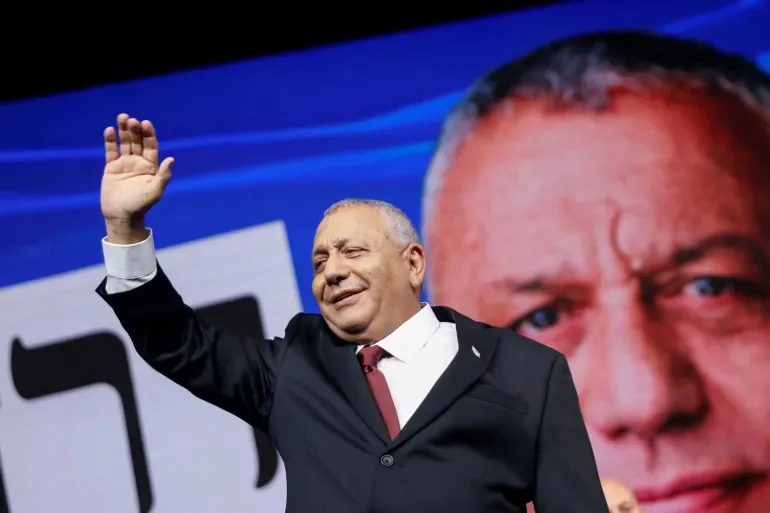
Israeli President Isaac Herzog formally designated former Israel Defense Forces chief of staff Gadi Eisenkot, now leader of the centrist Yashar party, as the first official candidate to assemble the country’s next governing coalition on Saturday evening, November 8, marking a sharp political blow to long-serving incumbent Prime Minister Benjamin Netanyahu. The announcement came after days of closed-door consultations between Herzog and representatives of all factions in the 120-seat Knesset, with a formal handover of the official mandate scheduled for 5 p.m. local time on Sunday. The October 27 parliamentary elections delivered no clear majority to either of the two dominant political blocs: Netanyahu’s aligned right-wing and religious faction secured 53 seats, Eisenkot’s core opposition bloc took 48, and Arab-majority parties won a historic combined total of 19 seats. To reach the 61-seat threshold required for a governing majority, Eisenkot garnered public support from parliamentary groups representing 67 lawmakers during the pre-mandate consultations, compared to just 46 seats pledged to Netanyahu. The 7-seat ultra-Orthodox United Torah Judaism party opted to withhold a formal endorsement for either candidate, creating a critical swing vote in the coalition calculus. Under Israeli law, Eisenkot will have 28 days to negotiate and finalize a functional government after receiving the official mandate, a timeline Herzog can extend by up to an additional 14 days if negotiations show measurable progress. Despite his strong lead in parliamentary endorsements, Eisenkot faces steep structural barriers to locking in a stable majority. His existing 48-seat base would jump to 67 with full backing from Arab parties, but Eisenkot has repeatedly ruled out inviting Arab political factions to hold formal cabinet positions in his administration. An alternative path to a 61-seat majority would require securing support from both ultra-Orthodox parties Shas and United Torah Judaism, which hold a combined 13 seats, but that scenario risks triggering fierce internal rifts over long-simmering disputes over mandatory military service exemptions for ultra-Orthodox Israeli citizens. A third viable framework under consideration is a narrow minority government that relies on informal, outside parliamentary support from Arab parties to pass key legislation and confidence votes. Arab political factions have emerged as the decisive kingmakers in the current political deadlock, after their collective endorsement of Eisenkot cleared the way for Herzog’s formal designation. Ahmad Tibi, a senior leader of the joint Arab electoral list, noted the selection of Eisenkot aligned with their pre-stated priorities, which centered on blocking any push for a national unity government that would allow Netanyahu to retain a senior leadership role. Tibi confirmed his faction is prepared to extend external backing to an Eisenkot-led minority government, even though that framework falls short of their full policy agenda, because ousting Netanyahu and his far-right governing allies is framed as an urgent top priority. Netanyahu pushed back sharply against that prospect on Saturday, warning that any government dependent on support from Arab parties would “erode Israel from within” and claiming such an administration would be beholden to Islamist political groups. Tibi immediately rejected those remarks, accusing Netanyahu of deliberately stoking sectarian hostility against Israel’s Arab civilian population. A decorated former IDF chief of staff serving from 2015 to 2019, Eisenkot first joined Netanyahu’s wartime emergency cabinet as an observer following the October 7, 2023, Hamas attacks, before resigning in 2024 to publicly criticize the government’s lack of a clear actionable strategy to end the Gaza war and secure the release of all remaining Israeli hostages held in Gaza. If Eisenkot fails to deliver a functioning government within his allotted negotiation window, Herzog retains the authority to assign the mandate to a second Knesset member. Should that second candidate also fall short, a 61-seat parliamentary majority can nominate a third candidate for prime minister. If all three attempts collapse, new general elections will be required to be held within 90 days, with Netanyahu remaining in office as a caretaker prime minister in the interim. The coming weeks of high-stakes coalition negotiations will determine whether the disparate anti-Netanyahu political factions can translate their shared opposition to the long-serving premier into a durable, legally recognized governing coalition, as the balance of Israeli political power shifts into uncharted territory with no guaranteed outcome to end Netanyahu’s more than decade-long tenure in office.