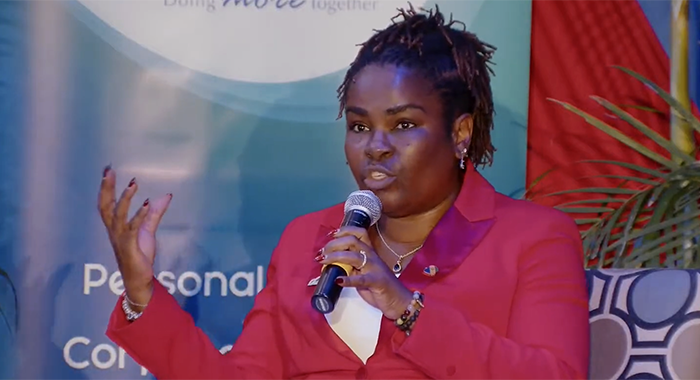
Delivering a pointed keynote intervention at the first-ever National Performing Arts Conference held in Kingstown on a Wednesday, veteran playwright, cultural organizer and former educator Nisha Hope laid out a stark warning for St. Vincent and the Grenadines’ tourism sector: any industry that sidelines investment in homegrown creative output will fail to meet the fast-evolving demands of modern global travelers, who now prioritize deeply rooted, culture-driven immersive experiences over superficial destination sightseeing alone.
Hope left no room for compromise on the link between the creative ecosystem and long-term tourism success, stating unequivocally, “We cannot build a thriving, future-proof tourism industry without a robust, well-resourced orange economy, and there is no reason to apologize for centering that priority.” She emphasized that global travel patterns have shifted dramatically in recent years, with visitors no longer content to merely visit scenic locations — they actively seek out authentic interactions that connect them to a destination’s unique identity, from live local theatre and traditional craft workshops to community music performances and heritage site storytelling.
Pushing back against the longstanding tendency to relegate cultural and creative work to a trivial, decorative add-on for tourism campaigns, Hope argued that every segment of the creative sphere, including music, theatre, visual arts, traditional crafts, local fashion, and intangible cultural heritage, should be positioned as a foundational pillar of the country’s entire visitor value proposition, not an afterthought.
However, she highlighted a critical, unaddressed bottleneck that prevents this vision from becoming reality: raw creative talent alone is not enough to build sustainable, market-ready cultural experiences. Right now, independent creators across the nation are forced to navigate every stage of bringing an idea to audiences entirely on their own, with almost no formal institutional support. “A brilliant original concept might start in a community workshop, a home studio, or even around a family kitchen table,” Hope explained, “but turning that spark into a viable, long-running business requires consistent access to funding, intellectual property protection, formal distribution networks, and reliable pathways to paying customers.”
She laid out the unsustainable dual burdens currently placed on individual creative practitioners, noting that designers are forced to act as unqualified marketing specialists, writers have to handle every layer of distribution logistics, and small-batch craft producers are stuck troubleshooting production bottlenecks, custom packaging, and international shipping long before they ever receive payment for a finished sale. These administrative and operational demands eat up the vast majority of time creators would otherwise dedicate to refining their craft and developing new, high-quality experiences for visitors.
Hope’s intervention came at a pivotal policy moment for St. Vincent and the Grenadines, as the New Democratic Party administration, which took office in November 2025, has formally flagged the orange economy as one of its core priority sectors to drive broad-based, inclusive national economic growth in the coming years.
To unlock this untapped potential, Hope called on national policymakers and cross-sector cultural stakeholders to immediately close the systemic gaps in the support ecosystem for creative workers, starting with the passage of a formal, comprehensive national creative and cultural industries policy that establishes a true enabling environment for creators to thrive. She stressed that this work is all the more urgent because of its direct ties to tourism competitiveness: if visitors are actively seeking meaningful, culture-connected experiences, local artists, performers, artisans and cultural leaders must be given structured opportunities to create those experiences, participate fairly in the tourism value chain, and receive equitable, living-wage compensation for their work.
Expanding on the need for cross-sector skill investment, Hope also raised alarms about the current low standard of hospitality sector recruitment across the country, noting that many current job postings for tourism and hospitality roles fail to attract candidates with the required level of training and professionalism, leaving the country’s visitor service offerings at a subpar standard. She argued that this shortfall is a warning sign for all high-growth priority sectors, and that national leaders must take coordinated, intentional action to upgrade industry-wide skills and formal professional standards across both tourism and the creative economy.
She issued a stark warning against delaying these necessary reforms: without targeted action to resolve these structural barriers, the national performing arts sector could find itself gathering for identical conferences year after year, with new panels of speakers but no tangible progress, stuck rehashing the exact same unresolved challenges.
Hope’s framing positioned the orange economy as far more than a tool for cultural preservation, but as a central driver of the country’s broader post-pandemic economic ambitions. The core question facing the nation now, she argued, is whether creative practitioners will finally be given the structured resources, formal professional training, legal intellectual property protection, and clear market access pathways to turn their original creative ideas into stable, long-term livelihoods. Her comments aligned with broader cross-conference discussions that highlighted unmet needs for expanded K-12 and higher education arts programming, standardized professional industry benchmarks, purpose-built cultural infrastructure, and targeted grant and business development support for independent creators and small cultural enterprises.
Crucially, the collective conversation did not frame tourism as a universal fix for all the creative sector’s longstanding challenges, but rather acknowledged that any national tourism strategy centered on unique, authentic cultural experiences can never reach its full potential without a skilled, properly supported local creative workforce. As Hope emphasized, the link between the two sectors is direct and unbreakable: if St. Vincent and the Grenadines wants international visitors to engage with the nation’s distinct culture in meaningful, memorable ways, local creatives need far more than public praise for their talent. They need a structured, supportive ecosystem where their work can be fully developed, professionally presented to global audiences, and sustained as a viable long-term career. “We have to conduct a full, honest audit to identify every single one of these barriers first,” she concluded, urging all cross-sector attendees to collaborate across stakeholder groups to build actionable, practical solutions.
SVG ‘cannot build a tourism industry without a strong orange economy’ — playwright