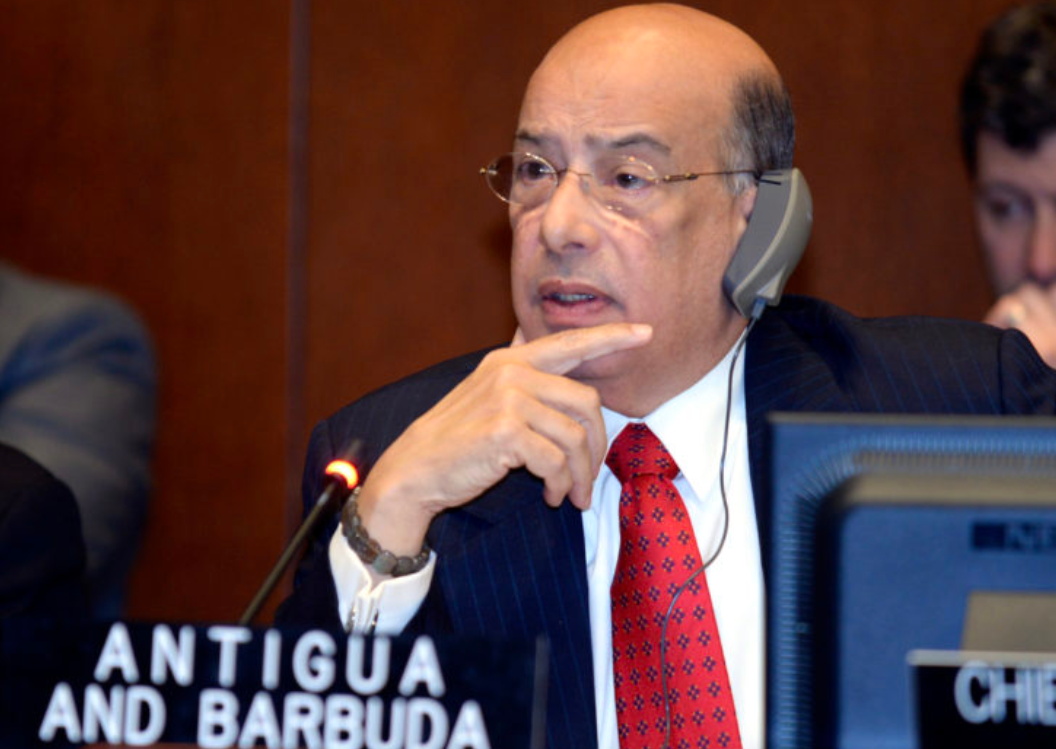
By Sir Ronald Sanders, Antigua and Barbuda’s Ambassador to the United States and the Organization of American States, and Chancellor of the University of Guyana, the following analysis reflects his independent views, not the official stance of any affiliated institution.
The 3 November 2026 U.S. midterm elections have reshaped Washington’s legislative landscape, delivering the Democratic Party full majorities in both the U.S. House of Representatives and the U.S. Senate. The newly elected Congress will formally take power in January 2027, prompting critical deliberations across the Caribbean regional bloc about how this partisan shift will reshape U.S. policies that directly impact Caribbean national security, economic prosperity, and everyday livelihoods for millions of people across the Caribbean Community (CARICOM).
A core nuance of the U.S. governing system means that while congressional control will shift legislative priorities, funding allocations, and oversight mechanisms, the foundational foreign policy framework of the Trump administration is not expected to undergo radical upheaval. The U.S. Congress holds three core constitutionally mandated powers: drafting and passing federal legislation, appropriating public funds for government operations, and conducting formal oversight of executive branch agencies. The U.S. Senate additionally retains exclusive authority to review and confirm senior presidential appointees, from cabinet secretaries to ambassadors and high-ranking diplomatic staff. These new Democratic majorities will undeniably shape the trajectory of relevant regional policies, but they do not override the substantial executive authority held by President Donald Trump over foreign relations.
As head of the executive branch, President Trump retains broad unilateral powers to direct diplomatic outreach, enforce immigration regulations, and set key parameters for U.S. trade policy. He can also issue binding executive orders without congressional approval, provided these actions are rooted in constitutional authority or existing statutory law. Any legislation passed by the new Congress that runs counter to the president’s agenda can be vetoed, and overriding a presidential veto requires a two-thirds supermajority in both legislative chambers – a threshold that is extremely difficult for any single party to achieve under normal partisan conditions. History also shows that domestic legislative gridlock or constraints on a president’s domestic policy agenda rarely translates to reduced U.S. foreign policy activity, as the executive branch retains wide latitude to act on global and regional priorities, even as congressional funding decisions and legal limits impose meaningful guardrails on that activity. For these reasons, it is deeply premature to frame the midterm election results as a fundamental shift in the Trump administration’s approach to Latin America and the Caribbean.
The administration’s signature “Trump Corollary” to the longstanding Monroe Doctrine centers U.S. strategic interests across the Western Hemisphere, with explicit top priorities including cross-border migration management, counter-narcotics enforcement, securing access to geostrategically critical locations, and limiting the growing influence of rival global powers in the region. There is no credible indication that these core priorities will be abandoned simply because partisan control of Congress has flipped. For Caribbean nations, the implications of this framework extend far beyond traditional state-to-state diplomacy: critical regional assets including major seaports, cross-border energy infrastructure, telecommunications networks, and foreign direct investment partnerships carry as much geostrategic weight in Washington as they do economic value at home for Caribbean populations. Navigating this dual reality requires Caribbean policymakers to clearly articulate their own legitimate development needs, international legal obligations, and sovereign decision-making authority, to build a durable, mutually respectful bilateral relationship with the U.S. that allows for open, meaningful dialogue centered on the interests of both parties.
There is already substantial shared common ground between the U.S. and CARICOM nations, backed by tangible, measurable economic benefits for both sides. The U.S. ranks as one of the Caribbean’s largest trading partners, a leading source of foreign direct investment, and the top origin of international tourist arrivals that sustain millions of local jobs across the region. In turn, CARICOM nations collectively represent a high-value market for U.S. exports, generating a U.S. goods trade surplus of roughly $7 billion in 2025 alone. This two-way commerce supports hundreds of thousands of American small businesses and blue- and white-collar jobs across every U.S. state. The Caribbean’s economic value extends far beyond consumer purchases: the region’s oil and gas sectors, bauxite reserves, and other critical mineral resources make it a geographically proximate, reliable partner in global supply chains that underpin U.S. industrial output and national energy security. Guyana’s fast-growing oil production, alongside the long-established energy and mineral industries of Trinidad and Tobago and Jamaica, stand as clear, concrete examples of this mutually beneficial economic partnership.
For small, vulnerable Caribbean economies, policy predictability is an absolute necessity. Existing U.S. tariffs applied to Caribbean export goods are already eroding the competitiveness of regional products in the U.S. market, while concurrent shifts in U.S. export pricing, global shipping costs, and transnational supply chain disruptions are driving up Caribbean import bills dramatically. For island nations where a single dominant industry can make up a large share of national GDP, even relatively minor economic disruption can trigger cascading harm to local employment, government tax revenue, and foreign exchange earnings. Policy arrangements that sustain stable Caribbean economic activity, in turn, preserve long-term, high-value commercial opportunities for U.S. businesses.
Regional security represents another deep area of shared bilateral interest. Transnational threats including drug trafficking, illegal firearms proliferation, transnational organized crime, illicit cross-border financial flows, and maritime insecurity inflict severe harm on Caribbean communities while also creating direct spillover risks for U.S. national safety. Close, coordinated cooperation between national law enforcement agencies, customs authorities, coast guard units, and judicial institutions across both U.S. and Caribbean jurisdictions is non-negotiable to address these threats effectively, and sustained action is required to track the flow of illegal weapons and criminal proceeds alongside counter-narcotics operations. Long-term regional security also depends on well-functioning public institutions, broad-based economic opportunity, and widespread public trust in the rule of law, as public safety enforcement and equitable development reinforce one another. The ongoing crisis in Haiti stands as a stark demonstration of the catastrophic consequences when widespread insecurity overwhelms state institutions: the Haitian people bear the overwhelming brunt of human suffering, while neighboring states face unprecedented humanitarian spillover and cross-border security pressures. A sustainable, long-term solution to the Haitian crisis requires sustained financial resources, strict accountability mechanisms, the strengthening of local Haitian state institutions, and meaningful, inclusive participation from Haitian stakeholders themselves. Continuity of targeted international support for Haiti remains critical regardless of the partisan makeup of the U.S. Congress. Similarly, ongoing developments related to U.S. policy toward Cuba carry direct ripple effects for neighboring Caribbean states via shifting migration patterns, economic linkages, and humanitarian needs, making these dynamics a core consideration for any comprehensive assessment of regional stability.
Equitable access to international development financing is another high-stakes priority for the Caribbean. Per capita income metrics alone fail to capture the extreme vulnerability of small island developing states to catastrophic natural disasters, or the crippling financial burden of post-disaster reconstruction. A single major hurricane can wipe out public infrastructure accumulated over decades, leaving even nations classified as middle- or high-income facing severe, cascading financial distress. The high levels of debt many Caribbean nations have taken on to fund post-disaster recovery have only deepened their long-term economic and social vulnerability. The Caribbean’s longstanding, evidence-based advocacy for international financial institutions to account for national vulnerability alongside per capita income when assessing financing eligibility carries clear practical relevance for the U.S., which holds significant voting power and influence across major global multilateral financial bodies. More economically resilient Caribbean nations are far better positioned to sustain stable two-way trade, protect U.S. foreign investments, and recover from shocks without requiring repeated emergency international assistance. Investments in disaster preparedness and climate-resilient regional infrastructure therefore create a natural, practical basis for bilateral cooperation rooted in shared economic stability and measurable, tangible benefits for both sides.
Deep human connections between the U.S. and the Caribbean also underpin the bilateral relationship far beyond formal government ties: millions of family members, students, skilled workers, business owners, and established Caribbean diaspora communities across the U.S. sustain constant people-to-people exchange that generates billions of dollars in mutual economic and social value every year. While individual visa eligibility decisions fall exclusively under the purview of U.S. authorities in line with domestic U.S. law, broad nationality-based visa restrictions that apply to nations including Antigua and Barbuda and Dominica create widespread harmful impacts that extend far beyond individual visa applicants. These restrictions impede critical business travel, reduce tourist arrivals to the U.S., block fee-paying Caribbean students from accessing higher education at U.S. universities, and prevent Caribbean patients from accessing specialized medical care at U.S. healthcare facilities. These outcomes carry measurable financial costs for U.S. educational institutions, healthcare providers, and travel and tourism businesses as well as for Caribbean citizens, and can erode long-standing cooperative bilateral relations. Predictable, balanced policy frameworks that address legitimate U.S. national security concerns while preserving these vital people-to-people connections serve the best interests of both parties.
The new Democratic-controlled Congress will open new avenues for constructive policy dialogue and formal oversight of executive branch actions, but it does not guarantee automatic alignment with CARICOM priorities, nor does it replace the Trump administration as a central, essential bilateral partner for the Caribbean. Some of the Trump administration’s core regional policy priorities enjoy broad bipartisan support across both major U.S. political parties, while others remain deeply contested along partisan lines. The most effective path forward for CARICOM nations is to continue clearly articulating their unique national and regional circumstances to U.S. policymakers, and developing practical, actionable policy proposals that can win cross-party agreement. Long-standing partnerships between Caribbean stakeholders and U.S. businesses, universities, and local community groups add critical depth to these diplomatic efforts, by clearly demonstrating that Caribbean prosperity and security are directly, tangibly linked to the well-being of the American public.
The partisan balance of power in Washington has shifted following the 2026 midterms, but the unchanging geographic proximity, deeply integrated economic ties, and generations of human connections that bind the United States and the Caribbean remain firmly in place. These enduring realities provide a solid, stable foundation for constructive bilateral engagement with the Trump administration and members of both political parties in the new Congress, rooted in mutual respect, candid open dialogue, and clear recognition that the core interests of the U.S. and the Caribbean very frequently align.
*Disclaimer: The views expressed in this analysis are the personal opinions of Sir Ronald Sanders, and do not represent the official position of NOW Grenada, which bears no responsibility for the content of contributed opinion pieces.*