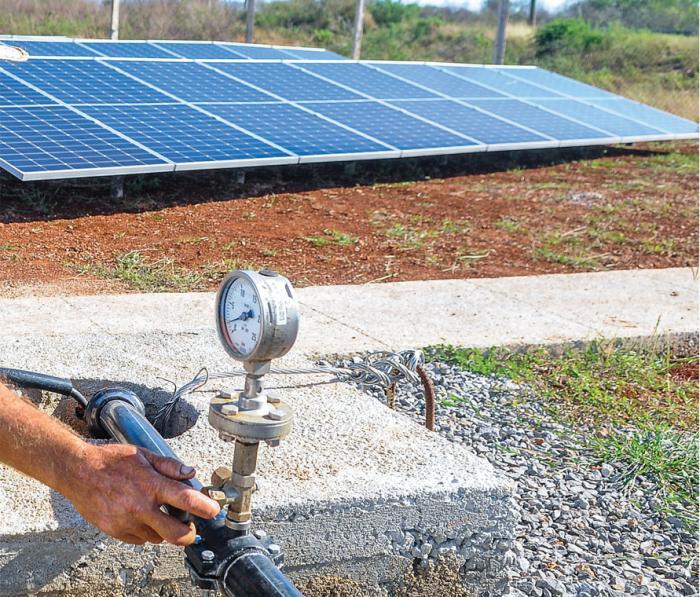
SANTIAGO DE CUBA – Local authorities overseeing hydraulic resources have unveiled a new phase of a renewable energy rollout designed to insulate the province’s water distribution networks from frequent disruptions tied to national power grid generation shortfalls. Wilmer Destrades Heredia, the Santiago de Cuba delegate for Hydraulic Resources, confirmed to state publication Granma that 55 additional water pumping stations across the nation’s most topographically rugged province will be fitted with photovoltaic solar panels, joining 88 operational stations that already use solar as an independent energy backup. The announcement comes shortly after the full resolution of a service outage that impacted 16 hydrometric sectors in the provincial “Hero City” last Thursday, triggered by a rupture in a 900-millimeter main pipeline in the Zona Alta district. Parallel infrastructure upgrades are also in motion: construction is advancing on a dedicated new power line for the Gota Blanca reservoir to Quintero pumping system, which delivers potable water to over 70% of residents in Cuba’s second-largest urban center. Over in the Contramaestre municipality, crews are completing upgrades at the Maffo pumping station, including the installation of a new high-efficiency motor and dedicated, stable power access. The Electric Utility Company has already completed targeted investments to decouple the Maffo site from overstretched power circuits that regularly suffer unplanned outages due to systemic national energy generation deficits. Destrades Heredia noted that rural and mountainous communities across seven municipalities – Contramaestre, Mella, San Luis, Songo-La Maya, Palma Soriano, Segundo Frente, and Tercer Frente – have already seen substantial improvements from the solar and equipment upgrade program, with nearly 50,000 residents previously plagued by frequent conventional pump failures now accessing far more consistent water service, a problem that had no viable short or medium-term solution prior to the targeted investments. Even with the measurable progress, the hydraulic resources delegate emphasized that the multi-pronged initiative will not fully eliminate the longstanding complexities of equitable water distribution across the province, noting that a number of hydrometric sectors in San Luis, Palma Soriano, and Songo-La Maya still operate on water delivery cycles that stretch beyond 90 days, with additional long-term infrastructure work required to resolve those gaps.