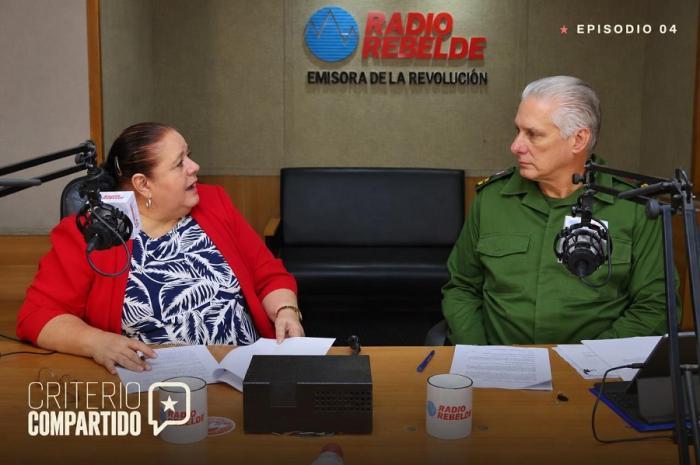
During the November 5, 2026, broadcast of Cuba’s public affairs program Shared Views, President Miguel Díaz-Canel Bermúdez, who also serves as First Secretary of the Cuban Communist Party Central Committee, laid out a comprehensive, multi-pronged strategy to address the country’s long-running, widespread water supply challenges, while urging state institutions to adopt more responsive, citizen-centric approaches to public concerns. The president acknowledged that water access strains are particularly acute in major population hubs including Havana, Santiago de Cuba, and Holguín, noting the crisis is rooted in overlapping structural barriers: decades of accumulated wear on aging hydraulic networks, chronic underinvestment in critical maintenance, persistent shortages of imported equipment and spare parts exacerbated by the longstanding U.S. economic blockade, and cascading disruptions from the national energy crisis, which regularly forces water pumping stations offline due to blackouts and fuel shortfalls. “This nation’s water crisis is not a minor or temporary inconvenience—it is a tangible, severe, and multifaceted challenge that cannot be solved with a single quick fix,” Díaz-Canel told viewers. A core pillar of the new national action plan is systematically reducing the water supply system’s overreliance on the national electrical grid (SEN) by integrating renewable energy infrastructure, particularly photovoltaic solar systems, at key water source sites and distribution booster stations. To reinforce the administration’s commitment to transparent, accountable public service, the president shared full follow-up data on citizen complaints submitted during the prior episode of Shared Views: 29 total calls were logged, with every caller receiving an in-person follow-up visit from relevant agency staff. Of the 23 formal complaints submitted, 17 were fully validated, 4 were partially substantiated, and 2 were deemed unfounded. As of the latest update, 9 of the documented issues have been fully resolved, while 12 additional cases requiring extra resources and extended timelines remain in active progress, alongside 40 other public submissions received in the weeks surrounding the prior broadcast. Díaz-Canel stressed that citizen complaints are not a nuisance for state agencies, but an early warning system that flags unmet needs, and that institutions have a duty to engage with petitioners humbly, deliver concrete results rather than empty rhetoric, and maintain consistent communication even when technical solutions cannot be rolled out immediately. He also called for stepped-up enforcement to crack down on hydraulic infrastructure vandalism and metal pipe theft, which often leaves entire neighborhoods cut off from piped water. Antonio Rodríguez, head of Cuba’s National Institute of Hydraulic Resources, presented supplementary operational data during the broadcast, noting that as of the morning of the program, 2.68 million Cubans faced piped water access disruptions, 66% of which were directly tied to power outages, and 25% to faulty pumping equipment, with 536,000 affected residents located in Havana alone. Rodríguez outlined upcoming targeted investments, including 10 grid-connected solar farms totaling 200 megawatts with integrated battery storage to power Havana’s three core water treatment and distribution hubs, currently scheduled for full completion in August 2027, with teams working to accelerate construction to cut the timeline. As part of the ongoing transition to a low-energy-dependency water network, 853 solar-powered pumping units are already operational, with 446 additional units set to be deployed by the end of December 2026. Díaz-Canel closed by emphasizing that material constraints can never justify unresponsive public service, and that the Shared Views platform will continue to serve as a structured, accountable channel to track community needs, enforce agency accountability, and share realistic, actionable progress updates with the public, without making unfulfillable promises.
Addressing the water supply issue requires a comprehensive program, not just a single measure