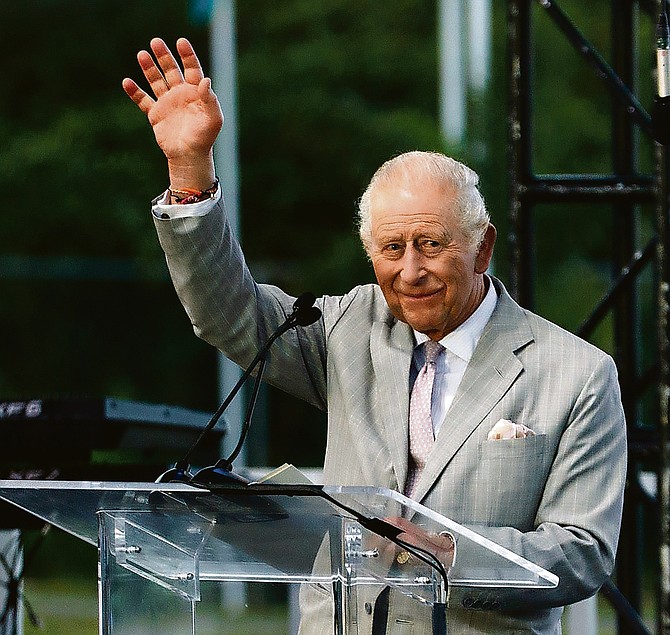
Delivering a landmark address at the official opening of the Commonwealth Heads of Government Meeting (CHOGM) hosted in Antigua and Barbuda, King Charles III publicly recognized that the brutal legacy of the transatlantic enslavement trade continues to hang heavy across Caribbean nations, a history he described as evoking visceral, deeply personal grief and revulsion. The monarch, who has long signaled willingness to confront the colonial past’s unaddressed harms, told assembled leaders that while the unalterable events of history cannot be rewritten, the 56-nation intergovernmental bloc holds the collective power to mitigate its lingering harms through targeted, forward-focused action rather than performative gestures.
“None of us would occupy the positions we hold today without the tangled, layered history that has shaped every member of this Commonwealth in countless unforeseen ways,” King Charles stated during his opening keynote. “That history is not a choice we get to make; it is an inheritance passed down to us by generations we will never meet, carrying both the triumphs and the terrible failures of those who came before us. We see it refracted through the distance of time, sometimes with clarity, sometimes with distorted hindsight, but its ripple effects are still acutely felt in our societies right now. It can uplift us, it can horrify us, but above all it can teach us. We cannot reverse the atrocities of the transatlantic slave trade, a shameful chapter that fills my heart with horror and my soul with the most profound personal sorrow, but we can choose to act on its lessons.”
The royal’s highly anticipated remarks land at a moment when Caribbean governments and grassroots advocacy groups are intensifying coordinated demands for formal reparatory justice for the centuries of systemic exploitation inflicted by chattel slavery, a cause that has gained growing mainstream traction across the Commonwealth in recent years. Beyond addressing the legacy of enslavement, King Charles framed the modern Commonwealth as a uniquely positioned collective to tackle overlapping 21st-century crises that disproportionately impact its most vulnerable member states, from widening economic inequality to cascading climate impacts and rising geopolitical conflict.
He noted that the long, hard-fought movement to abolish the transatlantic slave trade, in which the Royal Navy played a central enforcement role, proved that collective courage and coordinated action could dismantle even the most deeply entrenched systems of injustice. “Evil never has to have the final word,” he emphasized, adding that his own years of listening to community leaders, activists and marginalized populations across Commonwealth nations had strengthened his commitment to building equitable 21st-century partnerships that deliver tangible redress rather than empty apologies.
Outlining concrete priority areas for collective action, the king called for expanded cross-Commonwealth investment in accessible, inclusive education, youth employment pathways, and entrepreneurial support for the bloc’s more than 1 billion young people, who make up nearly 60 percent of the Commonwealth’s total population. He also highlighted the existential threat of climate change as a “catastrophic reality” for small island developing states, pointing out that these nations have contributed almost nothing to global greenhouse gas emissions yet bear the brunt of extreme weather events, rising sea levels and ecological collapse. To address this gap, he urged leaders to unlock scaled financing for climate resilience infrastructure, widespread renewable energy deployment, and cross-border natural resource conservation frameworks. He additionally pushed for sweeping reductions to cross-border trade barriers between member states to unlock shared economic growth that reduces systemic inequality.
Against a backdrop of rising global instability, King Charles emphasized that the Commonwealth’s founding shared commitments to democracy, universal human rights, gender equality and sustainable development are more critical now than at any point in the bloc’s modern history. This year’s CHOGM, themed “Accelerating Partnerships and Investment for a Prosperous Commonwealth”, marks the first summit under the leadership of newly appointed Commonwealth Secretary-General Shirley Botchwey, with formal agenda items set to include negotiations on expanded climate financing, harmonized cross-border trade rules, coordinated youth empowerment strategies, and targeted investment frameworks for small and medium-sized enterprises across all 56 member nations.