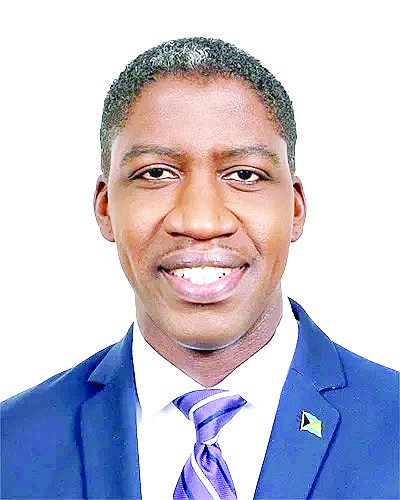
In a candid public briefing, Bahamas Minister of Environment and Natural Resources Zane Lightbourne laid bare the longstanding, vexing bottlenecks plaguing the government’s derelict vehicle removal program, acknowledging that current cleanup operations are moving at an unsatisfactorily slow pace despite repeated community complaints. Under the existing framework, the Department of Environmental Health first tags abandoned, unclaimed vehicles for removal, then grants registered property owners a 14-day window to arrange for the units to be hauled away on their own. Once that window expires, the government relies entirely on contracted private towing and wrecking firms to clear the tagged vehicles, a model Lightbourne openly admits is deeply inefficient. The government pays wreckers roughly $60 per vehicle removed, but most private operators decline to deploy their tow trucks for single or small batches of derelict units, given the low price point and high labor costs of extracting vehicles that are often missing wheels, buried under piles of other abandoned wreckage, or stuck in hard-to-reach residential lots. Most wreckers will only schedule pickup runs once they have a backlog of five or more vehicles to remove in a single trip, creating weeks-long delays that leave blighted wreckage sitting in neighborhoods long after cleanup orders are issued. Compounding the operational gaps, Lightbourne confirmed that multiple Members of Parliament have reported recurring dumping crises: many communities that are fully cleared of derelict vehicles during official cleanup drives end up littered with newly abandoned units within days, sometimes appearing overnight as unscrupulous residents and unregulated roadside garages dump unwanted cars on public and private land to avoid disposal costs. To address these gaps, the Ministry is rolling out a multi-pronged overhaul strategy, starting with tighter regulatory enforcement targeting unlicensed roadside garages in partnership with the Ministry of Works. The administration is also collaborating closely with the Attorney General’s Office to streamline operations for the dedicated environmental court, with Commissioner of Police Shanta Knowles already assigning a dedicated police prosecutor to fast-track cases against serial dumpers who disregard local environmental laws and lower neighborhood property values. While existing penalties for illegal vehicle dumping can reach as high as $10,000, Lightbourne emphasized that fines alone are not sufficient to resolve the crisis, as authorities still bear the cost burden of removing the abandoned vehicles even after offenders are penalized. Storage space for collected derelict units has also emerged as a critical bottleneck: current temporary holding sites at Ecology Park and Department of Environmental Health facilities are nearing capacity, prompting the government to work with the Lands and Surveys Department to secure a new, readily accessible parcel of land to replace a previously donated plot that required extensive pre-development work before it could be used as a dedicated wreck storage facility. Lightbourne noted that the derelict vehicle crisis is not limited to New Providence, with uncollected abandoned cars also posing a growing blight and public nuisance across the Family Islands, where the government is coordinating directly with local municipal authorities to launch targeted localized removal drives. Unlike routine household waste collection, derelict vehicle removal requires specialized heavy lifting equipment and trained personnel, making it far more logistically complex to execute at scale, and Lightbourne made a direct public appeal to Bahamian residents to take personal responsibility for legally disposing of their unwanted vehicles rather than dumping them in public spaces, and to continue reporting unclaimed wreckage to environmental health officials to support cleanup efforts. The minister also confirmed that the government is working to build a formal end-to-end system to ship collected derelict vehicles overseas for recycling, as no domestic large-scale auto recycling facilities currently operate in the country, with a long-term goal of removing all stored wreckage from the islands entirely. In a separate announcement, Lightbourne shared that the government’s upcoming national community cleanup campaign, initially scheduled to launch on November 7, has been pushed back by several weeks out of respect for the recent passing of the mother of Obie Roberts, Parliamentary Secretary and lead organizer of the cleanup initiative. The rescheduled campaign will mobilize schools, faith communities, civic groups, and private sector partners to advance nationwide public cleanliness goals, and is designed to be a sustained community engagement effort rather than a one-off bulk waste collection drive.
Contracted private wreckers ‘need to find a more efficient way to’ remove derelict vehicles