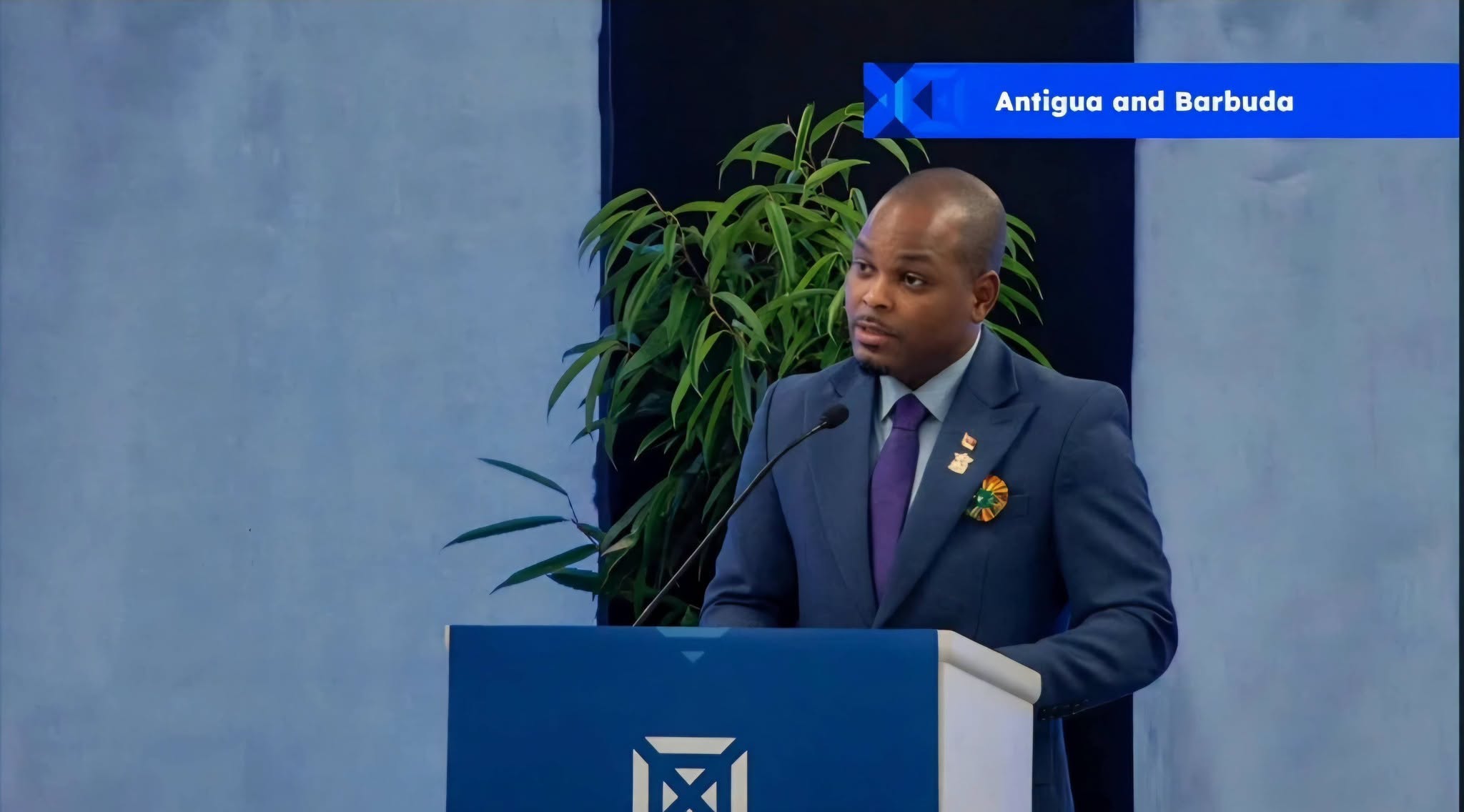
Hosted by the Government of Antigua and Barbuda alongside co-host nations Bangladesh, Guyana, Ireland, and Nigeria, in technical partnership with the World Health Organization (WHO) and under the secretariat coordination of the International Agency for the Prevention of Blindness (IAPB), the landmark Global Eye Summit wrapped up its proceedings today at the Sir John E. St. Luce Conference Centre. The high-profile gathering brought together heads of government, multilateral institution representatives, development stakeholders, civil society groups, and private sector leaders to align on actionable strategies to expand equitable access to quality eye care worldwide, and embed eye health priorities within universal health coverage roadmaps. In his official closing address, Antigua and Barbuda’s Minister of Health, Wellness, Environment and Civil Service Affairs Michael Joseph framed the summit’s collective outcomes as a pivotal turning point that moves long-held global eye health ambitions from policy rhetoric to tangible, community-focused impact. Joseph revealed that 57 participating national governments have formally tabled binding domestic commitments, unlocking a combined US$1.23 billion in earmarked public funding for national eye health programming – a shift that signals a widespread global move toward sustainable, country-led financing models that reduce overreliance on external donor aid. Several targeted priority pledges emerged from the summit’s working sessions: 29 nations committed to scaling up child eye health services via nationwide rollouts of school-based vision screening programs, streamlined early detection pathways for vision impairments, and expanded access to low-cost, quality prescription eyewear, with these efforts backed by 8 private sector partners and 53 civil society organizations, plus a formal UNICEF pledge to support 25 countries to deliver vision screening to 90 million children across low and middle-income regions. A further 42 governments agreed to implement targeted policy reforms to cut barriers to affordable glasses, including full alignment with WHO’s SPECS initiative, strengthened regulatory standards for eyewear quality, and the full removal of import tariffs and consumption taxes on prescription glasses to reduce costs for households. Regional collective commitments were also formalized during the event, with the Caribbean Community (CARICOM) and 18 Pacific Island nations announcing coordinated regional action plans tailored to address unique gaps faced by small island developing states and geographically dispersed, resource-strapped health systems that have long struggled to deliver equitable eye care services to remote communities. One of the summit’s most transformative milestones was the official launch of WHO’s SEE 2045 initiative, which establishes the world’s first global target to eliminate avoidable cataract – marking only the second noncommunicable disease in WHO’s 75-year history to receive a formal global elimination roadmap. Antigua and Barbuda was named among the first five pilot nations to join the SEE 2045 effort, alongside Bangladesh, China, Kenya, and Nigeria. The summit’s overarching unifying framework, the St. John’s Global Compact for Eye Health, was formally adopted during the closing plenary, consolidating all government, private sector, and civil society pledges under a unified structure that standardizes action tracking, investment accountability, and transparent progress reporting. At the time of the closing session, 187 cross-sector stakeholders had already formally endorsed the Compact, with organizers confirming the document will remain open for additional signatories from governments and partner organizations in the months following the summit. Minister Joseph extended special recognition to the IAPB for its work as the summit’s secretariat, calling on the global blindness prevention body to continue facilitating cross-stakeholder collaboration to ensure no pledged commitment falls through the cracks. “Every promise has been made, and the St. John’s Compact is now formally adopted,” Joseph stated in his closing call to action. “Our work starts today, not when we return home. Every partner around this table must deliver on the pledges we have made here in St. John’s, to ensure no person is left behind due to preventable or treatable vision loss.”
Antigua and Barbuda Joins Global Leaders in Advancing Commitments to Eye Health as Global Eye Summit Concludes