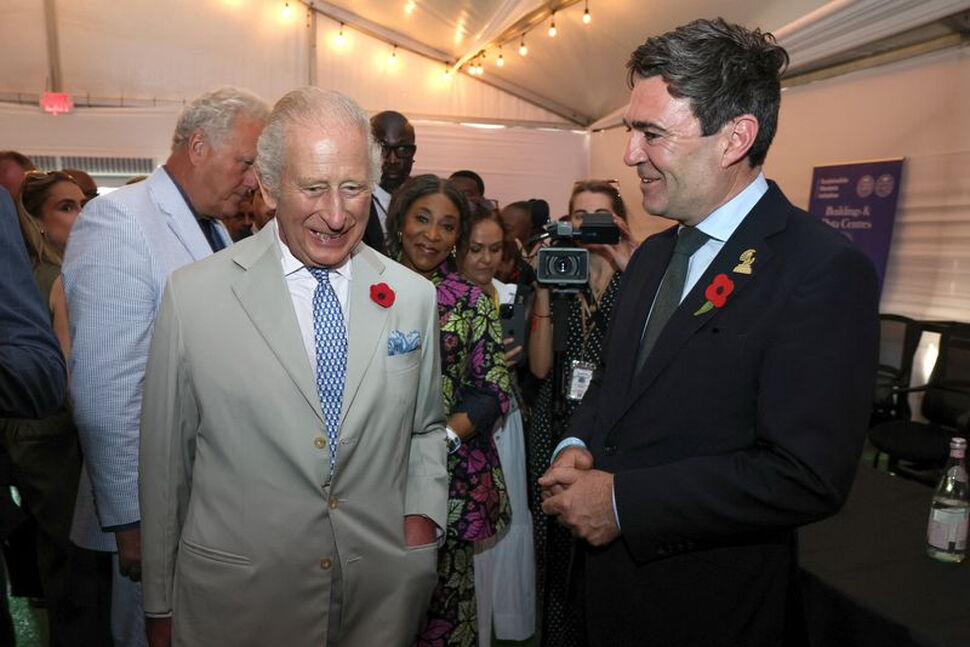
At the upcoming high-stakes Commonwealth Heads of Government Meeting kicking off Tuesday in Antigua and Barbuda, British Prime Minister Andy Burnham will lay out a forward-looking policy agenda centered on targeted debt relief for vulnerable member states, expanded cross-bloc trade ties, and coordinated action on shared global crises, even as long-simmering demands for historical slavery reparations dominate pre-summit discourse. Burnham will be joined at the 56-nation gathering by King Charles, the ceremonial head of the Commonwealth, a bloc made up largely of former British colonial territories that is home to 2.7 billion people across every inhabited continent. For decades, successive UK governments have resisted issuing a formal public apology for Britain’s central role in the transatlantic slave trade, a position King Charles has adhered to during his ongoing week-long Caribbean royal tour, where he has publicly acknowledged the “profound suffering and systemic injustices of the colonial era” without extending a formal state apology. In a notable policy shift announced over the weekend, Burnham confirmed his administration is open to negotiating a formal, collective apology for Britain’s historical involvement in the enslavement of African peoples, while clarifying that direct financial reparations payments are not under consideration. A Downing Street spokesperson confirmed Monday that preliminary discussions over the structure and scope of that proposed apology will launch on the sidelines of the Antigua summit, with input directly from the nations and communities most harmed by colonial exploitation, rather than being drafted unilaterally by British officials. “We believe any formal apology must be co-developed in good faith with the affected populations, not imposed as a top-down gesture decided exclusively in London,” the spokesperson stated. Beyond the reckoning with historical harms, Burnham’s formal summit agenda prioritizes tangible economic support for smaller, lower-income Commonwealth member states: his office data shows nearly half of all developing nations currently trapped in unsustainable debt burdens are Commonwealth members, with recent sharp global interest rate hikes worsening their fiscal precarity. Burnham will formally call for a broadened debt reset framework that brings non-G7 creditor nations and private sector lenders to the negotiating table, rather than limiting debt restructuring talks exclusively to the group of wealthy Western economies. He will also announce two new dedicated cross-Commonwealth taskforces: one focused on unlocking targeted foreign investment for the bloc’s fast-growing critical mineral industries, and another tasked with eliminating non-tariff barriers to intra-Commonwealth trade to boost shared economic growth. To back these commitments, the UK is pledging £40 million (US$54 million) in dedicated funding for Caribbean critical infrastructure projects over the next three years. King Charles, who will deliver the summit’s opening address Tuesday, is expected to reference the legacy of the transatlantic slave trade while framing the gathering as a forum for collective, future-focused action on climate change, shared security, and youth opportunity. A Buckingham Palace spokesperson noted that the King’s core function at the summit will be to facilitate connections between national leaders, global institutional stakeholders, and impact investors to align resources around shared Commonwealth priorities. These gestures are unlikely to fully satisfy demands from the Caribbean Community (CARICOM), a 23-member bloc of Caribbean nations that has formally pushed to place binding slavery reparations on the summit’s official negotiating agenda. Historical data from the Transatlantic Slave Trade Database confirms that between the 15th and 19th centuries, European traders abducted at least 12.5 million African people and trafficked them across the Atlantic, with British vessels transporting an estimated 3.2 million enslaved people, cementing the UK’s status as one of the largest participants in the transatlantic slave trade.