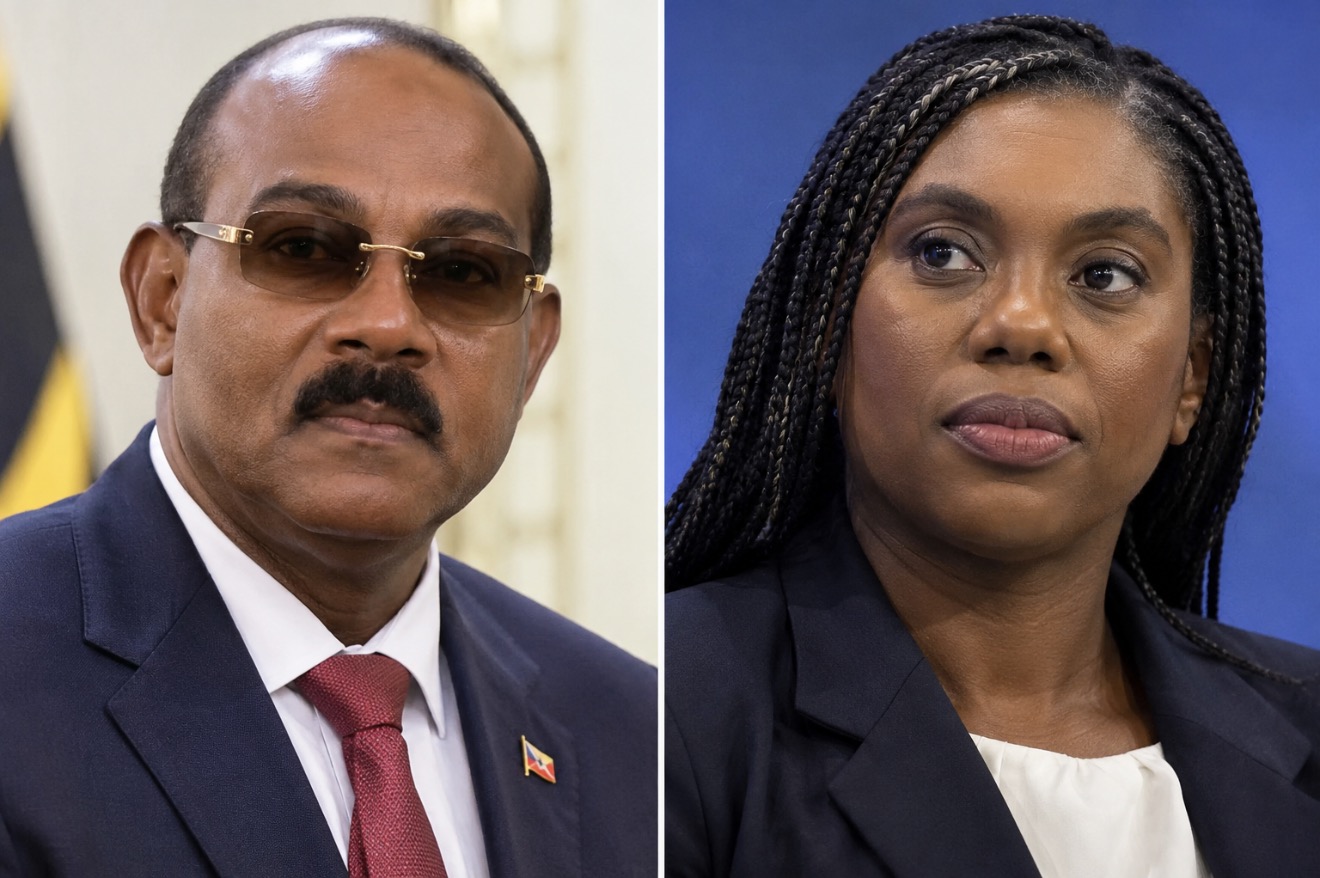
As Antigua and Barbuda prepares to host the 2026 Commonwealth Heads of Government Meeting (CHOGM) in its capital St. John’s, a fiery public dispute has erupted between regional reparations advocate Prime Minister Gaston Browne and UK Conservative Party opposition leader Kemi Badenoch over transatlantic slave trade accountability. The clash unfolded during a Sunday ITV News interview with Browne, held shortly after he joined King Charles III and Queen Camilla for a church service to mark the twin-island nation’s 45th anniversary of independence from British rule, and has since drawn widespread coverage across UK and Caribbean media outlets. Badenoch, who recently criticized UK Prime Minister Andy Burnham’s tentative openness to a formal British apology for the country’s role in the transatlantic slave trade, argued during a Sky News appearance that such an apology would create a legal and political opening for Caribbean nations to demand large-scale financial compensation. She framed the entire reparations and apology debate as a harmful distraction from collaborative future-focused Commonwealth initiatives, and insisted that Britain’s historic 19th century abolition of the slave trade deserved equal footing in conversations about its colonial legacy. Rejecting Badenoch’s framing outright, Browne described her position as deeply misguided, noting that her refusal to acknowledge the legitimacy of reparatory justice was a key illustration of why she remained in opposition rather than leading the UK government. While he stated that revisiting her stance was a personal choice for Badenoch, Browne emphasized that Antigua and Barbuda and its regional partners categorically rejected her position. A longstanding campaigner for redress for communities harmed by centuries of chattel slavery and colonial exploitation, Browne stressed that symbolic expressions of regret from the British government were insufficient to address intergenerational harms that persist across Caribbean societies to this day. He acknowledged that Burnham would face significant domestic political hurdles to implementing formal reparations, but argued that those practical challenges did not erase the moral and legal legitimacy of Caribbean demands. Browne added that the financial ask for compensation was calibrated to fall well within the UK’s economic means, and could be delivered via reallocations from the existing British overseas development assistance budget. Crucially, he framed financial accountability as a critical deterrent against future mass human rights abuses, noting that without tangible consequences for historical atrocities, global communities remained at risk of repeating similar violations in future generations. The public row unfolds against a rapidly shifting backdrop of British political discourse around colonial history: Prime Minister Burnham has broken with previous UK administrations by committing to structured formal talks with Commonwealth nations about a public apology for the slave trade, though he has explicitly ruled out direct cash reparations on the grounds that modern British citizens who never participated in slavery should not bear financial liability for historical actions. As an alternative, Burnham has proposed a debt restructuring framework for low-income Commonwealth nations, overseen by former Prime Minister Gordon Brown, that would extend loan repayment timelines and slash interest rates to ease fiscal burdens. This compromise proposal has been met with cautious openness by the 15-nation Caribbean Community (CARICOM) bloc, whose chair, Saint Lucia Prime Minister Philip J. Pierre, has welcomed the planned dialogue but insisted that reparations must remain on the negotiating table from the outset, rather than being discarded before talks even commence. CARICOM’s formal reparations agenda extends far beyond direct one-off payments, encompassing targeted investments in regional education and public health systems, formal support for Indigenous communities, full debt cancellation for highly indebted Caribbean states, cultural heritage restoration initiatives, and targeted policy measures to dismantle structural inequalities directly traced to the era of slavery. Regional leaders have explicitly clarified that debt relief packages cannot be accepted as a full substitute for comprehensive reparatory justice, noting that the transatlantic slave trade generated unprecedented wealth for British and European economies while creating systemic gaps in wealth, infrastructure and social opportunity across the Caribbean that persist 200 years after the abolition of the trade. The CHOGM gathering, which has already drawn King Charles and senior royal representatives to Antigua and Barbuda, is set to place this fraught historical debate under a global spotlight. Buckingham Palace has confirmed that the King will address the painful legacy of the transatlantic slave trade with unflinching sincerity during his formal address to Commonwealth leaders on Tuesday, though he is not expected to issue a formal public apology or announce any new reparations commitments. During his ITV News interview, Browne also took the opportunity to clarify his longstanding position on Antigua and Barbuda’s republican transition, noting that he personally supports the election of a local Antiguan head of state but that any constitutional shift will only move forward after full public consultation and adherence to established national legal procedures. He emphasized that until any such transition is approved by citizens, he and his government will continue to extend full customary respect to King Charles, who remains the country’s official head of state. The high-profile public clash between Browne and Badenoch has cemented Antigua and Barbuda’s position as the epicenter of a growing global conversation about colonial accountability, as Commonwealth heads of government gather to chart the bloc’s future path while confronting the unaddressed harms of its shared colonial past.
PM Browne Rebukes UK Conservative Leader Over Opposition to Slavery Reparations