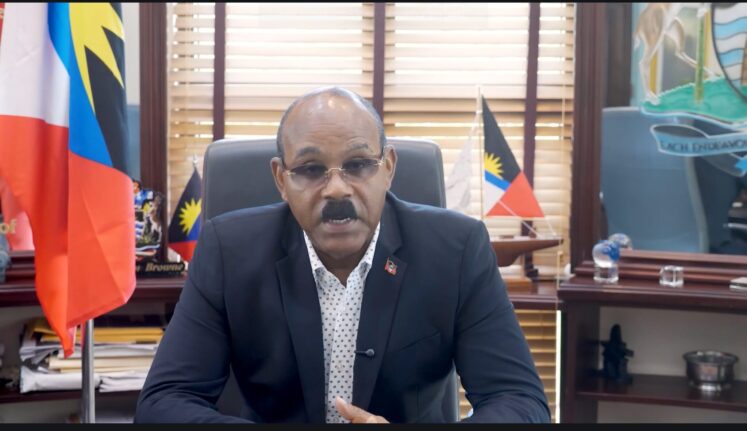
Delivering a landmark national address to mark Antigua and Barbuda’s 45th independence anniversary on Sunday, November 1, Prime Minister Gaston Browne offered a frank, nuanced assessment of the twin realities facing the twin-island nation: its historic achievement of official World Bank high-income economy classification, and the persistent unmet needs of large swathes of its population. Browne opened his address by celebrating the decades of collective progress that lifted the nation to the high-income threshold, framing the milestone as a hard-won victory earned through decades of strategic policy, public investment, and the labor of working citizens across every sector. But he immediately pushed back against any simplistic narrative that the classification translates to universal prosperity, emphasizing that aggregated national income metrics often obscure the day-to-day financial strains that many local families continue to navigate. The prime minister pointed to the ongoing global cost-of-living crunch as a core driver of current household stress, noting that surging prices for staple foods, fuel, electricity, public transit, and other essential goods have stretched household budgets thin for thousands of residents. He contextualized these domestic pressures as largely rooted in external global disruptions, including ongoing geopolitical conflicts, volatile international energy markets, and lingering bottlenecks in global shipping and supply chains that rippled across small island developing economies. Rejecting the idea that national success can be measured solely by GDP figures or high-profile infrastructure builds, Browne laid out a revised framework for national progress that centers tangible, quality-of-life outcomes for ordinary citizens. He cited past public investments in the country’s education system, public healthcare network, and upgraded airport and seaport facilities as critical foundational gains since the nation gained independence in 1981, but stressed that the true value of those projects only materializes when every household can access dignified livelihoods, affordable care, quality schooling for their children, and stable personal security. Browne outlined two top policy priorities for the coming term: tackling stubborn youth unemployment to create meaningful, rewarding career paths for young Antiguans and Barbudans that encourage them to build long-term futures on the islands, and accelerating targeted economic diversification to reduce the nation’s vulnerability to volatile external global shocks. He closed his address by framing full national sovereignty as extending far beyond political independence, noting that true self-determination requires building a more inclusive, resilient economy where the benefits of national progress are equitably distributed across every community, rather than concentrated in narrow segments of the population.
PM Gaston Browne acknowledges high-income status does not reflect struggles of every household in Antigua and Barbuda