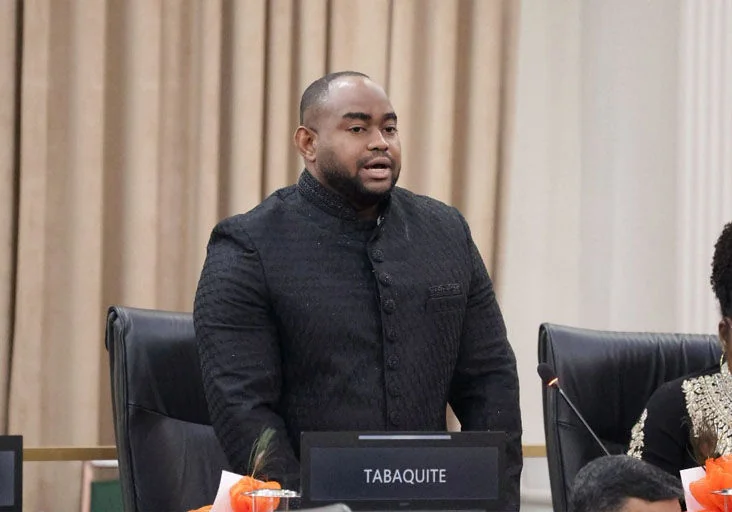
Port of Spain – Trinidad and Tobago’s historic break from decades of consistent support for annual UN General Assembly resolutions demanding an end to the U.S. trade embargo on Cuba was formally defended in national parliament yesterday by Minister of Foreign and Caricom Affairs Sean Sobers, who framed the unexpected negative vote as an act of solidarity with ordinary Cuban citizens rather than a rejection of their well-being.
The Caribbean nation cast its opposing ballot during the latest UNGA vote on Wednesday, joining more than 45 countries globally that declined to back the Cuban-sponsored measure – either via direct opposition, abstention, or full absence from the tally. Sobers emphasized that this marked the lowest level of global support for the long-running resolution since its first introduction in 1992, when only three nations voted against it.
Detailing regional voting patterns across the Western Hemisphere, Sobers noted that alongside Trinidad and Tobago, Argentina, Colombia, Costa Rica, Ecuador, and Paraguay also voted no, while Chile, the Dominican Republic, Jamaica, Guyana, Haiti, Honduras, and Peru abstained. A further six Caribbean and Latin American states, including several Caricom member nations, were not present for the vote, bringing the total share of Caricom members declining to support the resolution to over 50%.
Sobers clarified that the annual UN resolution carries no legally binding authority, and cannot compel the United States to roll back its sanctions regime, as that power rests exclusively with the U.S. Congress under its constitutional mandate. He went on to argue that decades of socialist governance under what he termed a dictatorial system, rather than external sanctions alone, were responsible for Cuba’s prolonged economic stagnation, pointing out that prior to the 1959 Cuban Revolution, the island boasted one of the most prosperous economies in Latin America, with leading regional rates of per capita consumption of food goods and household ownership of consumer durables including cars, telephones and radios.
This policy shift, Sobers explained, forms part of a comprehensive ongoing review of Trinidad and Tobago’s foreign policy initiated after the United National Congress administration took office in 2025, designed to align the country’s international engagements with core domestic priorities of building a stronger, safer and more prosperous nation. He noted that Prime Minister Kamla Persad-Bissessar had first publicly signalled this new stance back in February 2026, during her address to the 50th Regular Meeting of Caricom Heads of Government in St Kitts, where she openly called for political reform in Cuba.
Sobers stressed that it was ethically inconsistent for Caribbean nations to demand multi-party democracy, free and fair elections, and full political freedoms for their own populations while remaining silent on the absence of those same rights for Cuban citizens. He took the opportunity to criticize parliamentary opposition members for what he described as their historical alignment with the Cuban government’s diplomatic initiatives, claiming their political track record revealed a preference for unaccountable power not transferred via free, competitive elections.
Responding to a question from Opposition MP Marvin Gonzales, who noted that Persad-Bissessar had publicly pledged full support to the Cuban government during her 2010-2015 tenure in office, Sobers stated that foreign policy must be continuously updated to reflect rapidly shifting global contexts and the evolving lived realities of the Cuban people under autocratic rule. He reaffirmed that Trinidad and Tobago would continue to advocate for a free, democratic and prosperous Cuba across all regional and global multilateral forums, including Caricom and the United Nations.
‘True solidarity is not silence’