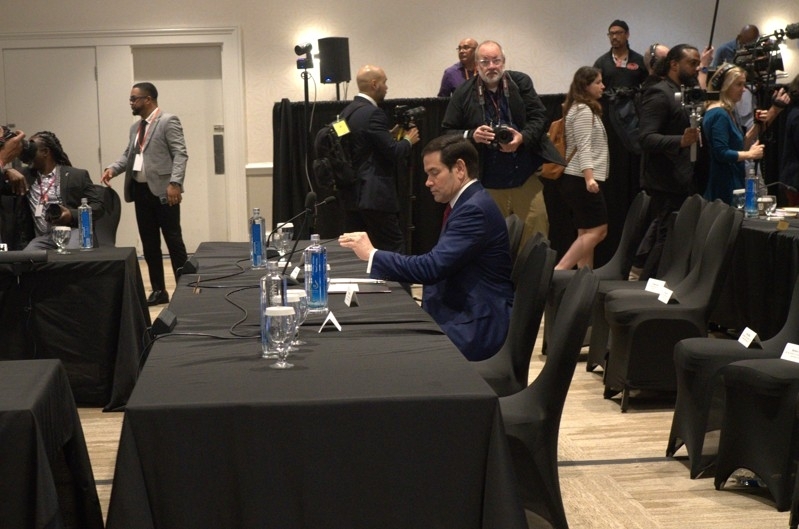
In his opening address at the Geopolitical Issues plenary of the two-day G20 Foreign Ministers Summit hosted in midtown Atlanta, Georgia on October 30, 2026, U.S. Secretary of State Marco Rubio called on all G20 member nations to prioritize coordinated cross-border collaboration to mitigate cascading global crises that threaten to erode the foundations of international order. Under the U.S.’s current 2026 G20 presidency, the Atlanta gathering has been framed as a critical precursor to align collective priorities ahead of higher-level leader summits, with a robust security footprint deployed across the downtown venue to safeguard visiting diplomatic delegations and dignitaries. Rubio emphasized that the overlapping array of current global pressures – including mounting disruptions to global energy and food supply networks, persistent supply chain bottlenecks, rising trade frictions, and growing threats to unimpeded freedom of navigation on high seas – cannot be resolved by isolated national action alone. He specifically flagged rising tensions around the Strait of Hormuz, the chokepoint that carries a large share of the world’s seaborne oil exports, as a flashpoint that risks triggering cascading shocks to energy prices, commodity markets, and broader macroeconomic stability at a moment of widespread global uncertainty. Noting that the U.S. G20 presidency under the Trump administration has centered on tackling interconnected, multifaceted transnational challenges, Rubio told assembled foreign ministers that coordinated, mutually aligned solutions were the only viable path to strengthen collective economic resilience, protect open global markets, and lay the groundwork for shared long-term prosperity. The summit’s opening plenary has structured its proceedings to ensure equitable participation across all 20 member states: after introductory briefings on the two core agenda items of freedom of navigation and food security, each delegation will be invited to deliver a three-minute intervention in alphabetical order to guarantee every nation has a chance to contribute its national perspective. Rubio closed his address by challenging assembled diplomatic leaders to move beyond rhetorical consensus and translate shared collective interests into tangible, actionable policies that deliver measurable improvements in stability and quality of life for ordinary citizens across all G20 member states and the broader global community.
Rubio calls on G20 foreign ministers to strengthen global stability amid mounting crises