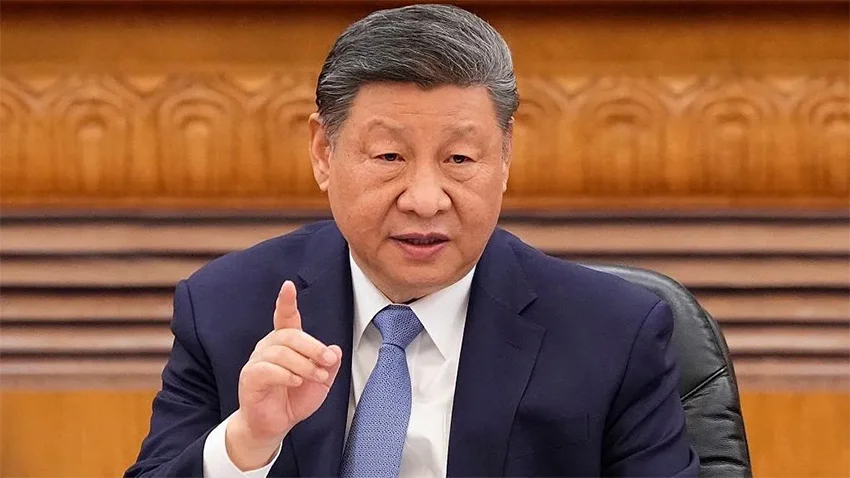
Held in Beijing from October 26 to 29, the Fifth Plenary Session of the 20th Central Committee of the Communist Party of China has formally ratified pre-issued disciplinary penalties against dozens of high-ranking party and military officials, as part of its core agenda to tighten internal party governance and sustain long-running anti-corruption efforts. The session, which concluded on October 29, stands out for an unprecedentedly low attendance rate, marking the first time in Xi Jinping’s 14 years in leadership that a plenary Central Committee gathering drew fewer than 300 participants. Official communiqué records show only 162 full voting members and 117 alternate members of the Central Committee were present, totaling 279 attendees – a sharp drop from the 376 combined full and alternate members that took part in the first plenum of the 20th Central Committee when the current leadership lineup was formally installed in 2022. During the closed-door meeting, Xi Jinping, General Secretary of the CPC Central Committee and China’s President, delivered explanatory remarks on a newly passed resolution that outlines plans to enforce strict, comprehensive oversight of all party operations. The official post-session statement frames the ongoing disciplinary crackdown as a targeted intervention to eliminate severe hidden risks within the party, state apparatus, and armed forces, noting that sustained internal rule enforcement and anti-corruption prevention are critical to consolidating party organizational strength and upholding its centralized authority. While the communiqué confirms that multiple senior incumbent and former party and military leaders have been sanctioned, it draws a clear distinction between officials who have been formally expelled from the CPC and Li Yunze, who was removed from his internal party post, without releasing granular details of individual charges or the full scope of underlying investigations. The scale of confirmed disciplinary actions underscores that Xi’s years-long anti-corruption campaign, launched shortly after he assumed leadership in 2012, is now penetrating the highest echelons of both the party leadership and military command structure. The plenum also elected Zhang Shengmin, a veteran leader with deep experience in the military’s internal disciplinary oversight system, as a new member of the 25-seat Politbureau, a move that analysts note follows significant downsizing of the Central Military Commission’s leadership roster linked to earlier disciplinary removals. The official statement additionally confirmed that the 21st National Congress of the Communist Party of China will be convened in Beijing during the second half of 2027, a landmark gathering that will set the next five-year leadership roadmap for the country. Independent political observers widely speculate that Xi will use the lead-up to the 2027 congress to secure a fourth term as party leader, a tenure that would extend his time in office far beyond the informal two-term limit that was standard for Chinese top leadership in the post-reform era, though no formal announcement of such a plan has been issued to date. While official narratives frame the sweeping internal disciplinary moves as a necessary step to streamline party operations and eliminate corruption, independent analysts point to the unprecedented low plenum attendance and large-scale removals from top military posts as key indicators of shifting internal power dynamics within the CPC’s highest circles, with many raising questions about potential impacts on the operational stability of China’s armed forces.
Chinese Communistische Partij bevestigt maatregelen tegen tientallen functionarissen na plenum