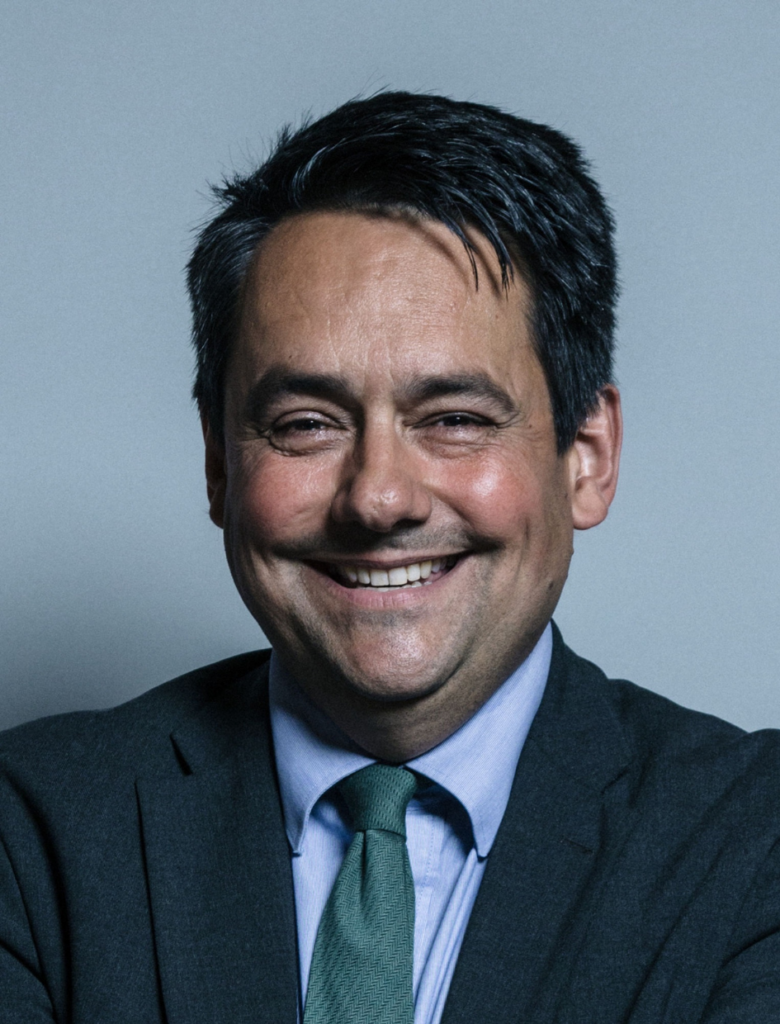
As Commonwealth heads of state converge on Antigua and Barbuda for the 28th Commonwealth Heads of Government Meeting (CHOGM), Stephen Twigg, Secretary-General of the Commonwealth Parliamentary Association (CPA), has published a targeted op-ed exploring how legislative bodies across the 56-nation bloc can lead the fight to shore up democratic engagement amid mounting global pressures.
Twigg opens by framing the current global landscape as uniquely hostile to democratic governance: anti-democratic actors are deploying coordinated tactics ranging from widespread disinformation campaigns to deliberate subversion of the rule of law, while a growing share of electorates report feeling alienated from the state institutions designed to represent their interests. Compounding these strains, nations across the Commonwealth are grappling with cascading overlapping crises: accelerating climate change and worsening extreme natural disasters, stagnant economic output, unsustainable national debt burdens, and the reemergence of interstate armed conflict that many global policymakers believed had been relegated to the past decades ago.
Autocratic regimes consistently target independent democratic institutions, Twigg notes, because they recognize a truth often overlooked in mainstream political discourse: robust, unconstrained public institutions pose the single greatest threat to authoritarian hold on power. No single pillar of a democratic system – whether parliaments, independent judiciary, free media, or active civil society – can unilaterally build long-term democratic resilience, but coordinated action across all four pillars creates a collective defense capable of pushing back against shared anti-democratic threats.
Legislatures cannot operate in isolation from the communities they serve, and targeted harassment of elected representatives – from torrents of online hate speech to anonymous death threats – is not a private harm limited to parliamentarians and their families, but a systemic danger to all citizens. When members of parliament face credible threats for carrying out their official duties, they are barred from safely holding unstructured in-person meetings with constituents, cannot observe on-the-ground community issues without heavy police escort, and cannot hold unfiltered public conversations unmediated by security concerns. This dynamic erodes the quality of democratic representation and creates an unbridgeable gap between elected officials and the populations they are mandated to serve.
Against this backdrop, the CPA’s core message at the Antigua and Barbuda CHOGM is straightforward: inclusive, high-functioning parliaments are a foundational building block of durable democratic resilience. Twigg emphasizes the CPA is not advancing this mission in isolation: the Commonwealth Secretariat has long prioritized democratic resilience as a core strategic goal, advancing these principles through sustained engagement with national governments and targeted programs including its long-running independent election observation missions. The CHOGM gathering, which brings together thousands of stakeholders from every corner of the Commonwealth, creates a timely, rare opportunity to share on-the-ground case studies of how legislative institutions across diverse national contexts are embedding democratic resilience into their daily operations.
The CPA’s extensive cross-border network of legislators will serve as living proof of this progress over the course of the summit. Host nation Antigua and Barbuda’s national parliament currently holds a seat on the CPA’s Executive Committee, and has emerged as a widely cited model for deep, sustained local engagement between legislative bodies and their constituents. A defining, longstanding feature of Commonwealth political systems is that elected local representatives do not just advocate for their districts – they often reside full-time in the communities they represent, a dynamic that is particularly pronounced in the CPA Small Branches network, which serves parliamentarians from jurisdictions with total populations under one million.
Twigg also highlights the need for targeted, data-driven action to address the disproportionate risks facing marginalized groups of legislators. Though women make up less than 50% of all sitting parliamentarians across the Commonwealth, female elected officials are targeted by online harassment and violent threats at vastly disproportionate rates. The CPA’s dedicated gender programming, and ongoing discussions led by its Commonwealth Women Parliamentarians (CWP) network, are explicitly designed to address this gap. Later in 2024, the CPA will partner with the Inter-Parliamentary Union and ParlAmericas to publish a comprehensive regional study documenting systemic sexism, harassment, and targeted violence against women serving in legislatures across the Americas and Caribbean.
Finally, Twigg stresses that beyond formal representation of constituents, elected parliamentarians must establish direct, collaborative partnerships with the communities their policies will impact. A legislature that is not even physically accessible to people with disabilities cannot legitimately claim to draft inclusive, representative public policy. For this reason, the CPA’s disability-focused programming at CHOGM will center the critical imperative of integrating disabled citizens into every stage of policy development, rather than treating accessibility as an afterthought. As global governance frameworks shift away from the outdated medical model of disability toward a more equitable social model, it has become increasingly clear that no nation can call itself a full, functional democracy until the voices of every single one of its citizens are centered and heard.
OPINION: Ensuring All Citizens Are Represented in the Commonwealth