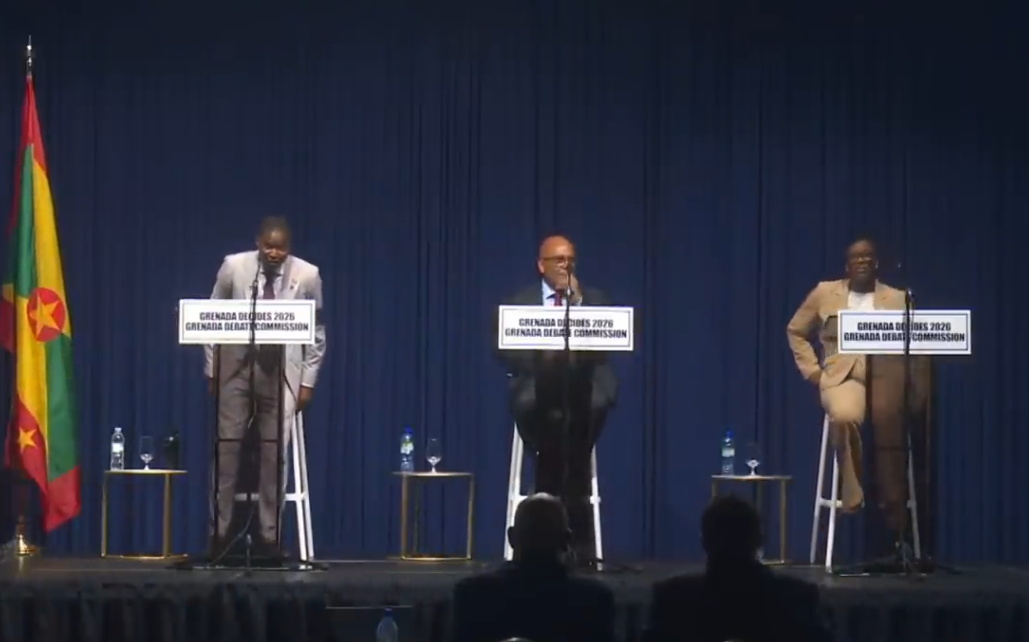
During Grenada’s first-ever National Leaders Debate hosted jointly by the Media Workers Association of Grenada, Grenada Broadcasting Network, The Bubb Report, and the Grenada Conference of Churches ahead of the 5 November general election, former two-term foreign affairs minister Peter David publicly voiced sharp disappointment over the fractured positions Caribbean Community (Caricom) member states took on a recent United Nations resolution condemning the decades-long U.S. trade and economic embargo against Cuba.
David, who now leads the newly formed Democratic People’s Movement (DPM), emphasized that Grenada owed a profound, enduring debt of gratitude to the Cuban government and people for decades of cross-border assistance, and pledged his party would prioritize preserving that bilateral relationship. He noted that for generations, every Caricom nation had stood unified in voting against the U.S. embargo, a core founding goal of the regional bloc to present a coordinated, powerful global voice on foreign policy. The 2024 UN vote shattered that long-standing consensus: Trinidad and Tobago became the first Caricom state in decades to vote against the resolution, while Jamaica, Haiti, and Guyana chose to abstain; three other Caricom nations were marked absent during the tally, and only seven member states including Grenada maintained their traditional support for the measure. The final 130-17 vote with 25 abstentions marked a dramatic drop in global backing compared to the previous year’s 165 votes in favor, 7 against, and 12 abstentions, eroding Havana’s long-held Western Hemisphere and European support base.
Incumbent Prime Minister Dickon Mitchell, leader of the ruling National Democratic Congress, struck a far more pragmatic, non-committal tone, framing Grenada’s foreign policy as rooted exclusively in putting the national population’s best interests first. He argued that public, hypothetical diplomatic posturing was counterproductive, noting that national leaders are constantly forced to navigate a complex landscape of competing demands from global partners ranging from the U.S. and European Union to African nations and Venezuela. Mitchell explicitly cited the critical priority of preserving unobstructed U.S. visa access for Grenadian citizens, noting that while his administration would never compromise national sovereignty in negotiations, hard trade-offs between principled UN votes and tangible practical benefits for residents would sometimes require transparent public consultation or decisive leadership choices.
Emmalin Pierre, the first woman to lead the main opposition New National Party into a Grenadian general election, described the Caricom split on the Cuba resolution as deeply unfortunate, noting that the regional bloc had once stood fully aligned on the issue for decades. She pledged that if elected prime minister, her administration would prioritize rebuilding full regional unity across Caricom, and pursue a strategic, balanced diplomatic framework that allowed Grenada to maintain warm, productive ties with the U.S., Cuba, Venezuela, and all other global partners without being forced to pick sides or create unnecessary geopolitical adversaries.
Grenada political leaders comment on Caricom vote at UN resolution on Cuba