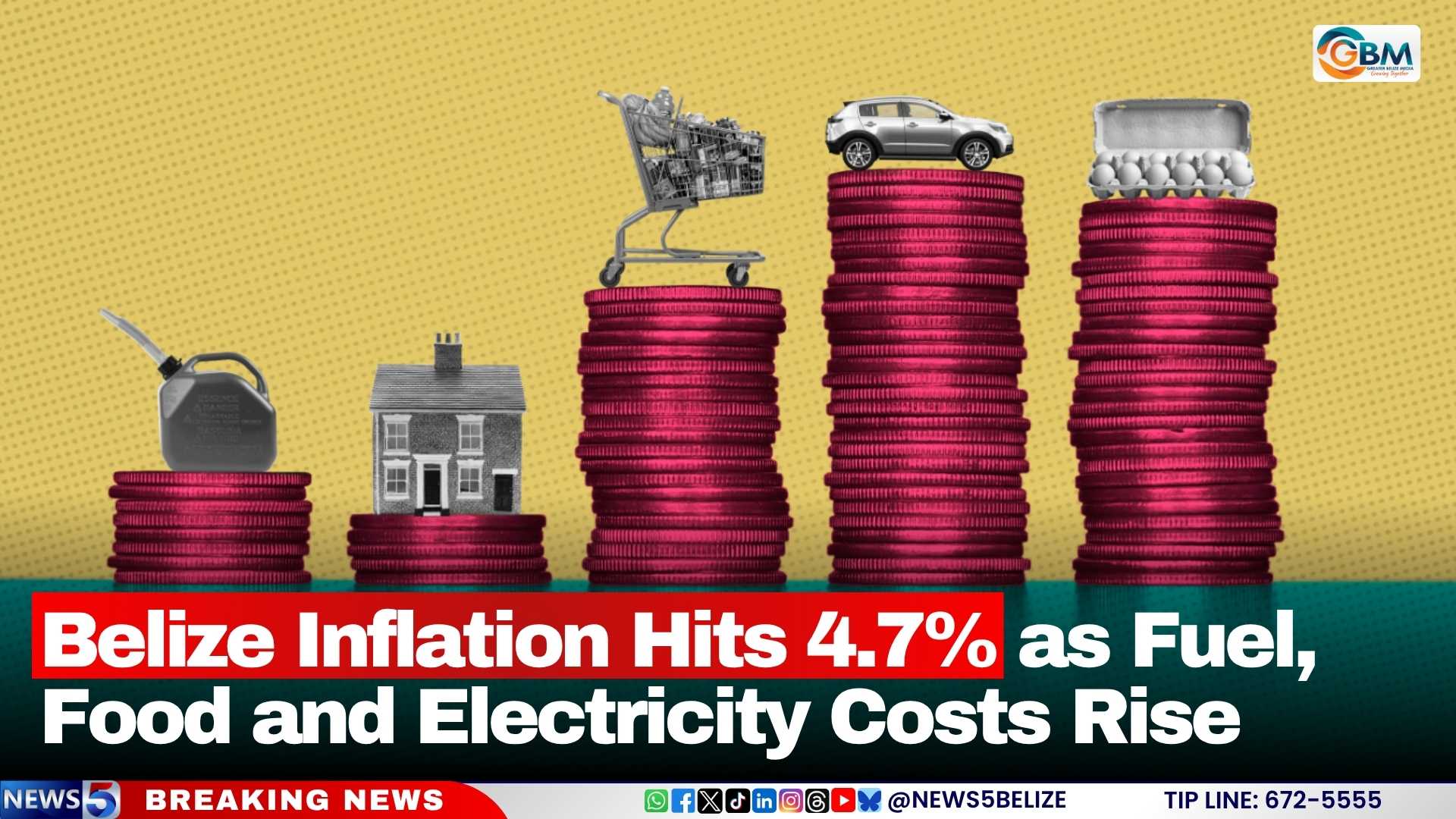
Official data released by the Statistical Institute of Belize (SIB) on October 29, 2026, confirms that the country’s annual consumer inflation rate reached 4.7% in September 2026, a trend that has been reflected in rising household expenditures across grocery, transportation, and utility bills for local residents. Three core expenditure segments — transportation, food and non-alcoholic beverages, and housing and related utilities — were responsible for 75% of the total price increase, marking them as the primary drivers of the upward inflation trend.
The transportation category saw the steepest year-over-year jump at 10.7%, with diesel recording the most dramatic price hike among fuel products: the average per-gallon cost surged by $3.77, rising from $11.92 in September 2025 to $15.69 in September 2026. Regular gasoline now averages $13.78 per gallon, while premium gasoline has hit $14.62 per gallon. Beyond fuel prices, passenger transport costs rose 15.2%, fueled by higher local bus and taxi fares, as well as elevated international air ticket prices.
Food and non-alcoholic beverage costs rose 4.6% year-over-year, with key staples driving the growth: poultry, fresh vegetables, fruits, and sugar all saw notable price increases. Sugar prices spiked 18% annually, while fresh fruit costs climbed 10.6% over the 12-month period.
Housing, water, electricity, gas, and associated fuel costs posted a 4.4% annual increase, with residential rents rising 2.3%. The SIB attributed the utility cost surge to a higher per-kilowatt-hour electricity rate and the Cost of Power Adjustment (COPA) policy implemented earlier in 2026. For a household consuming 4,500 gallons of water monthly, the water bill has increased from $86.38 to $91.13.
Other notable price shifts include a 6.4% rise in health service costs, linked to higher hospital and surgical procedure fees. The only tracked expenditure category that saw no upward movement was insurance and financial services. Regional inflation disparities were also recorded across Belize’s municipalities: San Ignacio/Santa Elena in the Cayo District reported the highest local inflation rate at 6.7%, while the coastal tourist hub of San Pedro posted the lowest rate at 3.3%.
Belize Inflation Hits 4.7% as Fuel, Food and Electricity Costs Rise