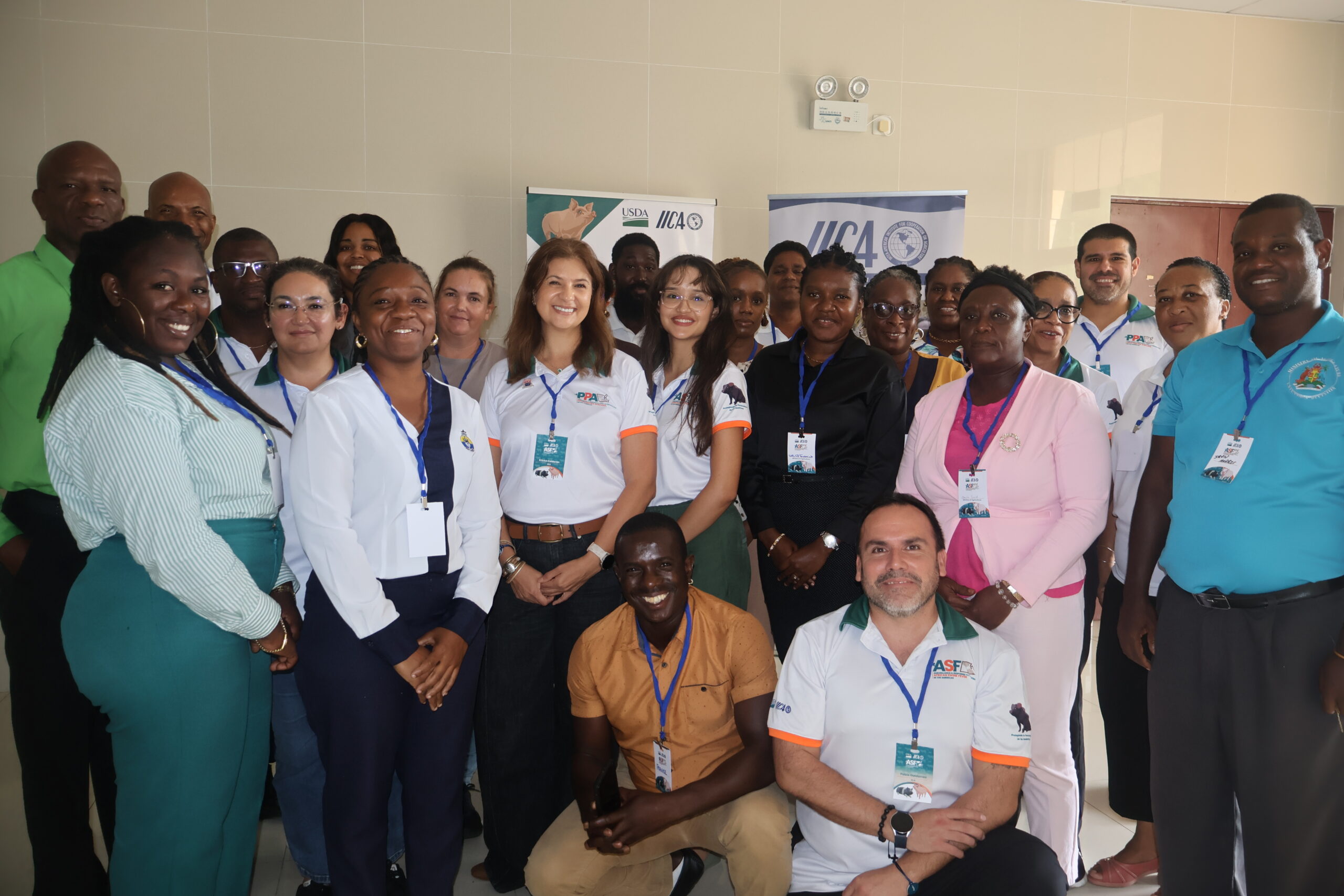
Over October 13–14, 2026, Grenada rolled out a targeted national sample collection and surveillance training program to bolster its full-cycle capacity to prevent, identify, and respond to African Swine Fever (ASF), a high-stakes viral threat to regional swine populations. Funded by the United States Department of Agriculture (USDA) and executed by the Inter-American Institute for Cooperation on Agriculture (IICA) in close partnership with the Ministry of Agriculture’s Veterinary and Livestock Division, the hands-on exercise marks the final installment of a multi-country preparedness series covering all six IICA member states in the Eastern Caribbean. ASF is an extremely contagious viral pathogen that exclusively impacts domestic and wild pig populations, with zero associated health risks for humans. Even so, unmanaged outbreaks can trigger near-total mortality in infected swine herds, erase the livelihoods of small-scale pig farmers, disrupt cross-border agricultural trade flows, and erode local food and nutrition security. The urgent push for enhanced regional readiness has been amplified by confirmed ASF outbreaks in neighboring Dominican Republic and Haiti, which expose the Caribbean’s unique vulnerabilities: porous cross-border movement of people and goods, long-standing regional trade links, and historic gaps in local veterinary and diagnostic infrastructure. The Grenada training brought together a diverse cross-section of critical stakeholders, including frontline veterinary personnel, officers from the Royal Grenada Police Force, representatives of the Grenada Ports Authority, and other public sector and industry partners. Over two days of combined classroom technical instruction and immersive field practice, participants mastered core competencies including low-stress animal handling protocols, strict field biosecurity standards, proper donning and doffing of personal protective equipment (PPE), sterile setup of designated sampling zones, accurate collection of ear blood swabs, and safe packaging, cold storage, and pre-shipping preparation of biological samples for diagnostic testing. A 7-member specialized IICA ASF technical team led by Dr. Ericka Calderon, IICA Headquarters ASF Project Manager, traveled to Grenada to lead the training, with additional expert facilitators joining from Chile, Guyana, and Saint Lucia. Zachary Tipton, International Programme Specialist with USDA, also contributed technical guidance to the regional initiative. Senior regional and local agricultural leaders emphasized the long-term strategic value of the training beyond a one-off technical drill. IICA Representative for the Eastern Caribbean States Gregg Rawlins noted that ASF’s confirmed presence on the island of Hispaniola means the threat is no longer a distant hypothetical for small Caribbean island nations. “For small island states like Grenada, proactive prevention, early detection, and robust preparedness are non-negotiable,” Rawlins explained. “This training is far more than a procedural drill: it is a targeted investment that will protect Grenada’s entire livestock sector and the thousands of livelihoods that depend on it.” Dr. Kimond Cummings, Chief Veterinary and Livestock Officer at Grenada’s Ministry of Agriculture, underscored the devastating global footprint of ASF on swine production systems, calling for coordinated, decisive action across the entire Western Hemisphere to contain its spread. “While the virus poses no danger to people, its impact on swine health is catastrophic, and it demands unwavering vigilance from every national veterinary authority,” Cummings stated. Dr. Calderon framed robust surveillance as the foundational first line of defense against ASF incursion. “Effective surveillance does not just detect existing outbreaks — it stops the virus from ever gaining a foothold in the first place,” she explained. Well-resourced surveillance systems empower veterinary authorities to map high-risk transmission pathways, monitor the movement of live pigs and pork products across borders, and make fast, data-driven decisions to contain risks before they escalate. The broader regional project, formally named the Surveillance and Response Project to Prevent African Swine Fever in the Americas, is designed to build a sustained regional network of fully trained veterinary and laboratory personnel, upgrade national sample collection and standardized reporting systems, and roll out coordinated targeted surveillance in high-priority high-risk zones. It also aims to formalize cross-border regional information-sharing protocols and pre-approved practical response frameworks, so that any suspected ASF case can be rapidly investigated and targeted containment measures deployed without delays. Javan Williams, Permanent Secretary of Grenada’s Ministry of Agriculture, called on all participants to integrate the newly acquired hands-on skills into standard day-to-day veterinary operations, rather than treating them as one-off training takeaways. “These capabilities will directly improve our ability to spot unusual disease signals early, mount a rapid, coordinated response, and protect our core livestock resources, keeping the livelihoods of our farming communities secure,” Williams said. He emphasized that formal training is only the starting point: sustained long-term vigilance will require regular routine farm visits, timely mandatory disease reporting, accurate centralized record-keeping, proactive on-farm observation, and ongoing close collaboration between veterinary teams, pig farmers, and all cross-sector stakeholders. Moving forward, the regional initiative will continue to support targeted field surveillance and systematic sample collection, access to accredited diagnostic testing at regional reference laboratories, and the full development of national customized ASF surveillance and emergency response plans. Program progress will be tracked using clear, measurable metrics including the total number of trained personnel, volume of samples collected and tested, geographic coverage of surveillance activities, and real-world application of acquired skills in field settings. Organizers explicitly clarified that the completion of this training exercise does not indicate any confirmed or suspected ASF presence in Grenada. As the final activity in the Eastern Caribbean training series, the program lays a collaborative foundation for long-term regional cooperation to protect animal health, agricultural livelihoods, and collective food security across the Caribbean.