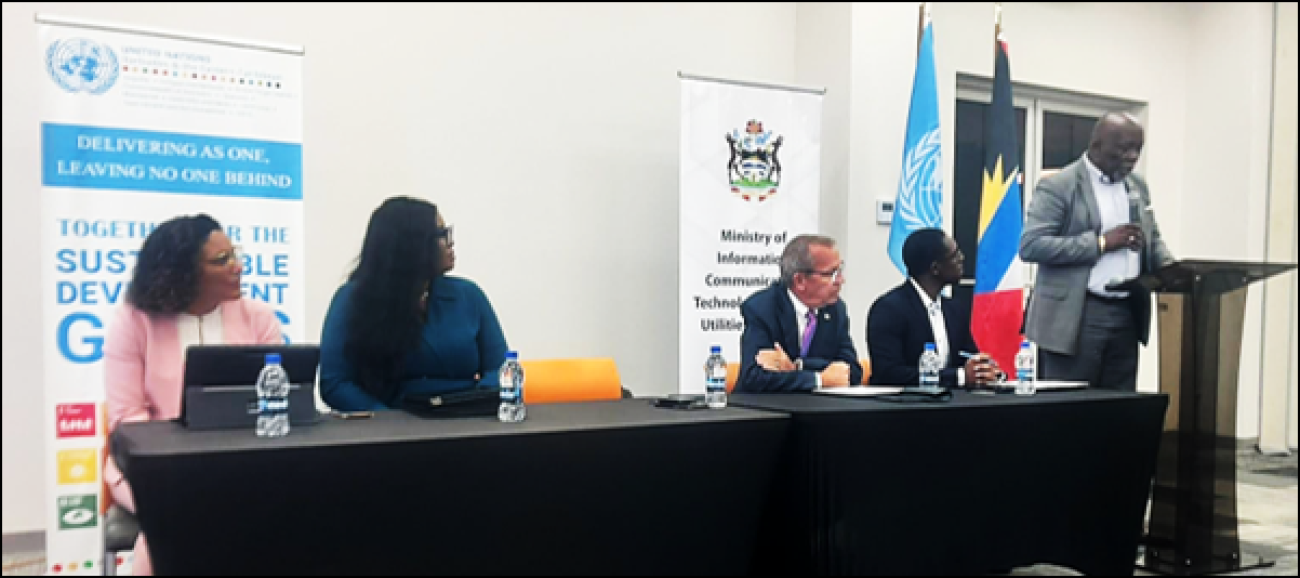
Following two years of cross-stakeholder collaborative drafting that kicked off in 2022, the twin-island nation of Antigua and Barbuda, in formal partnership with the United Nations Development System, has officially rolled out its comprehensive national Digital Transformation Strategy alongside a dedicated public-facing digital portal, laying out a structured, actionable roadmap to steer the country’s digital advancement through to 2030.
The landmark hybrid launch event brought together a wide coalition of partners spanning government agencies and multiple UN entities, including the UN Resident Coordinator’s Office, UNESCO, UNDP, PAHO, ITU, UNICEF, and UN Women, to mark the end of a multi-year co-development process and the official start of national implementation efforts.
Presiding over the launch, Honourable Melford Nicholas, the nation’s Minister of Information and Communication Technologies and Energy, delivered a formal public commitment to full execution of the strategy by the 2030 target date, while extending sincere gratitude for the robust, five-year collaborative support the UN Development System has provided to lay the groundwork for the digital modernization agenda.
Structured to deliver tangible, inclusive progress, the strategy is built around a three-phased implementation framework anchored to 10 high-priority targeted projects, all designed to elevate Antigua and Barbuda into a digitally advanced, adaptive, and resilient small island developing state.
Event speakers repeatedly emphasized that successful digital transformation cannot be delivered by government acting in isolation. Andrea Andrew, Antigua and Barbuda Country Coordinator, stressed that the national digital ambition requires coordinated, cross-sector buy-in from private industry, academic institutions, civil society groups, global development partners, and ordinary citizens across the islands.
This collective partnership ethos was echoed by Simon Springett, UN Resident Coordinator for Barbados and the Eastern Caribbean, who noted that years of joint work between UN agencies, national government teams, and local stakeholders had positioned digital transformation as a core enabler of the country’s broader sustainable development goals. “Today’s launch is not the conclusion of a process; it is, in many critical respects, the starting line,” Springett stated, before formalizing the UN Development System’s pledge to deliver ongoing implementation support, including specialized technical expertise, multi-stakeholder partnership facilitation, and access to global innovation networks and leading industry knowledge.
A key tangible output unveiled at the event is the official Digital Transformation Webpage, a purpose-built public platform designed to expand equitable public access to government information and services. Eric Falt, Regional Director of the UNESCO Regional Office for the Caribbean, highlighted the direct link between open digital access to information, civic empowerment, and meaningful public participation in governance. He noted that the new platform aligns fully with the core principles of Antigua and Barbuda’s Freedom of Information Act, ensuring residents can access clear, timely, and verified data about government services and policy decisions to better exercise their civil rights and engage with public institutions. The portal is built with full accessibility features for marginalized users, and a step-by-step video navigation guide was premiered during the launch to help all residents easily navigate its functions.
Isoke Perry, the national Digital Transformation Focal Point and Director of E-Government, welcomed the strategy’s deliberate action-oriented structure, noting that the phased roadmap and 10 priority projects will provide clear, consistent guidance to move the twin-island nation steadily toward its digital modernization and resilience goals. Perry also formally launched the Antigua and Barbuda Digital Transformation Journey, a public timeline that documents all key milestones of the country’s digital evolution to date, an initiative led by UNESCO in partnership with the Ministry of ICTs and Energy and the UN Resident Coordinator’s Office.
Don Charles delivered a detailed walkthrough of the full strategy and its decade-long 10-project implementation timeline, followed by structured feedback sessions that centered underrepresented stakeholder voices, including youth representatives, private sector leaders, people living with vulnerabilities, and civil society organizers, to ensure the implementation process responds to the full range of community needs. Additional speakers outlined targeted support commitments from partner bodies: Jordanna Straker, Caribbean Subregional Coordinator for UN Volunteers, laid out the organization’s dedicated digital transformation support agenda and specific areas where UN Volunteers personnel will contribute to local execution efforts, while Arita Phillip, Associate Programme Specialist for Communication and Information at UNESCO, led a guided review of the full strategy document and new public webpage. Kenroy Roach, from the UN Resident Coordinator’s Office for Barbados and the Eastern Caribbean, delivered the event’s closing remarks, calling for sustained collective commitment across all participating groups.
The hybrid launch drew hundreds of in-person and virtual attendees from national government bodies, UN agencies, and intergovernmental organizations across the region. With the formal rollout of the full strategy, priority project list, phased implementation roadmap, and public digital portal complete, national efforts are now fully focused on translating Antigua and Barbuda’s forward-looking digital ambitions into tangible, inclusive on-the-ground outcomes over the next seven years.
Antigua and Barbuda Unveils Plan to Improve Government Services and Access to Information Online by 2030