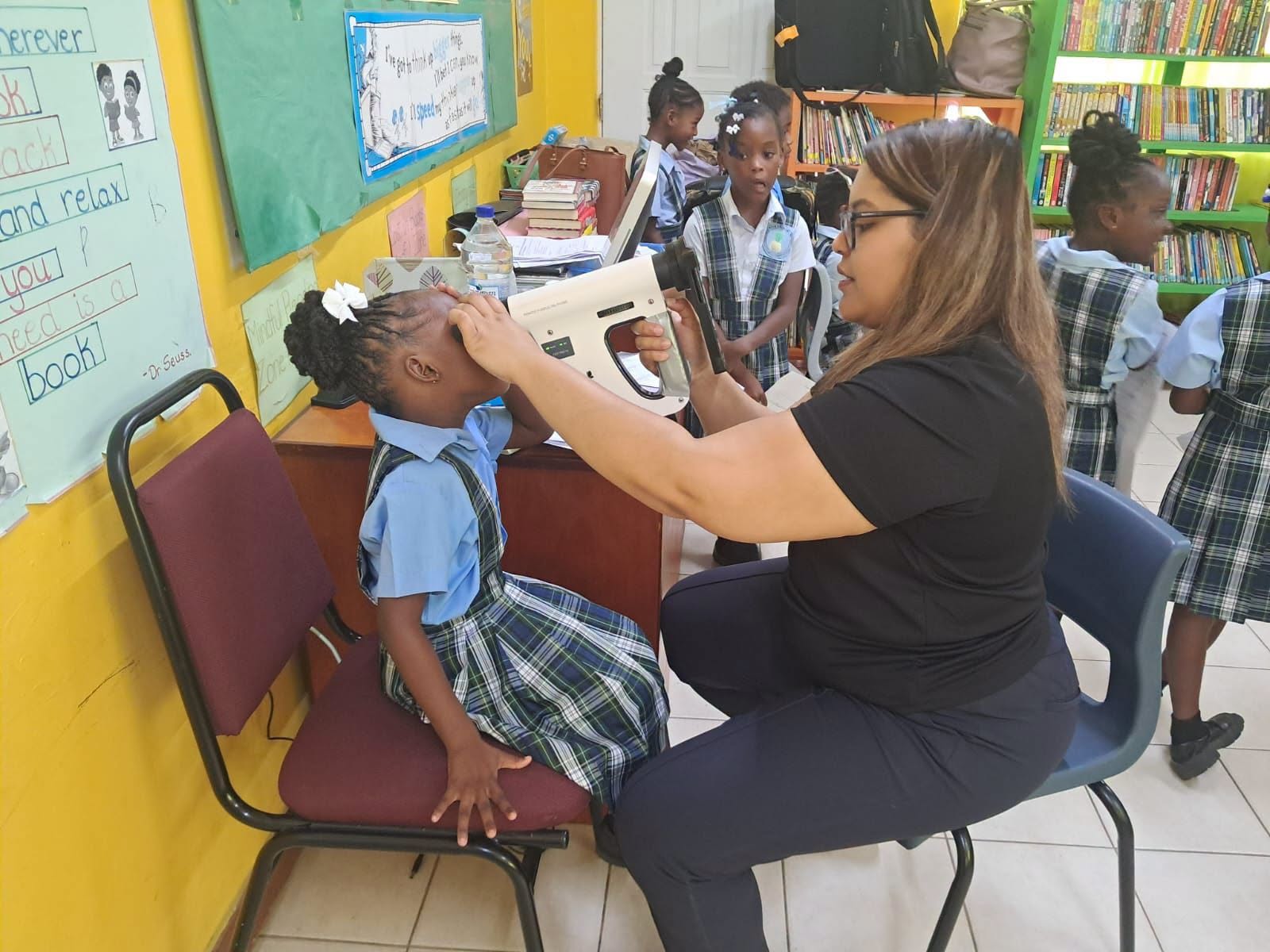
A landmark public health initiative led by the Ministry of Health, Wellness, Environment and Civil Service Affairs in partnership with Trinidad Eye Hospital is making steady progress in addressing unmet pediatric vision needs across local primary and secondary school populations, as officials release updated participation and outcome data for the ongoing National School Vision Screening Programme. As of the official data cutoff date of October 16, field teams have administered standardized vision tests to 7,745 students across participating educational institutions, with preliminary results showing that 12.6% of screened youth did not meet baseline vision health benchmarks. That figure translates to roughly one out of every eight children evaluated requiring additional targeted clinical assessment to rule out unaddressed ocular conditions. Program administrators have already flagged 394 students to receive cycloplegic refraction, a specialized diagnostic procedure that delivers precise measurements of refractive error in young patients, and project that an additional 800 children will be flagged for further evaluation as the final round of school-based screening wraps up. The initial screening process has also surfaced preliminary red flags for a range of more complex ocular conditions that require specialist review, including pediatric cataracts, potential keratoconus, suspected pediatric glaucoma, strabismus (crossed eyes), and a suite of other less common eye abnormalities. Ministry officials have emphasized that these initial screening alerts are not formal confirmed diagnoses, and are designed only to flag patients who require more in-depth testing from licensed ophthalmologists and optometrists. The final week of on-site school-based screening operations is scheduled to run from October 26 through October 30, after which field teams will shift their full focus to coordinating clinical follow-up for all referred students. A dedicated central Eye Examination Centre will operate for a 10-day window from November 5 to November 14, where care teams will conduct comprehensive confirmatory exams, finalize corrective lens prescriptions, distribute free or subsidized spectacles to eligible students, and process urgent referrals for specialist care for patients with complex ocular conditions. Public health leaders behind the programme note that early detection of unaddressed vision impairment in school-aged children is critical to preventing avoidable long-term vision loss, as well as eliminating barriers to academic performance, social development, and daily functioning that uncorrected vision issues often create. Ministry representatives are issuing a public call to all parents and legal guardians whose children have been referred for additional assessment to prioritize attending their scheduled appointments, and complete all recommended follow-up care to ensure their child’s vision health needs are fully addressed.
School Vision Screening Identifies Eye Conditions Requiring Further Assessment